
Reviewed · PARLIAMENT PALACE TOURS
Private Bucharest city tour visit the Palace of the Parliament & Village Museum
The Palace of Parliament is the day’s big surprise: a building so huge and costly that it tells you much about Nicolae Ceausescu’s rule before you even enter. You’ll pair that sobering communist-era story with the small-scale beauty of traditional homes at the Village Museum, a useful contrast in one long day.
I like the private format, which lets your guide adjust the pace, answer questions, and sometimes swap a planned stop for something that better suits your interests. I also like that entrance fees are included for the Palace and Village Museum, while the private car saves energy between Bucharest’s scattered sights. The main consideration is price: at $235.25 per person, this makes the most sense for a small group that values personal attention.
Key points to know before booking
- The Palace of Parliament anchors the day: Expect about an hour inside one of Europe’s most imposing and controversial buildings.
- Private touring brings useful flexibility: Guides such as Alex, Florin, Tudor, and Suzy have adjusted timing and stops around heat, weather, and personal interests.
- The Village Museum adds a needed change of mood: Its open-air collection presents churches, windmills, watermills, homes, and folk objects from across Romania.
- Bucharest’s story comes through contrasts: Communist monuments, Belle Époque façades, lively Old Town streets, and rural traditions all fit into one itinerary.
- Lunch is separate: Plan on roughly 12 euros per person at a recommended local restaurant, though the meal is not included.
- This is best for a first visit: Six to eight hours gives you a broad introduction, but not the slow pace of a specialist museum or neighborhood tour.
Why this private Bucharest day works
Bucharest can feel hard to read at first. Grand nineteenth-century buildings sit near Communist-era blocks. A busy avenue can lead to a quiet park. The Old Town is full of cafés and old façades, while the Village Museum offers a carefully assembled version of rural Romania.
That mix is exactly why a private tour helps. You are not simply ticking off sights. A good guide can explain how the city changed, why certain areas look so different, and how Romanians understand the years of dictatorship and revolution. The strongest guide reports here describe Alex, Florin, and Tudor as warm, flexible, and very good at adding personal stories to the formal history.
The day begins at 10:00 a.m. with pickup in Bucharest. Transport is in a modern private sedan or minivan, depending on your group size. That matters in a city where the sights are spread across several districts and traffic can eat into a short visit.
You should allow six to eight hours, including sightseeing, driving, walking, and lunch. The schedule gives you a broad view rather than long stretches at each place. If you want to linger at one stop, tell your guide early. The private setup is designed for that kind of adjustment.
More Palace of Parliament visits:
- Bucharest: Palace of Parliament Tickets and Guide
★ 4.3 · 3,182 reviews - Bucharest: Palace of Parliament Tickets and Guided Tour
★ 4.4 · 1,877 reviews - Bucharest: Parliament Palace Skip-the-line Ticket
★ 4.2 · 1,518 reviews
Entering the Palace of Parliament
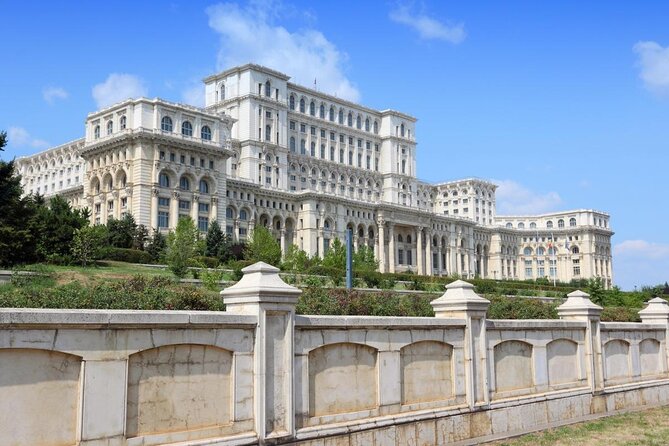
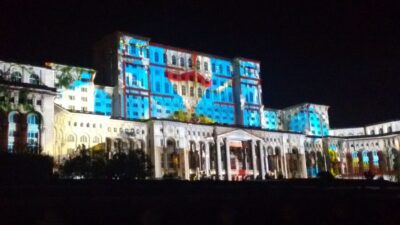
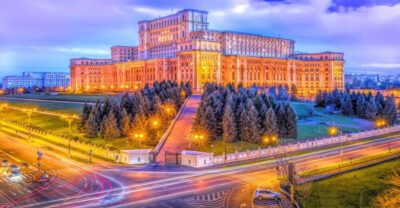
The Palace of Parliament, also called the People’s House, is not a gentle introduction to Bucharest. It is an immense political monument, built under Nicolae Ceausescu as part of his attempt to remake the capital around his own vision.
The building is 12 stories high and reaches eight levels underground. The lowest level is described as an anti-atomic bunker, connected to key city institutions by around 20 kilometers of catacombs. It also holds the Guinness World Record for the heaviest building in the world and is counted among the most expensive buildings ever constructed.
You will spend about an hour inside, with admission included. The visit is less about admiring a palace in the usual sense and more about understanding the scale of a dictatorship’s ambition. The corridors, halls, and materials show how public money and forced urban change were used to create a symbol of power.
The guide’s explanation is crucial here. Without context, the building can seem like an oversized collection of marble and grand rooms. With context, it becomes a lesson in how Ceausescu cleared large parts of Bucharest to create the House of the People, displacing residents and erasing older streets and buildings.
I would not treat this as a quick photo stop. The sheer size is the point, but the political story gives the building weight. The interior visit is also one of the elements that helps justify the tour price, since the entrance fee is included and transport is arranged for you.
Access rules and opening conditions can affect the visit. One guide was caught out by changes to museum hours, which caused wasted driving time, so it is sensible to confirm the Palace schedule close to your date. The tour provider says confirmation arrives when you book, but opening information can still change.
Reading the city from Unirii Square to Calea Victoriei
Before or around the Palace visit, the tour includes a guided walk through Piata Unirii, or Unirii Square. This is a good place to begin connecting modern Bucharest with the city’s huge twentieth-century changes.
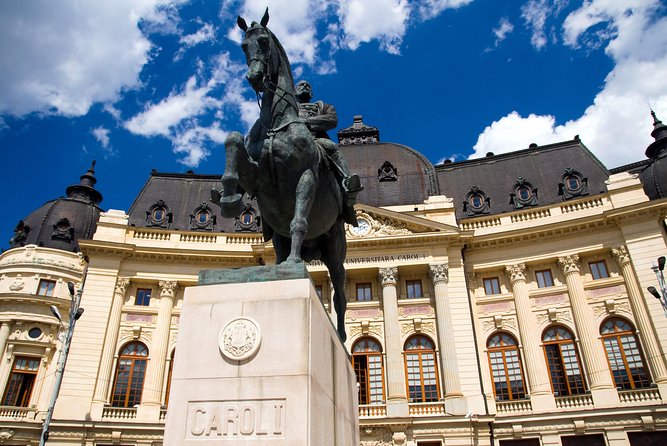
The route then reaches Calea Victoriei, Bucharest’s best-known historic avenue. It runs for nearly three kilometers and was once called Podul Mogosoaiei. Its current name recalls Romania’s victory in the War of Independence in 1878.
You get about 20 minutes here, so expect an introduction rather than a full architectural walk. The avenue offers glimpses of the Bucharest once nicknamed Little Paris, with older buildings and Belle Époque details that help explain the city’s pre-Communist character.
This short stop works best if you listen for the changes in the street itself. Calea Victoriei is not presented as a frozen museum road. It is a working city avenue, and the contrast between elegant older buildings and later construction is part of the lesson.
The private guide can add more detail if this style of architecture interests you. If you prefer political history, you may want to keep moving toward Revolution Square. That is one of the benefits of having your own guide rather than following a fixed group schedule.
Revolution Square and the end of dictatorship
Piata Revolutiei, or Revolution Square, gives the Communist story its most important setting. This is where Ceausescu made his final public appearance before the 1989 uprising ended his rule.
The square is tied to the moment when public anger overcame the socialist regime. Your guide can place the events in the physical setting, which makes the story easier to grasp than a simple list of dates. The tour also includes Piata Universitatii, another important Bucharest square.
You get around 20 minutes for these areas. That is enough for an explanation and a look around, but not enough for a slow study of every building or memorial. If the 1989 revolution is a major reason you are visiting Romania, tell your guide. The private arrangement gives you room for more questions.
This part of the day is especially useful after the Palace of Parliament. First you see the scale of the regime’s building program. Then you visit the place where that regime began to collapse. The two stops give each other meaning.
More museums in Bucharest:
- Bucharest: Museum of Senses Entry Ticket
★ 4.2 · 364 reviews - Communism in Bucharest – Landmarks, Museum & Communist Appetizers
★ 5.0 · 111 reviews - Bucharest: Entry ticket at the Museum of Communism
★ 4.6 · 57 reviews - Bucharest: Museum of Communism Ticket with Communist Coffee
★ 4.6 · 52 reviews
Old Town, CEC Palace, and Stavropoleos Monastery
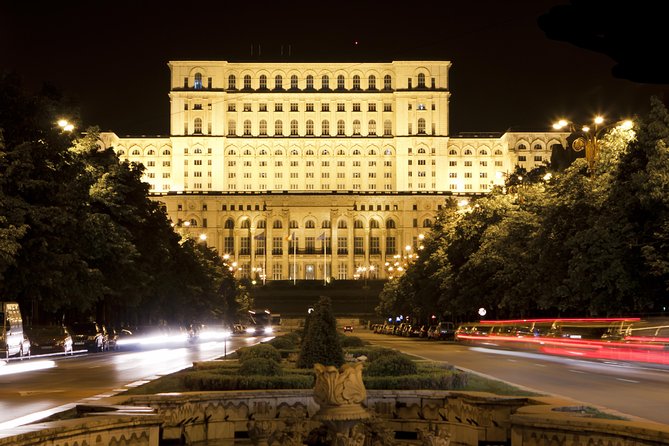
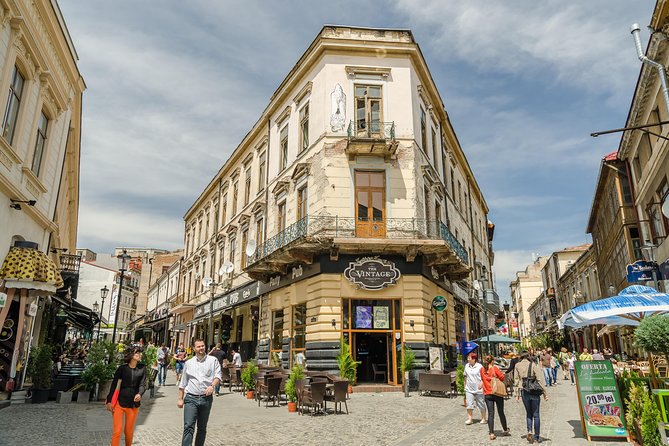
Bucharest’s Old Town brings a lighter, more social side of the city. You’ll walk among historic buildings, period façades, cafés, restaurants, and street food. It is one of the liveliest parts of the capital, but it is also a place of contrasts, with polished businesses sharing streets that reveal layers of age and wear.
The walking tour lasts about an hour. That gives you time to see key sights such as CEC Palace and Stavropoleos Monastery. CEC Palace is known for its ornate architecture, while Stavropoleos offers a quieter religious setting amid the city center.
The Arch of Triumph is also included in the panoramic sightseeing. Built between 1922 and 1936 to commemorate Romania’s participation in World War I, it was declared a historic monument in 2004. It sits at one of Bucharest’s busiest intersections, so you should expect to view it as part of the city drive rather than treat it as a long, separate visit.
Old Town is easy to revisit on your own, and one participant chose to use private time for the former Ceausescu family home instead. That option required an extra entrance fee, and it replaced some of the Old Town touring. This is a useful example of what the private format can do: you can ask for a different emphasis, but added attractions are not included.
The streets can be busy, and the area is more commercial than traditional. I would enjoy Old Town for its mixture of architecture and daily life, not expect an untouched historic quarter. The cafés and restaurants make it a practical lunch area, too.
Lunch at your own expense
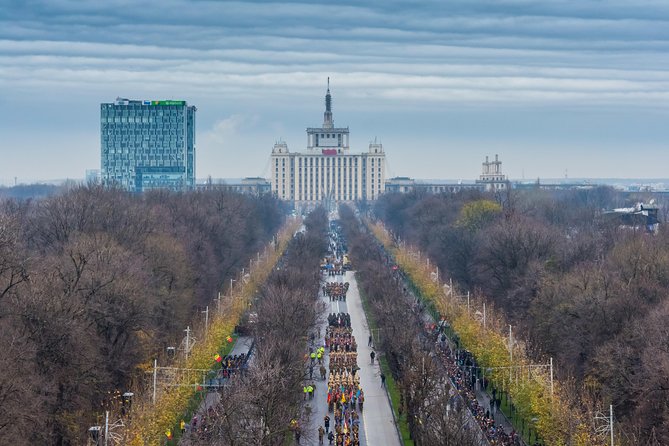
Lunch is not included, but the plan allows a stop at a well-regarded local restaurant. The estimated cost is about 12 euros per person, which keeps the extra expense modest compared with the tour price.
Ask your guide for a recommendation. One guide, Alex, was particularly praised for suggesting a good dinner, and local advice can help you avoid choosing a restaurant only because it is in a busy tourist lane.
The meal also gives you a chance to reset. This is a long day with several walking sections, and Bucharest can be hot. A flexible guide may arrange the order of stops to reduce time in the heat and avoid the worst traffic. Still, bring comfortable shoes and water, since the schedule mixes indoor visits, streets, squares, and the open-air museum.
The Village Museum near Herastrau Park
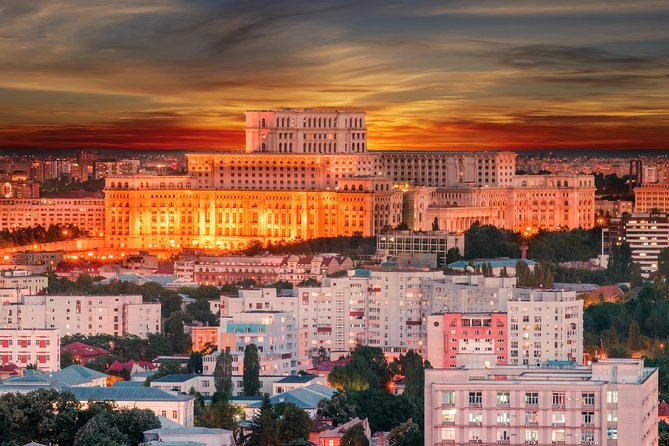
The Dimitrie Gusti National Village Museum is the day’s change of pace. Located near Herastrau Park, it presents traditional Romanian village life through an open-air collection of buildings and objects.
The museum opened in 1936 and contains 360 monuments and about 60,000 objects. You can walk among reconstructed village homes, a church, a windmill, a watermill, folk art, and handmade decorations. The setting offers a breath of air after the traffic and stone of central Bucharest.
I find this stop valuable because it gives you a first look at Romania beyond the capital. The displays show how homes, religious buildings, and working structures differed across the country. You get a physical sense of rural life that a city museum cannot provide.
The visit lasts about an hour, with admission included. That is enough to see the main paths and understand the museum’s purpose, but the grounds contain far more than you can study in detail. If you want to read every label or photograph each building, you may need a longer visit on another day.
The Village Museum is also a good reason to choose this tour over a city-only outing. Bucharest’s grand avenues and political landmarks explain the capital, while the open-air collection places it within Romanian culture. The pairing gives you more range in one day.
How much value do you get for $235.25?
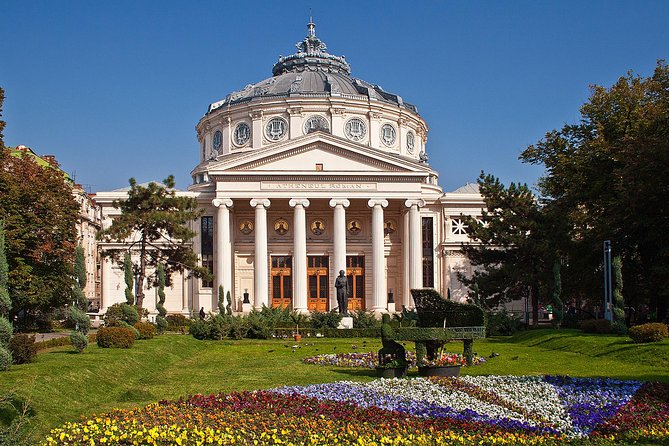
At $235.25 per person, this is not a budget city tour. The value depends heavily on group size. For one or two people, it is a substantial cost. For four people sharing a private vehicle and guide, the personal service becomes easier to justify, especially with Palace and Village Museum admission included.
You are paying for several things at once:
- A private English-speaking guide
- Pickup and transport in a sedan or minivan
- A six to eight hour schedule
- The Palace of Parliament entrance
- The Village Museum entrance
- A walking tour of Old Town
- Panoramic sightseeing with stops at central squares
- The freedom to ask for changes during the day
Group discounts are offered, so check the total price for your party rather than judging the per-person figure alone. The tour is also booked, on average, 22 days ahead, which suggests you should not leave it until the last moment if your dates are fixed.
The biggest value is not simply the car. It is the guide’s ability to connect Ceausescu’s building program, the 1989 revolution, the older city, and Romanian village traditions. If you want only the Old Town, you can see much of it independently for less. If you want a strong first orientation with private transport and context, the price is more defensible.
What the guides add to the day
The guide can make or break a tour like this. The strongest experiences described here involved guides who answered questions clearly, added personal stories, and listened to different views of Romania’s past.
Alex was praised for organizing the day around traffic, heat, and waiting times. Florin was described as friendly and well informed, with a willingness to discuss the difference between Western assumptions about Romania and Romanian feelings about their own past. Tudor adjusted the schedule for a visit to the former Ceausescu family home, with the extra entry paid separately.
The tour may be operated by a multilingual guide, even though it is offered in English. If language nuance matters to you, confirm the guide’s language arrangements when booking.
The private setup also means you can state your priorities at the start. You may want more time at the Palace, more political history, or a shorter Old Town walk. The schedule is not infinitely flexible, but the experience is built around your group rather than strangers.
Practical details for a smoother day
Pickup is offered, and the listed start time is 10:00 a.m. The experience finishes with a drop-off at your Bucharest hotel after the Village Museum.
The tour is private, so only your group participates. Children must be accompanied by an adult, and the minimum age is 12. Most people can take part, but you should expect walking at the squares, Old Town, Palace, and open-air museum.
Wear shoes that can handle pavement and museum paths. Since the day moves between a vehicle, indoor halls, open squares, and outdoor exhibits, layers are useful. Keep the schedule in mind when making evening plans, as traffic or a longer discussion can push the finish toward the eight-hour end of the estimate.
The price includes the stated entrance fees, but not lunch or additional attractions. If you want to replace Old Town with another paid site, ask before the day begins and budget for the extra ticket.
Cancellation is free up to 24 hours before the start time for a full refund. Changes or cancellations inside that window are not accepted for a refund.
Should you book this Bucharest tour?
Book it if this is your first time in Bucharest and you want the city explained rather than simply displayed. It suits couples, families with older children, and small groups who value a private car, a flexible guide, and a broad first look at the capital.
I would especially choose it for a group of four, when the cost per person becomes more reasonable. The Palace of Parliament, Revolution Square, Old Town, and Village Museum make a strong set of contrasts, and a good guide can turn those contrasts into a clear story.
Skip it if you prefer slow independent exploration, already know Bucharest well, or mainly want to spend hours in Old Town cafés. The schedule is full, the price is premium, and the Village Museum or Palace may deserve more than the allotted hour.
For most first-time visitors with only one day, this is a useful and well-shaped introduction. Just confirm opening conditions, reserve ahead, and tell your guide what matters most to you.
FAQ
How long does the private Bucharest tour last?
The tour lasts approximately 6 to 8 hours, including sightseeing, transport, walking, and time for lunch.
What time does the tour start?
The listed start time is 10:00 a.m.
Is hotel pickup available?
Yes, pickup is offered, and the day ends with drop-off at your Bucharest hotel.
Is the tour private?
Yes. Only your group participates in the activity.
What language is the tour offered in?
The tour is offered in English, though it may be operated by a multilingual guide.
Are entrance fees included?
Entrance fees for the Palace of Parliament and the Dimitrie Gusti National Village Museum are included. Additional entrances are not included.
Is lunch included in the price?
No. Lunch is at your own expense and is estimated at about 12 euros per person.
What is the cancellation policy?
You can cancel up to 24 hours before the local start time for a full refund. Cancellations or changes made less than 24 hours before the start time are not accepted for a refund.
Just added around Bucharest
- Private Full Day Tour of Bucharest★ 5.0 · 3 reviews
- Veliko Tarnovo and Medieval Bulgaria Private Day Trip from Bucharest★ 5.0 · 3 reviews
- Bucharest VIP Bar Crawl in Lipscani ‘Old Town’★ 5.0 · 3 reviews
- Bucharest Private City Tour★ 5.0 · 3 reviews
- Muddy Volcanoes and Salt Mine Private Tour★ 5.0 · 3 reviews
- Legends & Stories from Transylvania -2 Castles & Brasov Old Town★ 5.0 · 3 reviews
- 7-Day Dracula Tour in Romania from Bucharest including ‘The Ritual of Killing of a Living Dead’★ 5.0 · 3 reviews
- Transfagarasan Private Tour from Bucharest – 2 Days★ 5.0 · 3 reviews
Parliament Palace Tours, compared.

Palace of Parliament in Bucharest – fast-track tickets and guide
Read our review →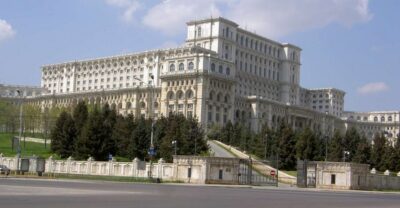
Parliament Senate Entry Tickets and Guided Tour
Read our review →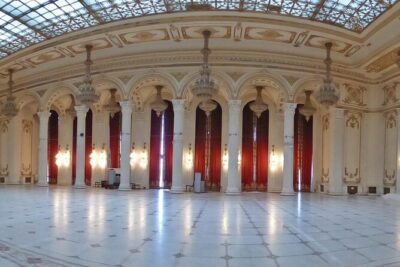
Skip the Line Ticket of the Palace of Parliament in Bucharest
Read our review →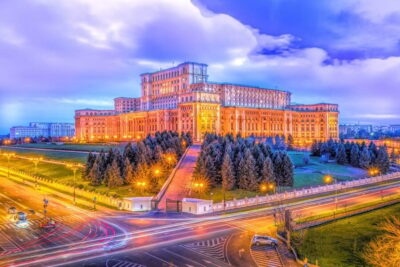
Palace of the Parliament, Village Museum & Ceaușescu Mansion
Read our review →
tour in the Parliament in Italian+exterior visit with guide
Read our review →Browse the lists this tour appears in