
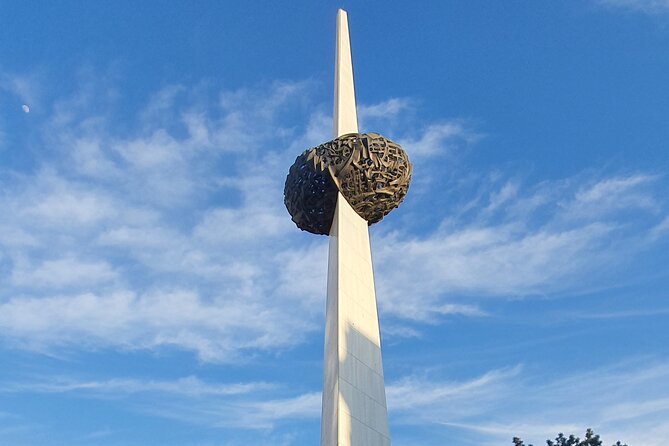
Reviewed · COMMUNIST BUCHAREST TOURS
Relics of Communism: 3-Hours Walking Tour (Small groups)
Bucharest’s communist story makes far more sense when you follow it on foot, from the balcony of Nicolae Ceausescu’s final speech to the enormous Palace of Parliament. This tour connects buildings, boulevards, churches, and revolution sites that can look unrelated when you pass them alone. Revolution Square gives the walk its strongest opening: you are standing where Romania’s 1989 uprising began.
I like the small maximum of 10 people, which gives you room to ask questions and hear the guide clearly. I also like the way the route mixes political history with ordinary details, including a Romanian snack associated with the communist period. The main drawback is that you spend about three hours outdoors and walking, while admission to museums is not included.
Key points to know before booking
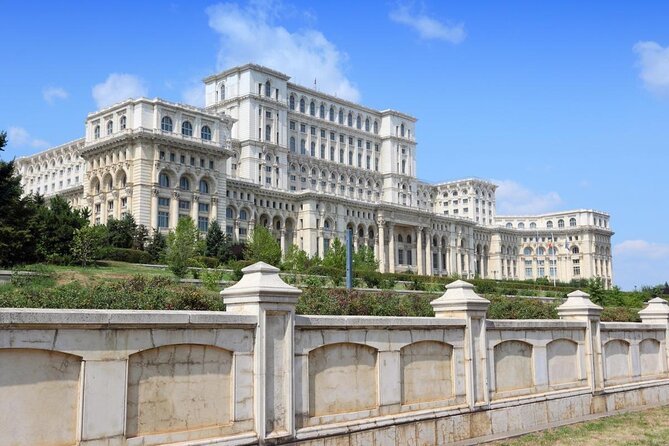
- The tour begins at Ceausescu’s last-speech balcony: Start at Revolution Square at 11 a.m. and hear about the 1989 Revolution in the place where the final break began.
- You walk through the communist-built city center: Unirii Square and Unirii Boulevard show how urban planning served the state and its leader.
- The group is capped at 10 people: This is a better setup for questions than a large coach tour or crowded city walk.
- Mihai Voda Monastery adds a religious angle: The stop explains the uneasy relationship between communist power and religion.
- The Palace of Parliament is the dramatic finish: The walk ends in Constitution Square, directly in front of the massive seat of power.
- A Romanian communist-era snack is included: It is a small extra, but it adds a taste of everyday life to a serious subject.
Why this Bucharest communist history walk works
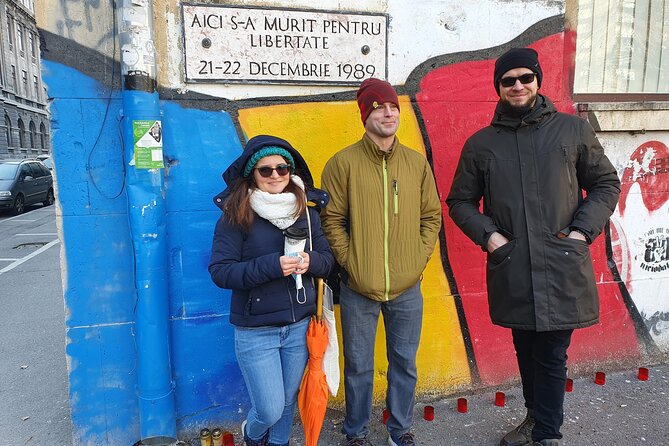
Communism in Romania is not confined to one museum. It is written across Bucharest in wide avenues, relocated churches, grand government buildings, empty spaces, and memorial sites tied to the 1989 Revolution.
That is why I find a walking tour useful here. You do not just hear that Nicolae Ceausescu wanted to reshape the capital. You see the scale of that plan as you move from older central streets toward the huge avenues and monumental buildings created under his rule.
The route lasts about three hours and uses five main stops, with roughly 20 minutes at each one. The pace should give you time to listen without turning every location into a rushed photo stop. Still, this is a walking experience, not a museum tour with seats and air conditioning. A moderate level of fitness is requested, and good weather is required.
The group limit matters. With no more than 10 people, you can ask about family life, food, propaganda, religion, or the years after 1989 without trying to make yourself heard over a crowd. The guide names provided for this experience are Mara and Elena. One account specifically praises Mara’s detailed answers about daily life under communism, while another highlights Elena’s clear overview of the era. Your assigned guide may vary.
More Walking Tours in Bucharest
- Bucharest: City Highlights Guided Walking Tour
★ 4.9 · 1,482 reviews - Bucharest Highlights Walking Tour
★ 5.0 · 469 reviews - Bucharest: Ghost Stories & Romanian Mythology Walking Tour
★ 4.9 · 287 reviews
Revolution Square and the final Ceausescu speech
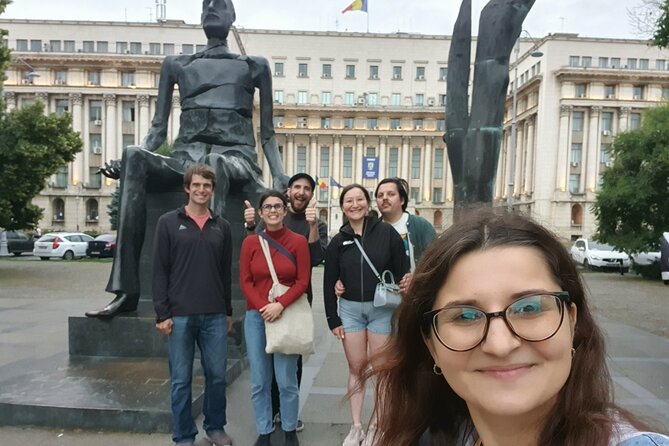
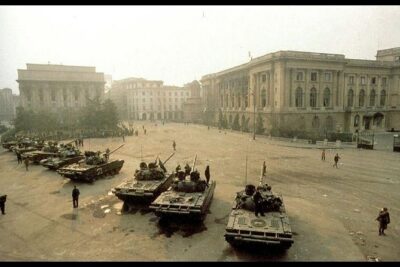
The first stop is Revolution Square, Piața Revoluției, where you meet at 11 a.m. in front of the balcony used by Ceausescu for his last public speech.
This is the right place to begin because the square links the official image of communist power with its sudden collapse. You hear how the events of December 1989 unfolded at the same location, rather than receiving the story as a detached timeline in a classroom.
Allow yourself to look around before the explanation begins. The point is not simply to photograph a balcony. It is to understand why this particular spot became such a powerful setting for the end of Ceausescu’s rule.
The stop lasts about 20 minutes and admission is free. Since the tour takes place outside, bring weather-appropriate clothing and comfortable shoes. The meeting point is central and near public transportation, but the tour information does not specify a particular station or transit line.
Piața 21 Decembrie 1989 and the revolution’s human cost
The next stop is Piața 21 Decembrie 1989, also known as 21 December 1989 Square. Here, the guide focuses on the incidents of December 21, the people who became heroes of the revolution, and the neo-communist period that followed.
This is an important change of focus. Revolution Square gives you the symbolic opening, while the 21 December stop brings attention to the people and events behind the political change. You also get a reminder that the end of communist rule did not instantly settle Romania’s future.
The phrase neo-communist era points to the complicated period after Ceausescu. A tour that includes this subject is more useful than one that treats 1989 as a clean finish line. You can ask the guide about what changed, what remained, and how Romanians understood the years that followed.
Again, the visit is free and lasts around 20 minutes. This is one of the stops where a small group helps most. Questions about political transition can quickly become specific, and a quieter group lets the guide explain without rushing.
Unirii Square and Ceausescu’s planned city
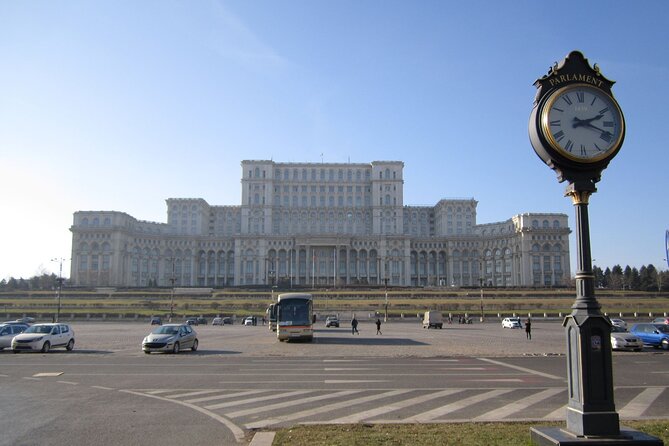
At Piața Unirii, the tour turns from revolution to urban power. This square became the new city center during the communist era, and the huge Unirii Boulevard cuts through the district as a clear example of how the state reshaped Bucharest.
The scale is the lesson. Wide avenues and monumental spaces can make a government look permanent and citizens look small. Here, the guide explains the rise of Romania’s communist party and the growth of Ceausescu’s cult of personality.
I like this part because it helps you read the city itself. Without context, a broad boulevard may look like ordinary urban planning. With the history attached, you begin to see the political purpose behind the size, sightlines, and grand scale.
The stop also sets up the final visit to the Palace of Parliament. Unirii Boulevard was not just a route through town. It formed part of a larger vision in which the capital was reorganized around the state and its leader.
You will not pay an admission fee at Unirii Square, and the tour remains outdoors. Expect another 20-minute explanation rather than an extended architectural visit. If you want to study particular buildings in detail, you may need extra time on your own after the walk.
More communist-era Bucharest walks:
- The Real tour of Communism
★ 5.0 · 666 reviews - Life under Communism
★ 5.0 · 358 reviews - 3-Hour Guided Tour of Communist Bucharest
★ 4.9 · 303 reviews - Bucharest Essential Tour: Old Town, Calea Victoriei & Communism
★ 5.0 · 142 reviews
Mihai Voda Monastery and religion under communism
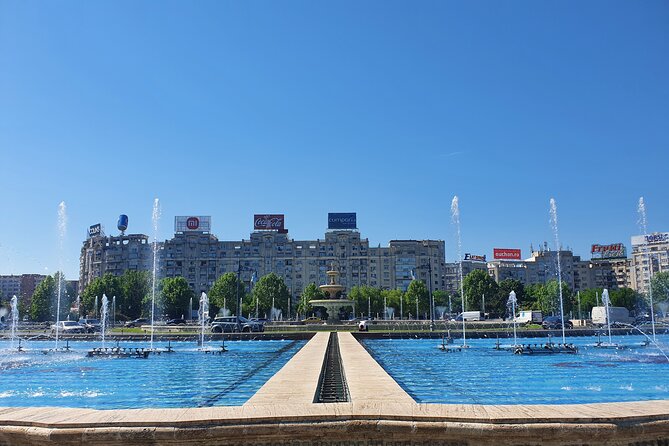
Mihai Voda Monastery brings a different subject into the route: religion and the communist state.
The tour uses this stop to show the relationship between communist authorities and religious institutions. It also introduces Bucharest’s less obvious churches, giving you a break from the grand boulevards and government architecture.
This is a valuable contrast. Ceausescu’s Bucharest is often represented by giant public buildings and broad avenues, but the city also contains religious places that complicate that picture. The stop helps you consider what happened when an officially atheist political system had to deal with Romania’s churches and religious traditions.
The itinerary does not promise entry inside the monastery, so treat this as an exterior historical stop unless your guide says otherwise. Admission is free, and you spend about 20 minutes here.
For me, this is one of the route’s more interesting choices. It prevents the tour from becoming only a story about concrete, propaganda, and political leaders. It brings the discussion closer to institutions and beliefs that affected ordinary life.
The Palace of Parliament and the final view of power
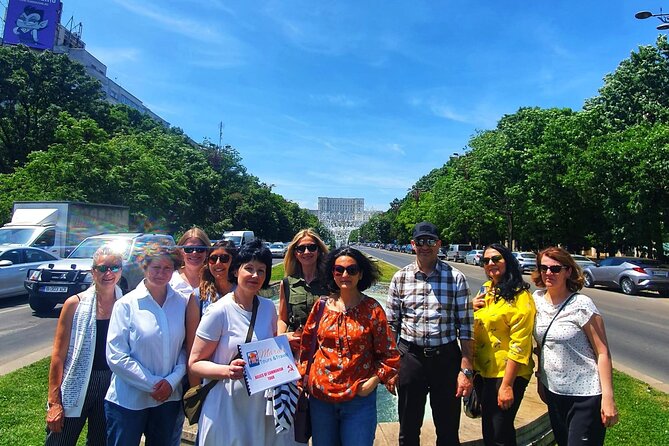
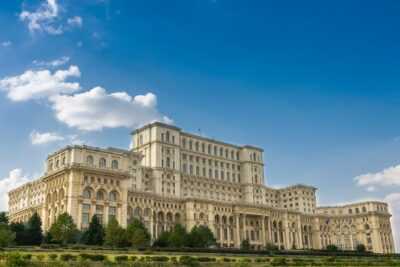
The tour ends at Constitution Square, in front of the Palace of Parliament. This is the largest and most imposing stop on the route, and the guide uses it to explain the new socialist-realist districts, Unirii Boulevard, and the palace’s role as the center of power.
The building is described as the second-largest administrative building in the world. Even without entering, its scale gives you a strong final image of Ceausescu’s ambitions. The surrounding area helps show how an entire section of Bucharest was planned around political authority.
The guide also shares less obvious details and stories connected with the palace. Since the experience does not include museum admission, you should not expect an interior visit as part of the $48.06 price. If seeing the inside matters to you, plan that separately and check the palace’s own entry arrangements.
Ending here works well. The route starts with the fall of Ceausescu and finishes with the physical monument to his power. You leave with a clearer sense of how revolution, urban planning, personal rule, and public architecture fit together.
What the $48.06 price gives you
At $48.06 per person, this is not the cheapest way to take a walk through central Bucharest. You are paying for a guide, a focused route, a small group, and historical interpretation rather than entry tickets.
That value depends on your interests. If you already know Romania’s communist period well and mainly want to see the buildings, you could visit the public squares on your own for less. You would, however, lose the connections between the sites. The balcony, revolution square, Unirii Boulevard, Mihai Voda Monastery, and the Palace of Parliament make more sense when someone explains how they relate.
The group size improves the value. A maximum of 10 people is small enough for direct questions and personal attention. The experience also includes one famous Romanian snack from communist times. It will not transform the price calculation, but it adds a practical detail about daily life and gives you a brief energy boost during the walk.
No museum admissions are included. That keeps the tour focused and avoids charging you for attractions you may not want to enter, but it also means your total cost will rise if you add a museum or palace visit later.
The experience is often booked about 43 days ahead, so I would not leave it until the last moment if your Bucharest schedule is fixed. Free cancellation is available up to 24 hours before the start time. Poor weather or failure to meet the minimum group size can lead to a rescheduled experience or a full refund.
Who should take this tour
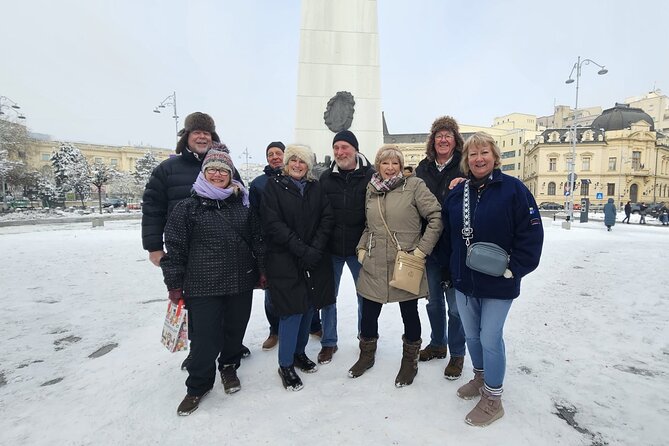
I would choose this walk if you want a clear introduction to Romania’s communist era without committing to a full museum day. It suits first-time visitors who keep seeing Ceausescu-era buildings but do not know what they represent.
It is also a good fit if you like political history told through places. The route does not stay inside one exhibition. You move through the capital and see how authority was presented in public space.
The tour may suit you especially well if you want to ask questions. Mara is described as personable and able to answer detailed questions about life during communism. Elena is described as offering a strong overview of the period. Since guide assignments can differ, use those names as useful possibilities rather than a promise of a particular guide.
I would think twice if you dislike outdoor walking, need frequent indoor breaks, or want extensive interior access. The route has a moderate physical requirement, takes about three hours, and does not include museum admissions.
Practical advice for the three-hour route
Wear comfortable walking shoes. The tour crosses several central areas and includes open squares and broad avenues, so comfort matters more than dressing for a formal attraction.
Arrive ready for an 11 a.m. start at Revolution Square. The end point is Constitution Square, in front of the Palace of Parliament, so you should not expect to finish where you began. That is useful when planning lunch, transit, or your next Bucharest sight.
Keep some attention for the spaces between stops. The five named locations carry the main structure, but the city streets connect the story. You may find that the guide’s explanation of an ordinary building or boulevard is as useful as the headline attractions.
Ask about daily life, not only leaders and dates. The tour specifically includes stories about communism, and the strongest personal value comes from understanding how the system affected people beyond official speeches and monuments.
Good weather is part of the operating conditions. Check the forecast before you go and leave room in your schedule if you need to move the tour to another date.
Should you book Relics of Communism?
Book it if you want Bucharest’s communist past explained through the actual city, with a small group and a guide who can answer questions. The route is especially useful on your first visit, before you explore the Palace of Parliament or return to Revolution Square on your own.
The strongest reasons to choose it are the 10-person limit, the careful progression from the 1989 Revolution to Ceausescu’s monumental city plan, and the inclusion of religion and everyday life. The main limits are outdoor walking, no museum admissions, and a price that is higher than sightseeing independently.
For a focused introduction to one of Bucharest’s most important and difficult subjects, I think the tour earns its place in your schedule. Just book it with comfortable shoes, realistic expectations about outdoor time, and a plan for any interior visits you want to add later.
FAQ
Where does the tour begin?
The tour begins at Revolution Square, Piața Revoluției, in Bucharest.
What time does the tour start?
The start time is 11 a.m.
Where does the tour end?
The walk ends in Constitution Square, in front of the Palace of Parliament.
How large is the group?
The tour has a maximum of 10 people.
Is admission to museums included?
No. Admission to museums is not included in the tour price.
Can I cancel for a full refund?
Yes. You can cancel up to 24 hours before the experience begins for a full refund. Cancellations or changes made less than 24 hours before the start time are not accepted for a refund.
Just added around Bucharest
- Bran (Dracula) Castle, Peles Castle, Brasov City – Private Tour★ 5.0 · 17 reviews
- 2-Hours Private Bucharest City Tour★ 5.0 · 17 reviews
- 4h Jewish Legacy in Bucharest – Private Tour by Car and Walking★ 4.5 · 17 reviews
- 3-Day Explore Transylvania from Bucharest★ 5.0 · 17 reviews
- Half Day Bucharest Sightseeing Tour★ 4.5 · 17 reviews
- 2 Days – Private Tour to Transylvania – Brașov, Sighișoara, Sibiu★ 5.0 · 17 reviews
- Salt Mine , Lunch at Winery & Dracula Grave – Private Tour★ 5.0 · 17 reviews
- Bucharest: Sweet Delights History and Desserts Walking Tour★ 5.0 · 18 reviews
Communist Bucharest Tours, compared.
Bucharest Essential Tour: Old Town, Calea Victoriei & Communism
Read our review →
Communism in Bucharest – Landmarks, Museum & Communist Appetizers
Read our review →

Browse the lists this tour appears in