
Reviewed · COMMUNIST BUCHAREST TOURS
The Real tour of Communism
Bucharest’s communist past is easiest to grasp on foot, where grand buildings, moved churches, former party haunts, and Revolution Square connect into one clear story. This tour follows that path from the Patriarchal Cathedral to the site of Ceausescu’s final public appearance, with guides such as Octavian, Daniela, Andrea, and John bringing personal detail to the political facts.
I like the small group of up to 15 people, which gives you a fair chance to ask questions. I also like the coffee, restroom, and snack break, especially since the walk can last more than three hours in practice. The main drawback is that much of the experience takes place outdoors, so cold, rain, or strong summer heat can affect your comfort.
Key points at a glance
- Personal stories make the era real: Guides may explain rationing, shortages, and daily life from lived experience.
- The route links major sights: You move from the Patriarchal Cathedral and Parliament to Old Town and Revolution Square.
- Architecture tells the political story: See how churches were moved rather than destroyed and how Ceausescu reshaped Bucharest.
- The 1989 Revolution gets proper attention: The final stop covers the violent overthrow of Romania’s communist regime.
- A short break helps: Coffee, a restroom stop, and a communist-era snack interrupt the walk.
- The price is modest: At $32.65 per person, the tour offers three hours of guided context without charging admission for most stops.
Why Bucharest makes a communist walking tour worthwhile
Communism in Romania was not just a chapter in a textbook. It changed the shape of Bucharest, the food people ate, the homes they lived in, the churches they could see, and the way families handled ordinary shortages.
That is what makes this route useful. Instead of treating Nicolae Ceausescu as an isolated dictator, the guide connects his rule to the city around you. A huge government building, a quiet monastery, a restaurant in Old Town, and a broad square all become part of the same story.
The timing also helps. Romania’s communist period ended in 1989, so guides can often add family memories and personal details. Octavian, for example, has spoken about rationing and the harder years of communist life. John has explained how the system affected his loved ones, while Daniela has been praised for linking past events to current Romanian politics.
You should not expect a museum tour with long indoor visits. This is a walking lesson built around streets, buildings, viewpoints, and storytelling. The value comes from the guide’s ability to explain what you are seeing.
More communist-era Bucharest walks:
- Life under Communism
★ 5.0 · 358 reviews - 3-Hour Guided Tour of Communist Bucharest
★ 4.9 · 303 reviews - Bucharest Essential Tour: Old Town, Calea Victoriei & Communism
★ 5.0 · 142 reviews
Starting at the Patriarchal Cathedral and former assembly headquarters
The meeting point is the Patriarchal Cathedral at Aleea Dealul Mitropoliei 25. The cathedral sits within the Patriarchal complex, so allow time to find the correct spot. One practical note is important: the cathedral is inside an estate and you must walk up a slope to reach the meeting area.
The first stop takes about 15 minutes. The nearby Patriarchal Palace once served as the headquarters of the Great National Assembly during the communist period. That gives the tour an immediate political setting, rather than beginning with a general introduction in an ordinary city street.
Admission here is free. You will likely spend more time listening than entering buildings, so comfortable shoes matter more than formal clothing. The tour requires a moderate level of fitness and uses public streets and slopes.
This opening also helps place religion and state power side by side. The cathedral complex represents an older Romania, while the former assembly headquarters points to the communist government that ruled the country for more than four decades.
The Palace of Parliament and Ceausescu’s oversized vision
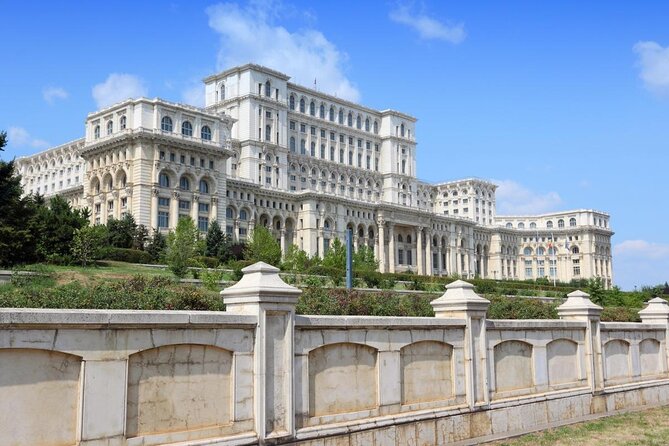
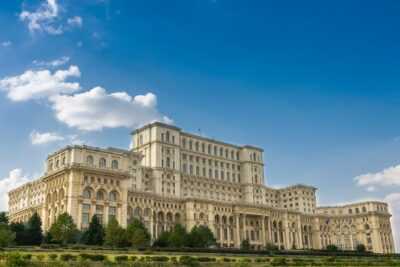
The Palace of Parliament is the route’s biggest visual shock. The stop lasts about 15 minutes and focuses on the story behind what is described as the second-largest building in the world.
You do not get admission to the building as part of the tour. That is an important distinction. The walk gives you an outside view and the political context, but a separate interior visit would require its own ticket and planning.
The building is valuable here not simply because it is enormous. Its scale helps explain the priorities of Ceausescu’s government. The project required a massive reshaping of central Bucharest and became a symbol of state power, personal ambition, and the cost imposed on ordinary people.
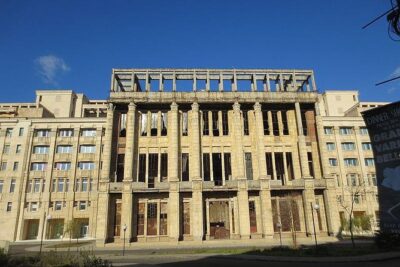
The guide may also discuss how palaces were taken over and divided into apartments, along with why some later deteriorated. That kind of detail moves the discussion beyond architecture. You begin to see the building boom, housing decisions, and urban changes as parts of daily life under the regime.
Give yourself room to ask questions at this stop. The building can dominate your attention, but the more useful subject is what its construction meant for the city and its residents.
Mihai Voda Monastery and the churches that escaped demolition
Mihai Voda Monastery offers one of the tour’s most unusual stories. During the communist reshaping of Bucharest, some churches from the 16th and 17th centuries were not destroyed. Instead, they were literally moved.
The stop lasts around 15 minutes and admission is free. The idea of translating a church may sound strange, but here it refers to physically relocating historic religious buildings so that major construction projects could proceed.
This is an excellent pause in the route because it shows that preservation was not simple or secure. A church might survive, but only after being shifted out of the way. The story also adds texture to the common picture of communist urban planning, which can otherwise seem focused only on demolition and concrete.
You will not spend a long time inside. The stop works best as a visual and historical explanation, so listen for how the guide connects the monastery to the wider rebuilding of Bucharest.
A few more Bucharest day trips to weigh up
- Bucharest: Dracula’s Castle, Peles Castle, & Brasov Old Town
★ 4.5 · 17,858 reviews - Bucharest: Dracula Castle, Peles Castle & Brasov Old Town
★ 4.6 · 10,891 reviews - Bucharest: Dracula’s Castle, Peleș Castle & Brașov Day Trip
★ 4.5 · 5,919 reviews - Bucharest: Palace of Parliament Tickets and Guide
★ 4.3 · 3,182 reviews
Old Town, former party restaurants, and the contrast of privilege
The Old Town stop lasts about 15 minutes and looks at restaurants favored by the communist leadership. This is where the tour turns from government offices and buildings toward privilege, food, and social life.
The contrast matters. Officially, communist Romania promoted equality. In practice, party leaders had access to places and comforts that ordinary people often did not. A restaurant story can explain that gap more plainly than a political speech.
The walk also gives you a different view of Bucharest’s Old Town. Many visitors see it mainly as a place for cafes and evening dining. On this tour, you get the older political setting behind some of those streets and buildings.
The included snack adds a small but memorable link to this subject. It is a food item that survived from the communist years. Do not expect a full meal, and food or drinks beyond the included snack are not part of the price. Still, a taste of an era can make the discussion of shortages and rationing more concrete.
Some guides have also stopped for coffee and a restroom break around the middle of the walk. That break is not just useful in bad weather. It gives you a chance to warm up, cool down, and absorb the amount of information being covered.
Revolution Square and the final days of Ceausescu
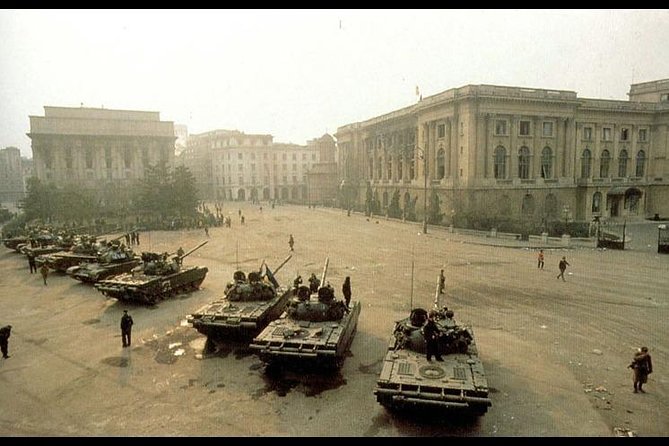
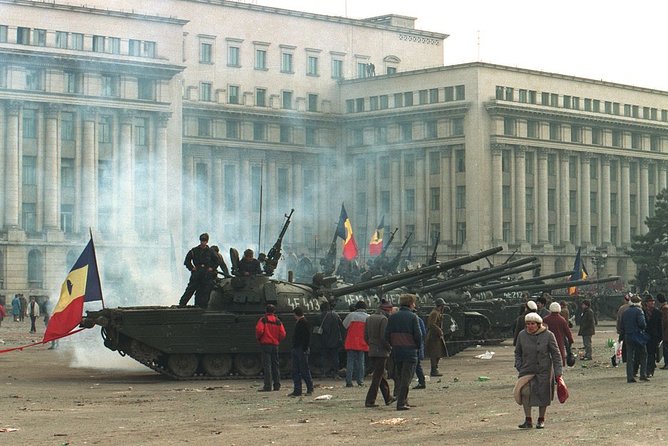
The tour ends at Revolution Square, or Piața Revoluției, after about 15 minutes at the final stop. This is the emotional center of the route.
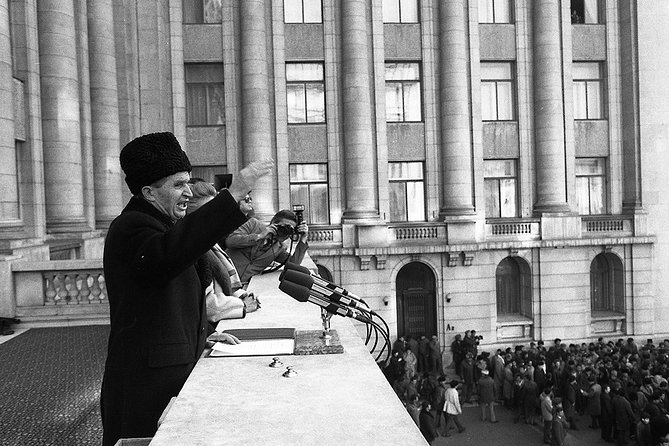
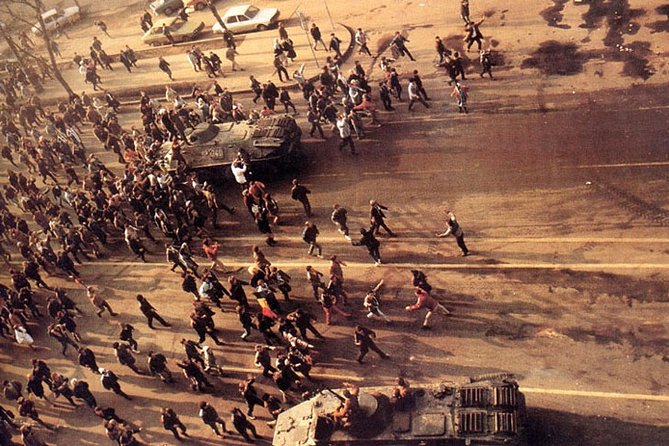
Romania’s 1989 uprising was the only bloody revolution among the former communist states of the Iron Curtain. At Revolution Square, the guide explains the final days of Ceausescu’s rule, his last public appearance, and the first days after more than 40 years of communist government.
The square is more than a place for dates and names. It helps you picture how quickly authority collapsed and how uncertain freedom felt at the start. A good guide will also explain the difference between the official version of events and the confusion experienced by people on the ground.
This is where personal memories are especially useful. Guides have added stories about how communism affected their families, food supply, work, and sense of safety. Those details give scale to the political change. You are not just learning when the regime ended. You are considering what changed at home and what did not.
The tour finishes here rather than returning to the starting point. That is convenient if you plan to continue sightseeing around central Bucharest, but you need to arrange your own way back to your hotel. No hotel pickup or drop-off is included.
The guides are the heart of the experience
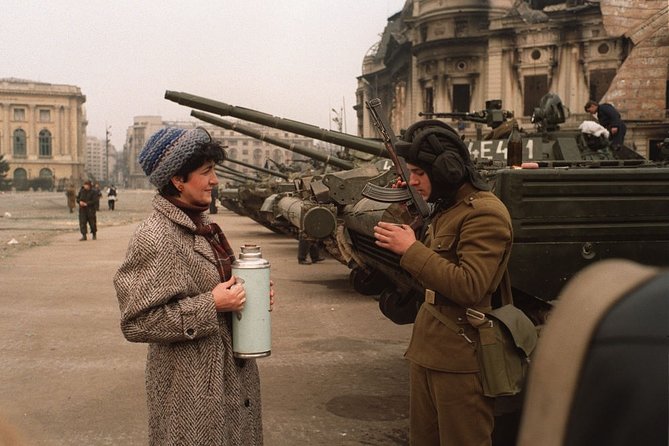
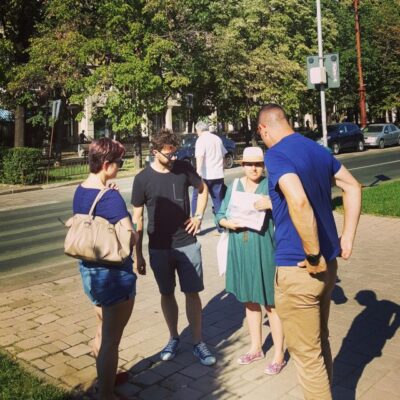
The route is fixed, but the guide can shape the entire afternoon. Names associated with this experience include Octavian, Octavia, Daniela, Andreea, Andrea, Mihai, and John Sever. Your assigned guide may be different, so treat those names as examples rather than a guarantee.
The strongest guiding style here combines three layers:
- Basic political history, including Ceausescu’s rise and fall.
- Physical evidence in the city, including Parliament, relocated churches, and Revolution Square.
- Personal experience, including rationing and the effect of communist rule on families.
That mix is why the tour has earned a 4.9 rating from 666 reviews, with 99 percent of customers recommending it. The important point is not the number alone. The repeated praise focuses on clear explanations, thoughtful answers, personal stories, and a good balance between detail and the larger picture.
You should feel free to ask questions. Guides have been praised for encouraging them and for filling in gaps that standard history books often leave out. The subject is large, but the best guides summarize it without making the walk feel rushed.
What the three hours feel like on foot
The advertised duration is about three hours, though some groups have taken a little longer. That is enough time to cover serious material without turning the outing into a full-day commitment.
The route includes several short stops of roughly 15 minutes each, with walking and explanation between them. You should wear shoes suited to city streets and be prepared to spend most of the time outside. The tour operates in all weather conditions, and the booking terms also state that poor weather can lead to cancellation with an alternative date or full refund.
That wording means you should check conditions before setting out. A freezing, rainy day has not prevented some groups from enjoying the tour, especially when a coffee break is available, but comfort will depend on your clothing and tolerance for weather.
On hot days, bring water. On wet or cold days, dress in layers and use rain protection. The tour is not designed for someone seeking a slow, indoor itinerary.
The maximum group size is 15. That is large enough to create a social atmosphere but small enough for a guide to keep the group together and respond to questions. Service animals are allowed, and the route is near public transportation.
Is $32.65 a fair price?
At $32.65 per person, this is a good-value introduction to communist Bucharest. You receive about three hours of guiding, a small snack, several major sights, and historical context that would be difficult to assemble from a guidebook while walking alone.
The price does not include admission to the Palace of Parliament. It also excludes additional food and drinks, hotel transfers, and anything else not specifically listed. If you want to tour the Parliament interior, plan for a separate ticket and visit.
The value is strongest for first-time visitors who want the city to make sense quickly. You see important places, learn how they connect, and get tips from the guide about other communist attractions. It is less useful if you already know Romania’s modern history well or want an architectural tour with extensive interior access.
The included snack is a pleasant extra, not the reason to book. The real purchase is the explanation. Three hours of context for a modest price can save you from looking at Bucharest’s grandest buildings as disconnected sights.
Who should book this walk?
I would choose this tour if you are interested in modern European history, political change, architecture, or everyday life behind the Iron Curtain. It also suits you if you prefer learning through real streets instead of spending hours in a museum.
Families with older children and teenagers may find the subject engaging, though the amount of political history requires attention. The personal stories and food link can help younger people understand what rationing and restricted choices meant in daily life.
This is also a strong first-day activity in Bucharest. The route gives you a mental map of central sights and helps you recognize the difference between older city layers and communist construction. Afterward, you can revisit the Palace of Parliament or Revolution Square with a clearer eye.
I would hesitate if you have difficulty walking for three hours, dislike outdoor touring, or need guaranteed indoor shelter. The walking is moderate rather than extreme, but the tour does require a reasonable level of fitness and comfort with changing weather.
Book at least a little ahead if your schedule is fixed. The average booking point is 22 days before the activity, and the group is capped at 15 people. You can cancel for a full refund up to 24 hours before the start time. Changes or cancellations inside that window are not accepted for a refund.
Should you book the Real Tour of Communism?
Book it if you want Bucharest’s communist period explained through buildings, streets, food, and personal memory. The route is well chosen, the price is sensible, and the final stop at Revolution Square gives the story a strong finish.
The tour will not replace a full museum visit or an interior tour of Parliament. It also cannot guarantee a particular guide. But with a skilled guide such as Octavian, Daniela, Andrea, or John, you get something harder to find on your own: a connected explanation of how political decisions changed ordinary Romanian lives.
For most visitors with three hours to spare, this is a worthwhile and unusually grounded way to understand Bucharest.
FAQ
How long is the Real Tour of Communism?
The tour lasts approximately three hours, though some groups have taken slightly longer.
How much does the tour cost?
The listed price is $32.65 per person.
Where does the tour start?
It starts at the Patriarchal Cathedral, Aleea Dealul Mitropoliei 25, Bucharest. The cathedral is inside a complex, and you must walk up a slope to reach the meeting area.
Where does the tour end?
The tour ends at Revolution Square, Piața Revoluției, in Bucharest. Hotel drop-off is not included.
Is entry to the Palace of Parliament included?
No. Admission to the Palace of Parliament is not included in the tour price.
Is food included?
A snack that has survived from the communist period is included. Additional food and drinks are not included unless specifically stated.
What size are the groups?
The tour has a maximum of 15 participants.
Can I cancel for a refund?
You can cancel at least 24 hours before the start time for a full refund. Cancellations or changes made less than 24 hours before the start time are not accepted for a refund.
Just added around Bucharest
- Private Full Day Tour of Bucharest★ 5.0 · 3 reviews
- Veliko Tarnovo and Medieval Bulgaria Private Day Trip from Bucharest★ 5.0 · 3 reviews
- Bucharest VIP Bar Crawl in Lipscani ‘Old Town’★ 5.0 · 3 reviews
- Muddy Volcanoes and Salt Mine Private Tour★ 5.0 · 3 reviews
- Bucharest Private City Tour★ 5.0 · 3 reviews
- Legends & Stories from Transylvania -2 Castles & Brasov Old Town★ 5.0 · 3 reviews
- Transfagarasan Private Tour from Bucharest – 2 Days★ 5.0 · 3 reviews
- 7-Day Dracula Tour in Romania from Bucharest including ‘The Ritual of Killing of a Living Dead’★ 5.0 · 3 reviews
Communist Bucharest Tours, compared.
Bucharest Essential Tour: Old Town, Calea Victoriei & Communism
Read our review →
Communism in Bucharest – Landmarks, Museum & Communist Appetizers
Read our review →

Museum of Communism Ticket with Communist Coffee
Read our review →Browse the lists this tour appears in