
Reviewed · TIMIȘOARA TOURS
The Classic Tour of Timisoara
Timisoara’s old center makes sense once you understand how its fortress walls shaped the city. This two-hour walking tour connects grand squares, Habsburg-era buildings, the old administrative quarter, and the Maria Theresia Bastion with stories that go beyond dates and building names.
I like the way it gives you a quick orientation to central Timisoara, so you can explore with more confidence afterward. I also like the guides’ mix of history, humor, and local detail. Teo, Dan, Sergiu, Marius, and Ludovic have all led engaging tours, and one guide even helped a guest retrieve Covid test results. The main drawback is that you will be outdoors for the full walk, and there is no food or drink included, so hot weather can make the two hours feel longer.
Key points to know before booking
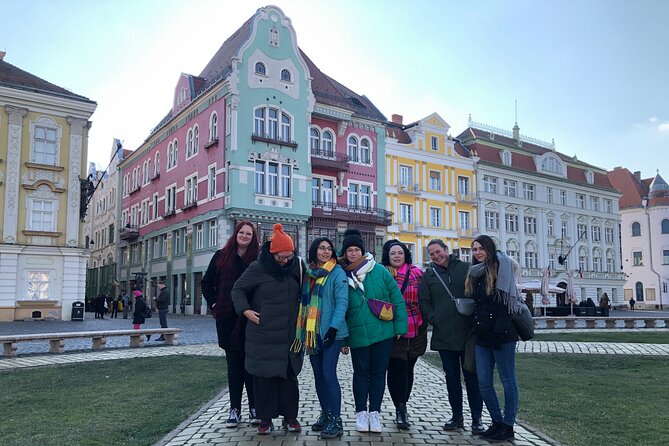
- The tour covers Timisoara’s main historic core: You visit Piata Victoriei, Unirii Square, Libertatii Square, Maria Theresia Bastion, Bruck House, and St. George’s Cathedral.
- The best value is the local context: Your guide explains why the city changed after its fortifications were removed and how that helped create its early 1900s building boom.
- It is a compact first-day tour: Two hours is enough to get your bearings without taking up a full morning or afternoon.
- Coffee and beer are optional extras: Traditional coffee and beer may be sampled, but you pay for your own food and drinks.
- The group can reach 20 people: That keeps the price reasonable, though a larger group may feel less personal than a private walk.
- Weather matters: This is an outdoor activity, and poor weather can lead to a new date or a full refund.
Why this is a smart first look at Timisoara
Timisoara can initially feel like a collection of handsome squares and ornate buildings. The tour supplies the missing links. You learn how the city’s military past affected its streets, why certain buildings appeared when they did, and how the old administrative center fits into the larger story.
That context is useful because the tour does not treat the city center as a string of unrelated photo stops. At Piata Victoriei, for example, you discuss the removal of the city’s defenses and the property boom that followed in the early 1900s. Suddenly, the Art Nouveau palaces and imposing public buildings are not just pretty facades. They become evidence of a period of change.
The walk also keeps moving. Most stops require no admission ticket, and the emphasis is on seeing the exterior architecture while your guide explains what you are looking at. You will not spend your two hours waiting in museum lines or sitting through a long lecture.
A few more Timisoara day trips to weigh up
- Weekly Guided Tour in English – Tuesday, Thursday, Saturday
★ 5.0 · 84 reviews - Timisoara All in One – Walking and Tram Tour
★ 5.0 · 72 reviews - Timisoara: Guided Walking Tour
★ 4.9 · 38 reviews
Piata Victoriei: Timisoara’s grand opening scene
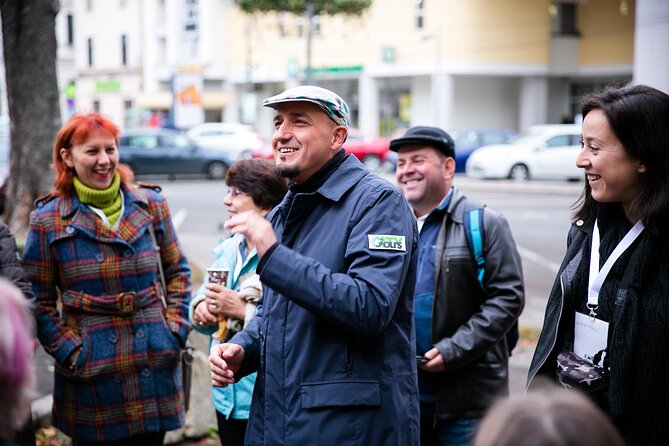
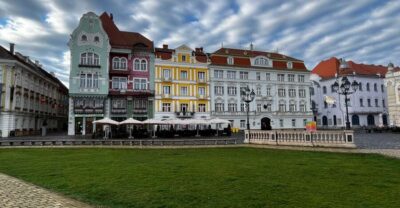
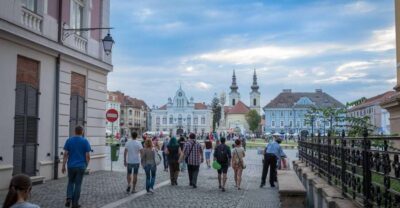
The tour begins at Piata Victoriei, one of the best places to start understanding central Timisoara. The guide discusses the city’s defortification and the real-estate growth of the early 1900s, giving you a useful explanation for the large-scale architecture around the square.
You see the Opera House, the Metropolitan Cathedral, and Art Nouveau palaces here. The stop lasts about 30 minutes, which gives your guide time to connect the buildings with the city’s development rather than simply name them.
The Opera House is especially useful as a reference point because the route returns to it later for a closer look at its history. The Metropolitan Cathedral adds a different architectural note, and the surrounding palaces show how ambitious the city became once it was no longer confined by its old defenses.
This is also where you should pay attention to street orientation. The tour begins at Timisoara City Tours on Strada Alba Iulia number 7, and the walk later returns to the starting point. Piata Victoriei helps you place the rest of the center in relation to that meeting area.
Unirii Square: the old downtown
Unirii Square is described as Timisoara’s old downtown, and the half-hour stop gives it proper attention. This is not a quick pass-through. You have time to look at the square as a complete historic setting and hear how it fits into the city’s past.
For you, the value is less about checking off one famous plaza and more about learning how the old center worked as an urban space. The guide can point out details that are easy to miss when you walk alone, including the relationship between the buildings, the square, and the former civic life of the city.
The supplied route also refers to one of Timisoara’s symbols, although it does not identify that stop separately. That means you should expect the guide to highlight an important city emblem along the walk, but you should not book this tour expecting a long standalone visit to a particular monument that is not clearly named.
The Opera Romana House and its 1875 story
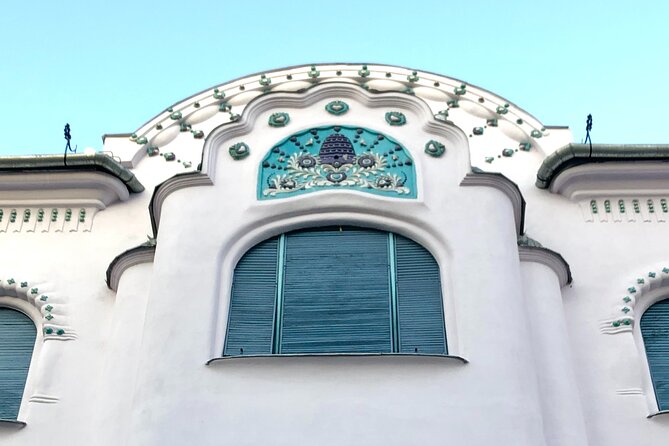
The Opera Romana House receives a short five-minute stop. It was built in 1875 and has an interesting history, according to the tour description.
Five minutes is enough for an exterior explanation and a few photographs, but not for a full architectural study. That is worth keeping in mind. The building works best as part of the wider city story, especially after you have already heard about the growth of Timisoara and seen the architectural ambition of Piata Victoriei.
If you want long interior visits, this is not that kind of experience. The strength here is the guide’s ability to add meaning to a short stop, then keep you moving through the old center.
Same corner of the country, a completely different day out:
- Day trip to Corvin Castle and Sibiu (and back) from Timisoara
★ 5.0 · 30 reviews - Timișoara Highlights – Walking Tour
★ 5.0 · 28 reviews - Danube Gorge & Banat Waterfalls
★ 5.0 · 27 reviews - Timisoara: Classic Walking Tour
★ 5.0 · 26 reviews
Libertatii Square and the 1700s administrative quarter
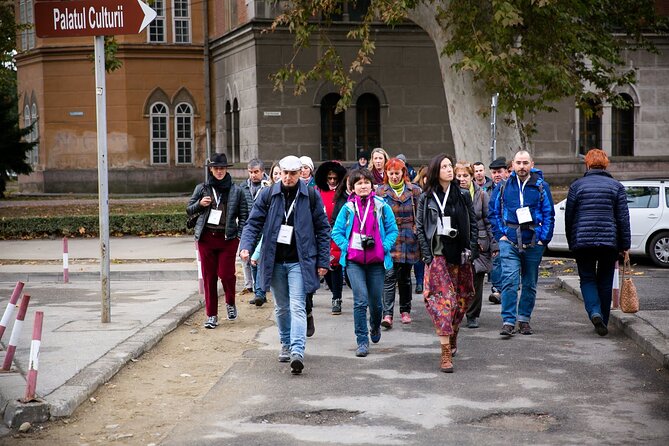
Libertatii Square takes about 20 minutes and represents the old administrative center of Timisoara. Much of this area was built in the 1700s, giving the tour a chance to shift from the later Art Nouveau period to an earlier phase of the city’s development.
I like this contrast. Instead of seeing only one architectural era, you move between different periods and get a clearer sense of how Timisoara changed over time. The square also helps explain why the center feels layered, with military, administrative, religious, and commercial influences close together.
Your guide’s storytelling matters most here. A bare list of dates would make a 20-minute stop drag. Guides such as Dan and Sergiu have been praised for explaining history clearly without becoming dull, while Ludovic has been noted for adding humor and observations about individual streets and buildings.
Maria Theresia Bastion: the military past made visible
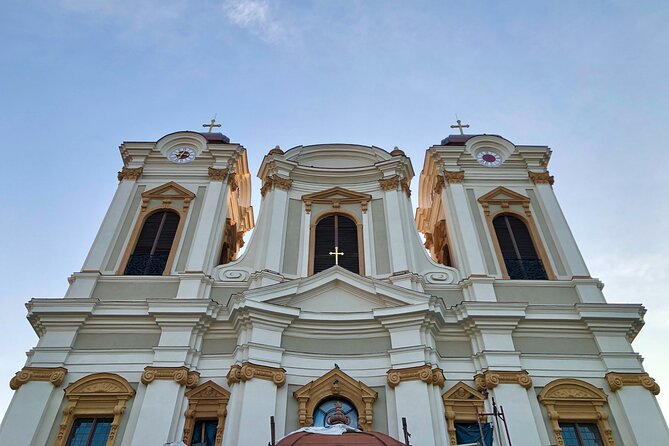
The Maria Theresia Bastion is one of the most useful stops on the route. It was once the largest of Timisoara’s nine bastions, and the guide explains how this kind of fortification worked.
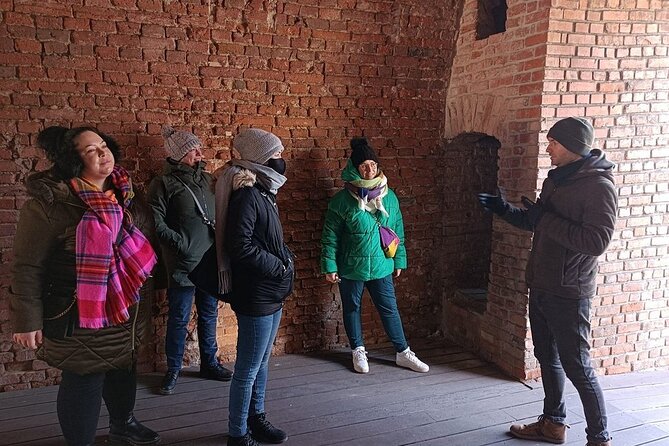
This is where the opening discussion about defortification becomes easier to picture. You are no longer hearing only about vanished walls and changing property lines. The bastion gives you a physical example of the defensive system that once shaped the city.
The stop lasts about 15 minutes. That is long enough to understand the basic purpose of the structure, but you should expect an overview rather than a specialist military-history lesson. The tour is designed to give you a working knowledge of the center, not to explore every technical detail of fortress construction.
For many visitors, this is the point where Timisoara’s past becomes most concrete. You can connect the old defenses with the later expansion of the city and the grand buildings seen earlier.
Bruck House: a quick architectural pause
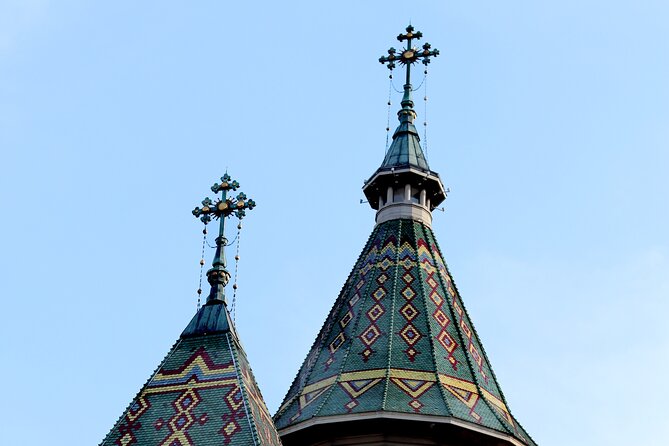
Bruck House gets about five minutes. It is presented as one of Timisoara’s most beautiful buildings, so this is a good place to keep your eyes up and take in the facade.
The short timing tells you what kind of stop this is. Your guide will explain why the building matters, then the group moves on. You will have time for photographs, but not a long discussion of every design feature.
That brevity is not necessarily a weakness. On a two-hour city walk, several short stops keep the route lively. The tradeoff is that anyone with a special interest in architecture may want to return later and look at Bruck House at a slower pace.
St. George’s Cathedral and the Central European baroque style
The final listed stop is St. George’s Cathedral, a typical baroque cathedral for Central Europe. The visit lasts about five minutes.
Again, this is primarily an exterior orientation and explanation. The cathedral adds a religious and architectural layer to the route, complementing the civic buildings, defensive works, and urban squares you have already seen.
The tour’s broad range is one of its strengths. In a short time, you cover a fortress bastion, administrative buildings, grand public architecture, Art Nouveau palaces, and a baroque cathedral. You do not study any one site at museum length, but you leave with a useful map of the city’s central character.
The guides make the short format work
The guide assigned to your tour may be Teo, Dan, Sergiu, Marius, Ludovic, Alex, Armand, or another member of the Timisoara City Tours team. The experience can therefore vary somewhat in tone, but the strongest pattern is clear: guides explain the city in a personal, conversational way rather than reciting a fixed list of facts.
Teo has been praised for answering questions and making the information feel personal. Dan is described as friendly and well prepared, with a talent for explaining details you might miss while walking alone. Sergiu has been noted for accurate historical explanations, strong English, and the ability to keep attention high.
Marius adds local information about culture, people, food, and history. Ludovic has been praised for combining historical explanation with humor and for offering ideas for further exploring after the walk. Reviews also describe guides who could communicate in French or German, but English is the stated tour language, so do not assume another language is guaranteed.
The tour’s 20-person maximum is practical. A group of that size can keep the cost below a private-tour price, but it may not offer the same easy question-and-answer flow as a tiny group. If you have a specific interest, ask your guide early and take advantage of pauses at the squares.
What the $48.39 price gives you
At $48.39 per person, this is not the cheapest way to walk around Timisoara. The price makes more sense if you value a professional guide who can connect the sights, answer questions, and help you understand the city beyond its facades.
You are paying for about two hours of guided walking, not for admissions, meals, transport, or a private experience. All listed attractions have free admission for the tour, and food and drinks are extra. Traditional coffee and beer may be part of the experience, but you should carry money for your own purchase.
The value is strongest on a first visit. A self-guided walk can show you the same squares, but it may not explain why the city expanded after its defenses were removed, how the bastions functioned, or why different architectural periods sit together in the center.
Group discounts may improve the price for larger bookings. A minimum of two people is required, and the maximum group size is 20.
Timing, walking conditions, and practical details
The tour lasts approximately two hours and starts and ends at Timisoara City Tours, Strada Alba Iulia number 7, Timisoara 300077. It is near public transportation, but the walking route itself is the central feature, so wear shoes you can use comfortably on city streets.
Children must be accompanied by an adult. Most people can participate, and service animals are allowed. Because the activity takes place outdoors, check the forecast before setting out, especially in summer. One guest completed the walk in 40 C heat, but that is a warning as much as an endorsement. Bring water and consider choosing a cooler time of day if your schedule allows.
Confirmation is sent within 48 hours of booking, subject to availability. You can cancel for a full refund up to 24 hours before the start time. Changes or cancellations made inside that window are not accepted for a refund. If poor weather forces cancellation, you are offered another date or a full refund.
Who should book this Timisoara walk?
I would choose this tour for a first visit, especially if you want a clear introduction before exploring the center on your own. It suits people who enjoy architecture, city stories, and historical context but do not want an all-day program.
It also works well for visitors with limited time. In two hours, you see the city’s major central areas and can then decide which buildings or squares deserve a return visit. The guide’s local recommendations at the end can help you use the rest of your stay better.
Families can join, provided children are accompanied by an adult, though the value depends on whether younger children enjoy a walking tour built around history and buildings. People seeking private attention, long interior visits, or extensive specialist detail may prefer a smaller or more focused experience.
Should you book the Classic Tour of Timisoara?
Book it if you want to understand the center rather than simply photograph it. The route is compact, the sights are varied, and the guide adds the historical links that are easy to miss on your own.
Skip it if you strongly prefer independent wandering or if a group of up to 20 feels too large for your style. Also remember that drinks cost extra and hot or wet weather can affect the experience.
For most first-time visitors, the tour is a sound opening move. It gives you the city’s main squares, its fortress story, its changing architecture, and a human guide to help tie it all together.
FAQ
How long does the Classic Tour of Timisoara last?
The tour lasts approximately two hours.
What language is the tour offered in?
The stated tour language is English.
Where does the tour begin?
It begins at Timisoara City Tours, Strada Alba Iulia number 7, Timisoara 300077, Romania.
Where does the tour end?
The activity ends back at the meeting point.
What sights are included?
The route includes Piata Victoriei, Unirii Square, the Opera Romana House, Libertatii Square, Maria Theresia Bastion, Bruck House, and St. George’s Cathedral.
Are admission tickets included?
The listed stops have no admission ticket cost for this tour. The experience includes a professional guide, not paid entry to attractions.
Are food and drinks included?
No. Food and drinks are not included. Traditional coffee and beer may be sampled at your own expense.
How many people can join the tour?
The maximum group size is 20 people. A minimum of two people is required per booking.
Can children participate?
Yes, but children must be accompanied by an adult.
What happens if the weather is poor?
The experience requires good weather. If it is canceled because of poor weather, you can choose a different date or receive a full refund.
Just added around Timisoara
- Timisoara Dream Tour in Elisabetin Neighborhood★ 5.0 · 3 reviews
- Timisoara: Jewish Heritage Walking Tour★ 5.0 · 4 reviews
- Nera Gorge National Park – Private Day Tour from Timisoara★ 4.5 · 4 reviews
- Timisoara: Private Walking Tour with a Local Guide★ 4.5 · 5 reviews
- Timisoara Downtown Dream Tour★ 5.0 · 5 reviews
- The Jewish Heritage Tour of Timisoara★ 5.0 · 9 reviews
- Day Trip to Turda Salt Mine and Corvin Castle from Timisoara★ 5.0 · 10 reviews
- Timisoara Downtown Dream Tour★ 4.9 · 12 reviews
Timișoara Tours, compared.
Weekly Guided Tour in English – Tuesday, Thursday, Saturday
Read our review →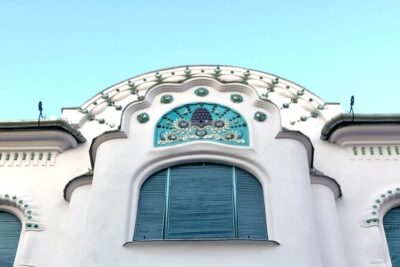
Day trip to Corvin Castle and Sibiu (and back) from Timisoara
Read our review →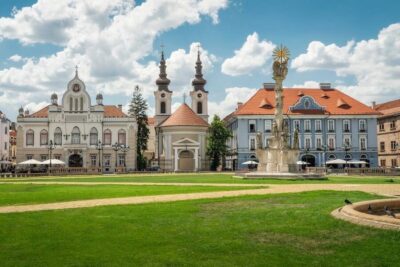
Browse the lists this tour appears in