
Reviewed · TIMIȘOARA TOURS
Timisoara: Classic Walking Tour
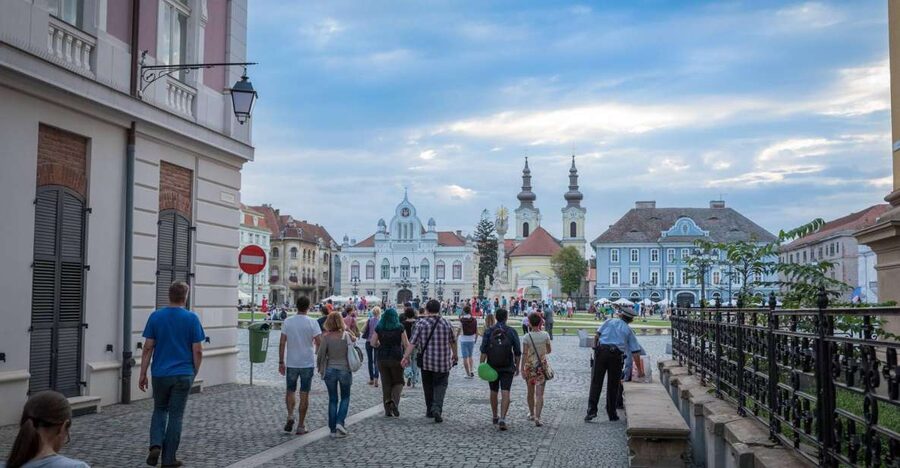
Timișoara’s story turns on sharp changes: Ottoman rule gave way to Austrian rebuilding, medieval wood gave way to planned streets, and a city known for early electric lighting later helped spark Romania’s 1989 revolution. This private two-hour walk gives you that big picture while you explore the center on foot.
I like the tour’s personal scale and its focus on everyday life, not just dates and grand buildings. I also like the odd, memorable facts, such as Timișoara’s early tram connection and its place among the first cities in continental Europe with electric street lighting. The main drawback is time: two hours can introduce the city well, but it cannot cover every important church or museum in detail.
I also value the human side of the guiding. Guides including Armand and Alex Muntean have been praised for stories, personal anecdotes, and the ability to explain the city to children. If seeing the Three Hierarchs Cathedral is a priority, ask about it early, since it is not listed as a set part of the walk.
Key points at a glance
- A compact history of Timișoara: Move from the Mongol invasion and Ottoman occupation to Austrian rule and the modern anti-communist revolution.
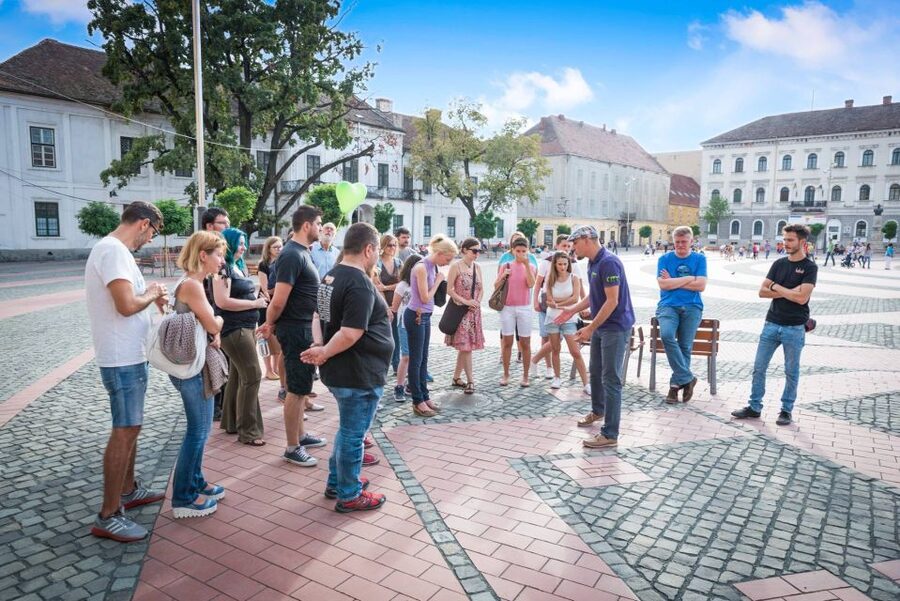
- A genuinely private outing: The private-group format lets you ask questions and adjust the conversation to your interests.
- Ottoman traces beneath the modern city: Learn where the Turkish bath, bazaar, and Central Mosque once stood.
- Early urban technology: Hear how trams linked the suburbs to the center and why Timișoara is associated with early electric street lighting.
- Guides with a personal touch: Armand and Alex Muntean are named in especially warm feedback for storytelling and family-friendly explanations.
- A useful first look: The two-hour length works well near the start of a Timișoara visit, when you want context before exploring alone.
A city shaped by repeated reinvention
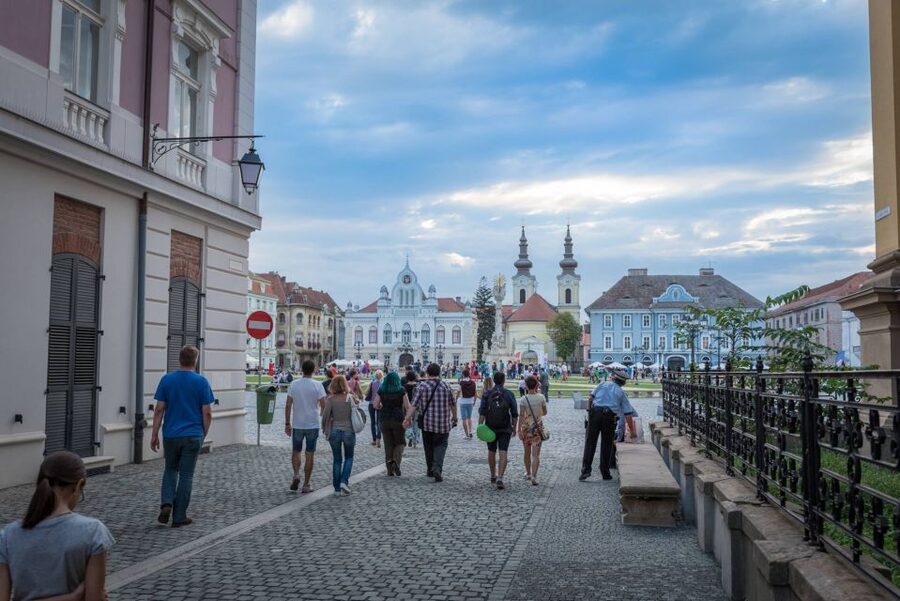
Timișoara is not a city whose story follows one neat line. It has been attacked, occupied, rebuilt, modernized, and politically transformed. This walking tour makes those changes the main subject, which is a smart choice because the city’s character makes more sense once you know why its streets and buildings changed so often.
The opening gives you a short explanation of Romania today before turning to the city’s past. I like that approach. You are not expected to arrive with a working knowledge of Romanian politics or regional history, and the guide can set the city within the country’s wider story before getting into local details.
The tour then reaches back to the Mongol invasion and the earlier history of the settlement. You will not get a full academic study in two hours, but you should come away with a timeline that helps you understand the forces that shaped Timișoara.
That timeline matters. The city’s Ottoman period, Austrian transformation, technical advances, and role in the 1989 revolution are not separate trivia items. They explain why Timișoara feels like a meeting point of Central European, Balkan, Ottoman, and Romanian influences.
More walking tours in Timisoara:
- Timisoara All in One – Walking and Tram Tour
★ 5.0 · 72 reviews - Timisoara: Guided Walking Tour
★ 4.9 · 38 reviews - Timișoara Highlights – Walking Tour
★ 5.0 · 28 reviews
Ottoman Timișoara, found through vanished landmarks
One of the more appealing parts of the walk is the look at the Turkish occupation. The guide points out where the Turkish public bath, bazaar, and Central Mosque once stood. These are not simply surviving monuments you can enter. Their value comes from learning how to read the absent city beneath the present one.
That kind of explanation can change the way you walk through a place. A modern street may look ordinary until you learn that it once formed part of an Ottoman commercial or religious setting. You begin to picture how people traded, bathed, prayed, and moved around the city centuries ago.
I would especially value this section if you enjoy urban history but do not want a lecture in a classroom. The guide connects old functions to visible locations, giving you a practical sense of how Timișoara worked during Ottoman rule.
The limitation is that the Ottoman remains described here are largely historical locations rather than a complete set of standing buildings. If you want grand Ottoman architecture at every stop, this will not be that kind of tour. Its strength is reconstruction through stories and place names.
The Austrian rebuild and a new city plan
The biggest break in the story comes when Austrian imperial troops conquered Timișoara at the start of the 18th century. The city was rebuilt on a large scale. Wooden medieval buildings disappeared, new streets and houses were laid out, and a fortification system was created.
This is the point where the guide’s storytelling can help you see the city as a planned project rather than a random collection of old structures. Political control brought physical change. The Austrian period did not just add another chapter to Timișoara’s history. It changed the shape of the city itself.
As you walk, listen for the connection between military needs, street planning, and housing. Even without detailed architectural analysis at every doorway, the basic story gives you a better eye for the built environment.
I like this part because it explains why Timișoara can feel different from a medieval Romanian town. Much of what you see reflects the rebuilding that followed Austrian conquest, not a simple survival of the Middle Ages.
The tour’s format also helps here. A guide can point from one street or building to the next and explain the changes in sequence. A written guidebook may give you the same facts, but it is harder to understand the scale of a rebuild when you are not shown how the pieces fit together.
Trams, streetlights, and the making of modern Timișoara
The walk is not limited to war and occupation. It also covers the city’s early public technology. Timișoara built one of the first trams in the world to connect suburban residents with the city center. It was also the first place in continental Europe to use electric streetlights.
These details are useful because they add a modern layer to the usual old-city story. Timișoara was not only shaped by empires and military walls. It was also a place where practical systems changed daily life.
A tram is more than a piece of transport history. It shows how the city was growing and how people outside the center were connected to work, trade, and civic life. Electric streetlights tell a similar story. They changed how public streets were used after dark and signaled a city willing to adopt new technology.
I would not book this tour solely for transport facts, but these are the kinds of details that make a walking tour stick in your memory. They are easy to repeat later and help you explain Timișoara to someone who has never visited.
The guide also adds anecdotes and entertaining facts, so the technical material should not feel like a list of dates. That balance is important. A two-hour tour needs variety, and these stories give the middle portion a welcome change of pace.
A few more Timisoara day trips to weigh up
- The Classic Tour of Timisoara
★ 5.0 · 154 reviews - Weekly Guided Tour in English – Tuesday, Thursday, Saturday
★ 5.0 · 84 reviews - Day trip to Corvin Castle and Sibiu (and back) from Timisoara
★ 5.0 · 30 reviews - Danube Gorge & Banat Waterfalls
★ 5.0 · 27 reviews
The revolution and Romania’s recent past
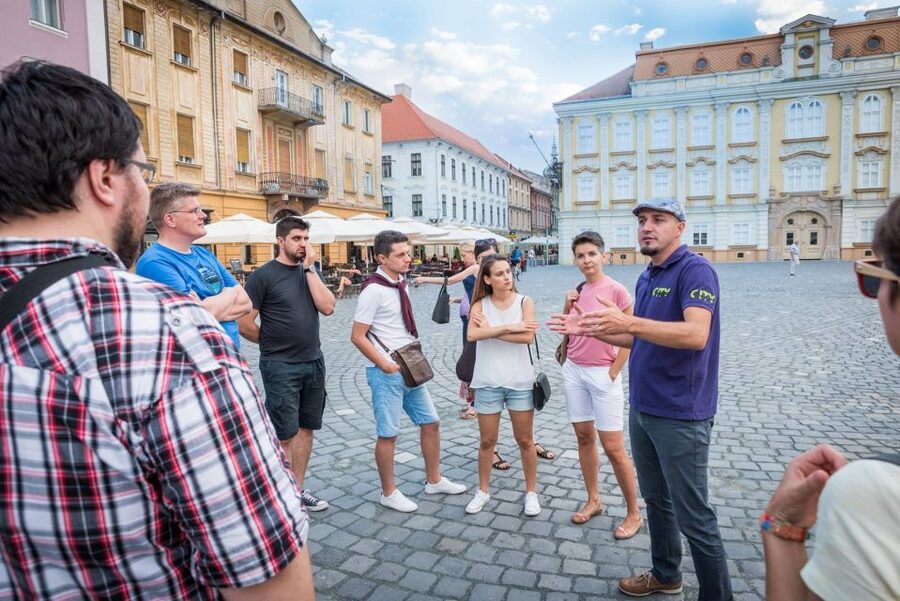
The final major part of the historical arc reaches the contemporary revolution against Romania’s communist regime. Timișoara’s modern identity is closely tied to that turning point, and the tour uses it to connect the city’s past with life in Romania today.
This is one reason I would take the walk early in a visit. You get more than a sequence of old occupations. You hear how society changed over recent decades and what it can feel like to live in Romania now. That present-day context can be hard to find in a standard sightseeing route, especially if you are exploring only churches and facades.
The guide’s personal perspective matters most here. Historical events from the 18th century can be explained from books, but recent social change benefits from a guide who can discuss how the country and city have developed. The activity specifically makes room for questions about Romanian life and changing society.
You should still keep expectations realistic. The tour introduces the revolution and modern change; it is not advertised as a dedicated communist-history or revolution tour. If that is your central interest, use this walk to orient yourself, then seek out more detailed local information afterward.
What the private format changes
At $42 per person, the price is easier to justify if you value conversation and flexibility. This is a private group, not a large public walk, so you are paying for a more focused experience rather than simply buying a route through the center.
That distinction matters most for couples, families, or small groups with different levels of interest. You can ask about Ottoman traces, trams, the revolution, or daily life without worrying that a large group is waiting. The guide can also spend more time on the subjects that catch your attention.
The available language options are English and Romanian. If you are comfortable in either language, you have a useful choice. English makes the tour practical for international visitors, while Romanian may suit locals or visitors who want to hear the story in the country’s own language.
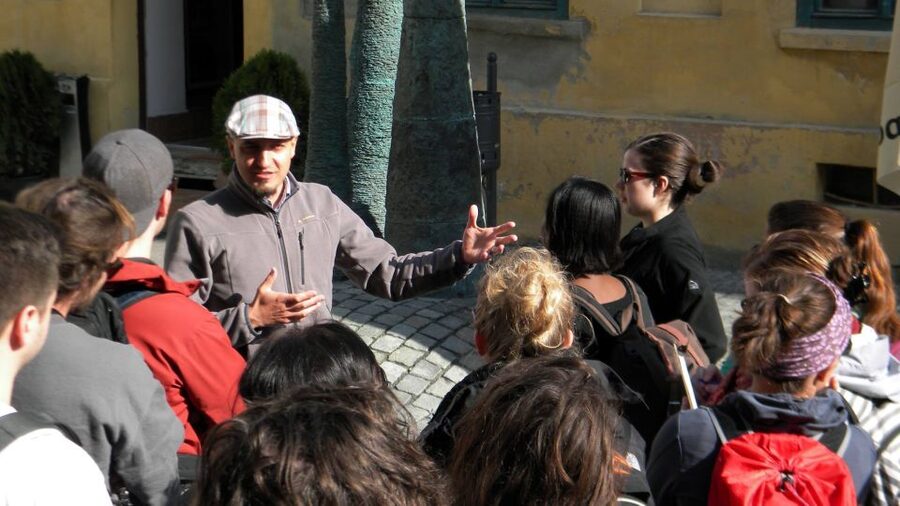
The strongest personal feedback centers on the guides. Armand was praised for combining city stories with personal anecdotes, while Alex Muntean was described as able to explain the Banat region clearly and engage children. Those comments suggest that the experience can depend heavily on who leads your walk, as is normal with a private tour.
I would ask at booking, or at the meeting point, who your guide will be and whether a specific interest can be included. Do not assume that Armand or Alex will lead every departure, but their names give you a useful idea of the standard this experience aims for.
Two hours on foot, with a clear meeting point
The tour meets in front of the tourist information center. That is a practical starting point because it gives you an obvious landmark and avoids the confusion of searching for a small business office or private address.
The duration is two hours. I see that as a good first orientation, especially if you have just arrived and want to understand the city before setting off on your own. It is long enough for a connected historical story without taking up half a day.
You should wear comfortable shoes and be ready to walk for the full period. The activity is described as a walking tour, and no transport is included. The route is therefore best treated as an introduction to the central city rather than a way to reach distant parts of Timiș County.
The short length is also the main tradeoff. You will hear a lot, but the guide cannot stop for extended visits inside every landmark. The tour is strongest for outside orientation, historical explanation, and questions. Plan separate time for places you want to enter or study closely.
Free cancellation up to 24 hours before the start and the option to reserve now and pay later make the $42 commitment less risky. Those terms are useful if your Romanian itinerary is still shifting, though you should check available start times before booking.
What the reviews tell me about the guiding
The rating is 5 out of 5 from 26 reviews, and the praise is remarkably consistent. The repeated strengths are friendly guides, informative explanations, and an enjoyable pace. One small-group experience included only four people, which shows how personal the private format can feel.
Several comments point to storytelling rather than dry instruction. That is important in Timișoara, where the best parts of the history involve changes over time and places that no longer exist. A guide who can connect facts with anecdotes will make the Ottoman and Austrian sections easier to remember.
The feedback also gives families a reason to consider the tour. Alex Muntean was specifically praised for responding well to children. That does not guarantee the same guide or a custom children’s program, but it suggests the tour can work for mixed-age groups when the guide adjusts the explanation.
One useful caution comes from a suggestion to include the Three Hierarchs Cathedral. The cathedral is not listed among the fixed highlights, so do not assume you will spend time there. If you want it included, raise the request before the walk begins and understand that adding one stop may reduce time elsewhere.
Who will get the most from this walk
I would choose this experience if you want a first look at Timișoara with context. It is especially suitable for people who enjoy history but prefer stories tied to real streets and locations.
It also suits visitors who want to ask questions about Romania today. The walk does not treat the city as a museum piece. It links older occupations and rebuilding with modern technology, communism, revolution, and social change.
Families may find the private format helpful because the guide can respond to children rather than delivering one fixed speech. Small groups and couples also gain from the chance to shape the conversation.
I would hesitate if you want a long architectural tour, extensive interior visits, or a specialist study of the 1989 revolution. The two-hour format gives breadth, not exhaustive detail. It is a strong foundation, not a complete Timișoara program.
Should you book Timișoara Classic Walking Tour?
I would book it for the beginning of a Timișoara stay, particularly if you are visiting for the first time. The combination of Ottoman locations, Austrian rebuilding, early electric lighting, trams, and the communist-era revolution gives you a useful mental map of the city.
At $42 per person, it offers fair value for a private two-hour tour when the guide is engaging and willing to adapt. The main question is not the number of sights, but how much you value a personal explanation of what you are seeing.
Book it if you want a friendly guide, a clear historical framework, and room to ask about Romanian life today. Skip it only if you prefer to explore silently at your own pace or need a detailed tour of specific interiors. If the Three Hierarchs Cathedral matters to you, ask about it before the walk starts.
FAQ
Where does the Timișoara Classic Walking Tour meet?
The meeting point is in front of the tourist information center.
How long does the tour last?
The walking tour lasts two hours.
What is the price?
The listed price is $42 per person.
Is this a private tour?
Yes. The activity is organized for a private group.
Which languages are available?
The live guide speaks English or Romanian.
What historical periods does the tour cover?
The tour begins with the city’s earlier history, including the Mongol invasion, then covers the Ottoman occupation, Austrian conquest and rebuilding, technical modernization, and the contemporary revolution against Romania’s communist regime.
Will I learn about Ottoman buildings?
You will hear where the Turkish public bath, bazaar, and Central Mosque were located in the past.
Does the tour explain Timișoara’s early technology?
Yes. The guide discusses the tram that connected suburban areas with the city center and the city’s early use of electric street lighting.
Is the Three Hierarchs Cathedral included?
It is not listed as a set highlight of the tour. You can ask whether it can be included, but the activity details do not guarantee a cathedral stop.
Can I cancel for a full refund?
You can cancel up to 24 hours in advance for a full refund. The activity also offers reserve now and pay later booking.
Just added around Timisoara
- Timisoara Dream Tour in Elisabetin Neighborhood★ 5.0 · 3 reviews
- Timisoara: Jewish Heritage Walking Tour★ 5.0 · 4 reviews
- Nera Gorge National Park – Private Day Tour from Timisoara★ 4.5 · 4 reviews
- Timisoara: Private Walking Tour with a Local Guide★ 4.5 · 5 reviews
- Timisoara Downtown Dream Tour★ 5.0 · 5 reviews
- The Jewish Heritage Tour of Timisoara★ 5.0 · 9 reviews
- Day Trip to Turda Salt Mine and Corvin Castle from Timisoara★ 5.0 · 10 reviews
- Timisoara Downtown Dream Tour★ 4.9 · 12 reviews
Timișoara Tours, compared.
Weekly Guided Tour in English – Tuesday, Thursday, Saturday
Read our review →
Day trip to Corvin Castle and Sibiu (and back) from Timisoara
Read our review →
Browse the lists this tour appears in