
Reviewed · CLUJ-NAPOCA TOURS
Cluj-Napoca Walking City Tour
Cluj-Napoca reveals its character one street at a time, and this two-hour walking tour gives you a clear route through the city’s main historic center. You’ll move from Museum Square to Union Square, read the city through Gothic and Baroque buildings, and finish at a viewpoint, possibly the Fireman Tower.
I like the small group of no more than 10 people, which should make it easier to ask questions. I also like the way the guide connects Romanian, Hungarian, and Saxon influences instead of treating Cluj as a collection of pretty facades. The main consideration is pace: two hours covers a lot, so this is an introduction rather than a full study of every site.
Key points at a glance
- Museum Square begins the story: The Franciscan Church and the Art Museum give you an immediate sense of Cluj’s cultural past.
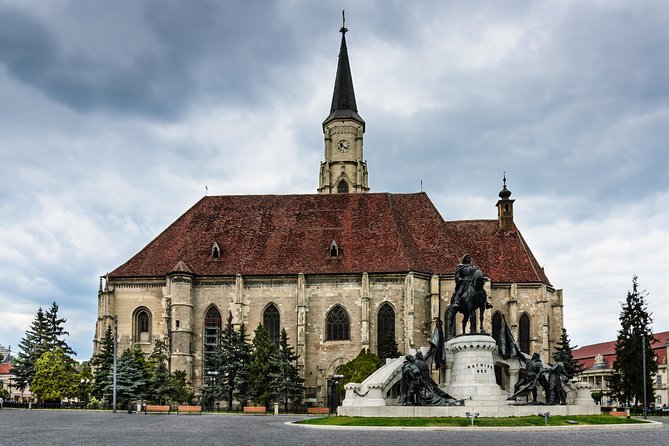
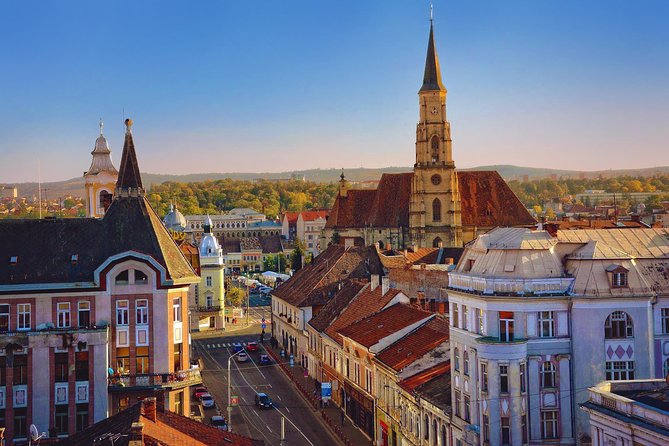
- St. Michael’s Church anchors Union Square: This Gothic landmark is one of the tour’s major visual highlights.
- Banffy Palace adds Baroque grandeur: The palace houses the National Art Museum, linking architecture with Cluj’s art scene.
- Several cultures appear in one walk: Romanian, Hungarian, and Saxon influences can be seen in buildings, streets, and local traditions.
- Guides add personal detail: Adrian and Catalin have led highly praised walks, using anecdotes, humor, and visual material.
- The finish brings a wider view: The final stop offers a city panorama, with the Fireman Tower identified in one account as a memorable viewpoint.
Starting among churches and museums in Museum Square
The meeting point is in front of the Obelisk, near Museum Square. That makes sense for a walking tour because you begin in one of Cluj-Napoca’s most useful historical spaces, rather than at a modern shopping street or a distant transport stop.
Museum Square gives you an early look at the city’s layered identity. The Franciscan Church brings a religious and architectural presence, while the Art Museum points toward Cluj’s long role as a cultural center. You are not simply ticking off two buildings. You are starting with the idea that Cluj has been shaped by different communities, political periods, and artistic tastes.
Your English-speaking guide sets the tone here. The strongest accounts of this tour describe guides who explain clearly, answer individual questions, and add amusing details rather than reciting dates. Adrian is specifically praised for giving context while also pointing out small local features. Catalin is noted for clear explanations, kindness, humor, and historical anecdotes.
The guide may use visual material during the walk. That can be useful when a building has changed over time or when the present-day street does not immediately reveal its earlier appearance. It also gives the tour a more human feel, helping you picture the people and events connected with the city.
More Walking Tours in Cluj Napoca
- Cluj-Napoca: 2.5-Hour Guided Walking Tour
★ 4.8 · 104 reviews - Cluj-Napoca: 2.5-Hour Guided Walking Tour
★ 4.5 · 29 reviews - Cluj-Napoca Walking City Tour
★ 4.5 · 16 reviews
Reading Cluj through Gothic stone at St. Michael’s Church
From Museum Square, the route continues toward Union Square and St. Michael’s Church. This is one of the clearest high points of the outing. The church’s Gothic form gives the square a strong medieval presence, and it helps you understand the older scale of Cluj before the city expanded beyond its historic core.
The value here is not just the chance to photograph a grand church. A good guide can help you notice how the building relates to the square around it, how religious structures once shaped civic life, and how later buildings were added around older foundations. The tour is designed to move chronologically, so the church becomes part of a larger story rather than an isolated stop.
You should expect the guide to explain architectural styles in plain language. That is useful if you enjoy old buildings but do not know your Gothic from your Baroque. Instead of staring at a facade and guessing, you can connect its shape and decoration with the period in which it was created.
St. Michael’s Church also gives the walk a strong sense of place. Union Square is broad and formal, while the old streets nearby are more intimate. Moving between these spaces helps you see how Cluj changes from grand civic center to close-packed historic town.
Banffy Palace and the National Art Museum
Banffy Palace brings a different mood. Its Baroque style is more decorative and theatrical than the Gothic church, and the contrast is exactly what makes the route work. In a short distance, you see how Cluj acquired new cultural layers as tastes and political circumstances changed.
The palace houses the National Art Museum, so it carries two roles. From outside, it is one of the city’s most important historic buildings. From inside, it represents Cluj’s art life. The walking tour focuses on the city rather than a full museum visit, and the supplied details do not promise an extended interior tour or admission to the museum.
That distinction matters. If you want a close look at the museum’s collections, you should allow separate time for it and check entry arrangements independently. On this walk, Banffy Palace is best understood as part of Cluj’s architectural and cultural setting.
I like this stop because it helps you compare styles without needing a lecture. Gothic St. Michael’s Church feels vertical and medieval. Banffy Palace is more formal and ornamental. The guide’s job is to make that contrast meaningful, then connect it to the city’s changing story.
Photography fees are not included, and meals are not included either. The tour itself is built around walking, explanation, and views, not food stops or paid attractions.
From old lanes to the Baroque National Theatre
The route continues through the historic part of town, where narrow streets and varied facades show how Cluj developed over time. This is where the tour’s promise of small local details becomes important. A guide can point out features you might pass without a second look, then explain why they matter.
The old center reflects Romanian, Hungarian, and Saxon influences. That does not mean every building can be assigned neatly to one group, but the mixture is visible in the city’s architecture and culture. Cluj’s past has been politically unsettled, and one account of the tour specifically highlights how the guide explains the country’s difficult history while keeping the walk good-natured.
The National Theatre adds another architectural period to the route. The building is described as Baroque-style, giving you another chance to compare its design with the medieval Gothic church and the palace. It also widens the story beyond churches and aristocratic residences. The theater represents public culture, performance, and the city’s continuing cultural life.
I appreciate the chronological approach. Many city walks jump from one famous building to another, leaving you with a scrapbook of sights. Here, the order is meant to show how later periods were added to the older town. That makes the route easier to remember after you leave.
The tradeoff is that a chronological tour may not linger long at every stop. If you want interior visits, extensive photography time, or a detailed architectural survey, two hours will feel brief. If you want a strong first orientation, the compact format is more useful.
Same corner of the country, a completely different day out:
- Curly Tour – Day trip from Cluj 🙂
★ 5.0 · 330 reviews - Cluj: Turda Salt Mine, Corvin Castle, Alba Carolina Tour
★ 4.8 · 184 reviews - Turda salt mine 4h tour from Cluj
★ 5.0 · 73 reviews - Turda Salt Mine, Corvin Castle and Alba Fortress from Cluj
★ 5.0 · 65 reviews
A viewpoint finish and the Fireman Tower
The final part of the walk reaches a location with a notable view across Cluj-Napoca. One experience account identifies the Fireman Tower as the memorable viewpoint, where the city can be seen from above. Since the exact final location may depend on the day’s route, it is sensible to confirm the viewpoint with the guide.
Ending above the streets is a smart choice. After walking through squares, churches, palaces, and lanes, you get a chance to see how those pieces fit together. A city view helps you understand the relationship between the old center and the wider urban area.
The Fireman Tower is especially useful as a visual finish because it changes your perspective. At street level, Cluj can feel like a series of separate blocks. From above, the pattern becomes clearer. You can also use the view to decide where to return later during your stay.
The viewpoint is not just a bonus photograph. It gives the walk a proper ending and helps fix Cluj in your memory as a real city rather than a list of historic buildings.
What the guide adds to the two-hour format
The guide makes or breaks a short walking tour. Here, English is the tour language, and the group is limited to 10 people. That is a practical size: small enough for conversation, but not so small that the tour depends entirely on private guiding.
Adrian is one guide associated with especially engaging explanations. His approach combines cultural context with details that bring the streets to life. Catalin is also praised for clear storytelling, funny historical anecdotes, patience, and a willingness to respond to individual questions.
You should not assume that Adrian or Catalin will lead your specific departure. The experience includes a professional English-speaking guide, but guide assignment can vary. Still, the descriptions associated with both men suggest the style to expect: informed, friendly, attentive, and comfortable discussing the city’s complicated past.
I like that the walk appears to avoid a dry list of dates. Cluj has a history that includes Romanian, Hungarian, and Saxon influences, as well as periods of tension and change. A good explanation needs to be accurate without becoming heavy. Humor can help, especially when the city’s past is unfamiliar to you.
The use of visual material is another advantage. You might understand a street or building more easily when you can compare its current appearance with an earlier image. That is particularly helpful in a city where layers of old and new sit close together.
Is $62 fair for two hours?
At $62 per person, this is not the cheapest way to walk around Cluj-Napoca. You can see many central streets on your own for free. The price needs to earn its place through the guide’s interpretation, the small group, and the efficient route.
For a first visit, I can see the value. In two hours, you receive a structured introduction to Museum Square, St. Michael’s Church, Banffy Palace, the National Art Museum setting, the National Theatre, the old streets, and a city view. You also get historical and architectural context that would take time to assemble from guidebooks and signs.
The price is easier to justify if you want conversation and questions. A group of up to 10 is more personal than a large walk, and the guide can respond to what interests you. The tour is also useful early in a stay because it helps you identify places to revisit independently.
The value is weaker if you mainly want admission to museums or church interiors. Meals, photography fees, and other personal costs are not included. The tour is an outdoor city walk with a professional guide, not a museum package.
I would compare it with the cost of your time. If you have only one day in Cluj, a guided route can prevent aimless wandering. If you have several days and enjoy researching architecture on your own, you may prefer to explore independently and spend the $62 elsewhere.
Who will enjoy this walk most?
This tour suits first-time visitors who want an organized introduction without giving up the feel of walking through real streets. It is also a good fit if you like architecture but want a guide to explain what you are seeing in straightforward terms.
I would recommend it to you if:
- You want to understand Cluj’s Romanian, Hungarian, and Saxon connections.
- You prefer a small group to a large bus-style outing.
- You enjoy stories, anecdotes, and local details.
- You want a city overview before choosing places to revisit.
- You are comfortable walking for two hours in comfortable shoes.
- You value a viewpoint at the end of a town walk.
It may not suit you if you use a wheelchair, since the activity is not suitable for wheelchair users. Pets are not allowed. The route also requires comfortable footwear, and the two-hour schedule may feel brisk if you want long stops for photos or interior visits.
Families with older children may find the mix of churches, palaces, streets, and views more engaging than a museum-only visit, but the supplied information does not specify a minimum age or a child-focused format. If your group has mobility concerns, ask before booking.
Timing, meeting point, and practical advice
The tour lasts two hours, with starting times available according to the selected date. You meet the guide in front of the Obelisk, near Museum Square. Arrive with enough time to locate that meeting point, especially if you are unfamiliar with the center.
Wear comfortable shoes. This is obvious advice, but it matters more here than on a short photo stop. The route moves through historic streets and squares, and the experience depends on walking rather than riding between sights.
The activity is conducted in English. If you want a tour in another language, this is not the right choice based on the supplied details. The guide is live, so you can ask questions during the walk rather than relying only on recorded commentary.
You can cancel up to 24 hours in advance for a full refund. You can also reserve now and pay later, which gives you some flexibility while finalizing your plans. Those terms are useful if your schedule in Romania is still changing.
My verdict for a first look at Cluj-Napoca
I would choose this tour near the beginning of a Cluj visit, not at the very end. The route gives you a useful mental map, introduces the city’s main historic styles, and points you toward places worth a second look.
The strongest reason to book is the guide-led interpretation. St. Michael’s Church and Banffy Palace are easy to find, but understanding how Gothic, Baroque, Romanian, Hungarian, and Saxon influences meet in the same center is harder without help. The small group and final viewpoint add practical value.
The main caution is the price. At $62, you are paying for explanation and company, not entry tickets or meals. Book it if you want a focused introduction and enjoy asking questions. Skip it if you prefer free self-guided walks or need a wheelchair-accessible route.
FAQ
How long does the Cluj-Napoca Walking City Tour last?
The tour lasts two hours.
What language is the tour conducted in?
The tour is conducted in English with a live English-speaking guide.
Where is the meeting point?
Meet the guide in front of the Obelisk.
What landmarks are included?
The route includes Museum Square, the Franciscan Church, the Art Museum, St. Michael’s Church, Banffy Palace, the National Art Museum setting, the National Theatre, historic streets, and a final viewpoint.
Does the tour visit the National Art Museum?
Banffy Palace houses the National Art Museum and is included as a landmark on the route. The supplied details do not promise a separate museum admission or an extended interior visit.
Is the tour suitable for wheelchair users?
No. The activity is not suitable for wheelchair users.
Are pets allowed?
No. Pets are not allowed.
What should I bring?
Bring comfortable shoes for the two-hour walking route.
Can I cancel or pay later?
You can cancel up to 24 hours in advance for a full refund. You can also reserve now and pay later.
Just added around Cluj Napoca
- Maramures: 2 Days in Rural Romania★ 5.0 · 5 reviews
- Private tour to Turda Salt Mine, Rimetea and Alba Iulia★ 4.8 · 5 reviews
- Turda Salt Mine, Gorge & Rimetea Village (private from Cluj)★ 5.0 · 5 reviews
- Golden Circle of Transylvania★ 5.0 · 5 reviews
- CJ03 – Day trip to Maramures Mocanita Train from Cluj Napoca★ 3.6 · 5 reviews
- From Cluj: Winter Walking Trip on the Great Mountain★ 5.0 · 5 reviews
- Pub Crawl in Cluj★ 4.5 · 6 reviews
- Saxon Heritage in Transylvania: Day Trip from Cluj-Napoca★ 4.5 · 6 reviews
Cluj-Napoca Tours, compared.
Turda Salt Mine, Corvin Castle, Alba Carolina Tour
Read our review →
Turda Salt Mine, Corvin Castle and Alba Fortress from Cluj
Read our review →
Browse the lists this tour appears in