
Reviewed · CLUJ-NAPOCA TOURS
Cluj-Napoca Walking City Tour
Cluj-Napoca’s old center packs Gothic, Baroque, and medieval stories into an easy two to three hour walk. St. Michael’s Cathedral gives you the city’s grandest landmark, Banffy Palace adds noble drama and changing fortunes, and the Transylvanian History Museum fills in the longer story.
I like the small maximum of 10 people, which gives your guide room to answer questions. I also like the useful city orientation, especially if you are new to Cluj and want to understand its layout before exploring alone. The main caution is that entrance arrangements can be unclear, and the advertised stops may not match every past version of the outing.
Key points to know before you book
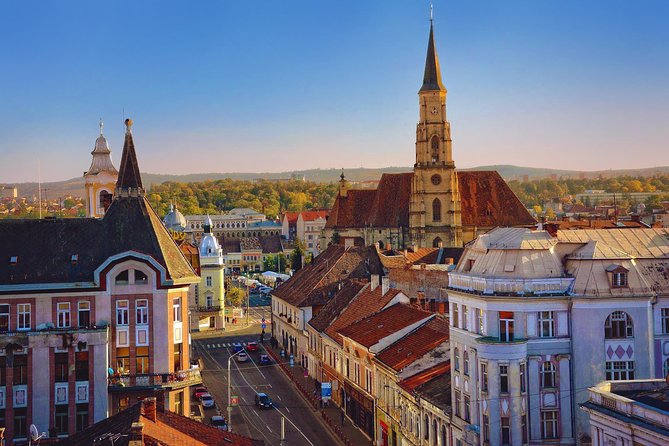
- St. Michael’s Cathedral anchors the walk: See one of Transylvania’s most important Gothic churches in the heart of the old town.
- Banffy Palace has had many lives: Its past includes a noble residence, casino, apartment building, industrial offices, and cinema.
- The group stays small: A maximum of 10 people makes it easier to hear the guide and ask questions.
- Guides shape the experience: Andrea, Roxana, Robert, and Joseph have each led highly praised tours, with special praise for clear explanations and a warm manner.
- The museum admission is included: Cathedral and Banffy Palace entry are listed as not included, so confirm what you will enter before setting out.
- The meeting point is central: Begin and finish at the Carolina Obelisk in Piața Muzeului.
What this Cluj-Napoca walking tour does best
This is an orientation walk first and a sightseeing tour second. You move through the historic center while your guide explains why Cluj-Napoca is known as a center for academic life, technology, and culture. That wider context matters because the city can feel like several places at once: medieval in one square, Baroque in the next, and modern in its public life.
The route is short enough to fit into a first day, yet long enough to give you a useful framework. I would book it near the start of a Cluj stay, not on your final morning. Once you know where the main square, museum district, and cathedral are, later wandering becomes much easier.
The small-group format is a real advantage. With no more than 10 people, you are not competing with a large crowd to hear a story or ask about a building. The guide can adjust the pace and give more attention to individual questions.
The guide is the deciding factor here. Andrea received special praise for laying out Cluj’s story from the Roman period onward, then linking that background to the streets and buildings in front of you. Roxana was praised for her careful attention and friendly style. Robert was noted for explaining history, architecture, and the way the city is arranged. Joseph was described as professional, effective, and adaptable.
Those details tell you what to expect from the best version of this experience: not simply a list of dates, but a guide who connects each stop to the city around it.
More Walking Tours in Cluj Napoca
- Cluj-Napoca: 2.5-Hour Guided Walking Tour
★ 4.8 · 104 reviews - Cluj-Napoca: 2.5-Hour Guided Walking Tour
★ 4.5 · 29 reviews - Cluj : Must-See Attractions Walking Tour
★ 4.8 · 8 reviews
Starting at the Carolina Obelisk
The tour begins at the Carolina Obelisk, at Piața Muzeului 2. This is a practical meeting place in the museum square, close to the old center and easy to use as a reference point during the rest of your stay.
Arrive with comfortable shoes and a little time to spare. The tour is on foot, and although two to three hours is not a marathon, old-center walks often include uneven paving and repeated stops. Children can participate, but they must be accompanied by an adult.
The opening explanation may be one of the most useful parts of the walk. A guide such as Andrea has used the start to explain Cluj from around 200 AD onward, giving you a base for understanding the city’s changing culture and heritage. That sort of introduction helps prevent the usual problem with historic centers, where every building looks important but you are not sure why.
The walk is offered in English, though a multilingual guide may lead it. If precise English-language guiding is important to you, confirm the arrangements when booking.
St. Michael’s Cathedral and the Gothic center
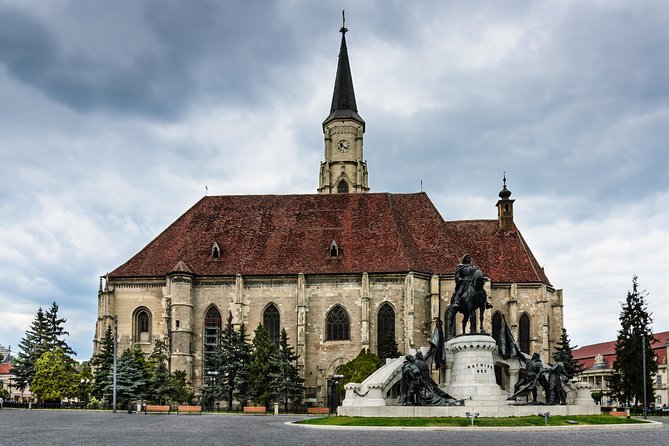
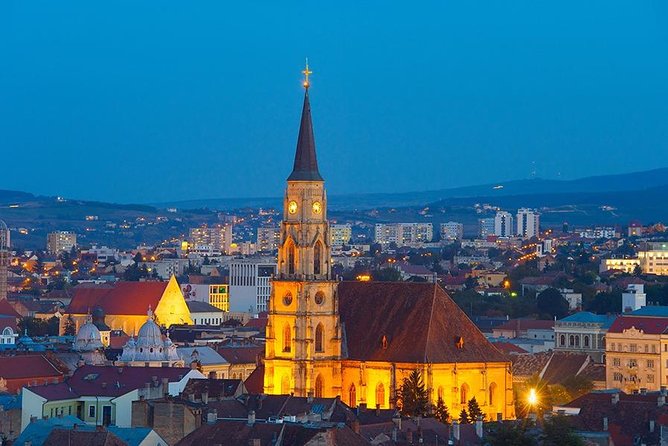
St. Michael’s Cathedral is the emotional center of the route. It is the second-largest Catholic cathedral in Transylvania and the most representative landmark in Cluj’s old town.
From the outside, its Gothic design gives the central square a strong medieval presence. Inside, the architecture carries you back toward the 14th century, with Gothic details and medieval frescoes. If the church is open, allow the guide’s explanation to do more than point out decoration. The building helps you see Cluj as a historic Transylvanian city with layers of religious, political, and artistic life.
The planned stop lasts about 30 minutes. That is enough time for a guided look without turning the walk into a specialist church tour. You should not expect a long private visit or an extended religious service experience.
There is an important practical issue here. The stop is marked as having admission not included, and the general inclusions list names only the professional English-speaking guide. A past provider response also noted that the cathedral had been closed at that time. In other words, the cathedral may be part of the route and discussion without guaranteeing interior access.
I would ask before booking whether the cathedral is expected to be open on your date and if any entrance cost applies. That small check can prevent disappointment, especially if seeing the medieval interior is your main reason for choosing this walk.
Banffy Palace and a building with many identities
Banffy Palace offers a different kind of history. The building is associated with the noble Banffy family and is described as Gothic-style, but its appeal goes beyond its first purpose.
Over time, the palace served as a protocol residence, a nationally known casino, an apartment building, offices for industrial companies, and a cinema. That list gives your guide plenty to work with. You are not just looking at an aristocratic façade. You are seeing a building reshaped by changing politics, economics, and urban life.
The palace now houses an art gallery. That makes it tempting to expect an interior visit, but admission is listed as not included. The route may focus on the exterior and the building’s story rather than a gallery tour.
The planned stop is around 30 minutes. I like that timing because Banffy Palace works best when you understand its changing role, then move on before the details become repetitive. If you want a full art-gallery visit, treat that as a separate plan and confirm opening hours and entry arrangements yourself.
This is also one of the places where the tour’s value depends on the guide. A basic walk-by would not tell you much. A good explanation of the palace’s many uses turns an impressive building into a useful lesson in how Cluj changed over time.
Same corner of the country, a completely different day out:
- Curly Tour – Day trip from Cluj 🙂
★ 5.0 · 330 reviews - Cluj: Turda Salt Mine, Corvin Castle, Alba Carolina Tour
★ 4.8 · 184 reviews - Turda salt mine 4h tour from Cluj
★ 5.0 · 73 reviews - Turda Salt Mine, Corvin Castle and Alba Fortress from Cluj
★ 5.0 · 65 reviews
The National Museum of Transylvanian History

The National Museum of Transylvanian History is the third listed stop, with about 30 minutes set aside. Admission is included, unlike the listed arrangements for the cathedral and Banffy Palace.
Thirty minutes is a compact visit. You should think of it as an introduction rather than a complete museum tour. The value is in getting a sense of the wider story of Transylvania and seeing how the museum fits into Cluj’s cultural identity.
That shorter format can work well for a first visit. You gain enough background to recognize themes and periods later, while keeping the walk moving. If museums are your main interest, you may want to return on your own for a longer visit, assuming opening hours suit your plans.
The museum also helps balance the route. The cathedral gives you religious and architectural history. Banffy Palace gives you noble and civic history. The museum broadens the picture beyond one family or one building.
Be clear about what is actually included
The tour information is strongest when it describes the guide, route, and group size. It is less precise about interior access.
The stated inclusions are:
- A professional English-speaking guide
- Admission to the National Museum of Transylvanian History
Meals, personal expenses, and all fees and taxes are not included. Cathedral and Banffy Palace admission are specifically marked as not included.
One past booking description referred to the Botanical Gardens, Banffy Palace, and the museum, while another account included a visit to the Fireman Tower. Those details do not appear in the current three-stop plan supplied here. I would not assume either attraction is part of your tour.
This matters because a city walk can change with opening days, weather, access rules, and local scheduling. One difficult experience involved a Monday booking when Banffy Palace and museums were closed, along with confusion about meeting instructions and the planned attractions. The guide was described as professional, but the guest still felt the paid experience did not match expectations.
The lesson is simple: confirm the exact route, interior access, and meeting instructions before the day. That is especially important if you are booking well ahead, since this experience is often reserved about 32 days in advance.
Is $63.68 a fair price?
At $63.68 per person, this is not the cheapest way to see Cluj’s center. The price makes sense if you value a private-feeling small group, a trained guide, and a structured explanation of the city rather than just a stroll between landmarks.
The maximum of 10 people helps support that value. You are paying for attention and interpretation, not transportation or a meal. Since the tour lasts two to three hours, the cost is easier to justify for a first-time visitor who wants to get oriented quickly.
It is less attractive if you are happy reading signs, walking independently, and visiting only the exteriors. You may also feel the price is high if the cathedral or palace cannot be entered and the museum visit remains brief.
I would compare the price with your priorities. If you want a clear introduction to Cluj and appreciate asking questions as you walk, the cost can be reasonable. If you mainly want admission to several sights, check the inclusions carefully before paying.
What the strongest guide experience looks like
The best descriptions of this tour focus on the human side. Andrea is praised for a clear opening history lesson and for leading guests through the major sites with stories and detail. Roxana is praised for warmth and attention. Robert brings together history, architecture, and the city’s spatial culture. Joseph is noted for adapting well to the group.
You should not assume a specific guide unless the operator confirms one for your date. Still, these names show the kind of guiding that makes the route work: informed, personable, and able to connect buildings to everyday city life.
A guide who simply recites dates would make the cathedral and palace feel static. A guide who explains how the city developed gives you something more useful: a way to read Cluj after the tour ends.
The tour may also be operated by a multilingual guide. That is not necessarily a problem, but English is the advertised language, so ask if you need a fully English-led experience.
Who should book this walk?
I would recommend it to first-time visitors, couples, families with an adult accompanying each child, and anyone who wants a clear introduction before exploring alone. It also suits people who enjoy architecture but want more context than a self-guided walk provides.
The route is a good match for a short Cluj stay. If you have only a day or two, the walk gives you a practical foundation and points you toward places worth revisiting.
History and architecture fans should like the range of subjects. You get Gothic church design, noble architecture, museum collections, and the broader story of Cluj as an academic and cultural center.
I would be more cautious if you need guaranteed interior entry at every stop, want a full museum visit, or expect the Fireman Tower and Botanical Gardens to be included. Those features have appeared in descriptions of past experiences, but they are not part of the current three-stop plan provided here.
Free cancellation is available if you cancel at least 24 hours before the local start time. Cancellations or changes made later are not refunded or accepted, so keep that deadline in mind.
Should you book the Cluj-Napoca Walking City Tour?
Book it if you want a small, guided introduction to the old center and care about understanding what you see. The strongest reason to choose it is the combination of a manageable route, a central meeting point, and guides who can explain Cluj’s architecture and history in a personal way.
Before paying, confirm three things: which guide will lead the walk, whether St. Michael’s Cathedral is open for interior viewing, and exactly what happens at Banffy Palace. If those details are clear, the tour offers a useful first look at Cluj for the price.
If your main goal is a list of included entrances, this may not be the right choice. The cathedral and Banffy Palace entries are not included, and the museum visit is limited to about 30 minutes. For orientation, context, and a small group, though, it is a sensible way to begin.
FAQ
Where does the Cluj-Napoca walking tour begin?
The tour begins at the Carolina Obelisk, Piața Muzeului 2, Cluj-Napoca 400394, Romania.
Where does the tour finish?
The activity ends back at the meeting point at the Carolina Obelisk.
How long does the tour last?
The walking tour lasts approximately two to three hours.
What language is the tour offered in?
The tour is offered in English, though it may be operated by a multilingual guide.
How many people can join the tour?
The group has a maximum of 10 travelers.
Is admission included at all the stops?
Admission to the National Museum of Transylvanian History is included. Admission to St. Michael’s Cathedral and Banffy Palace is listed as not included.
Can I cancel for a full refund?
Yes. You can cancel at least 24 hours before the local start time for a full refund. Cancellations or changes made less than 24 hours before the start are not accepted or refunded.
Just added around Cluj Napoca
- Two days tour to Bucovina & UNESCO Painted Monasteries★ 5.0 · 3 reviews
- CJ05 – Mysteries of Transylvania: Bran Castle & Sighisoara★ 4.8 · 3 reviews
- Transylvania’s Trail: Sibiu, Bran Castle, Brasov, Sighisoara★ 4.6 · 3 reviews
- Cluj – walking city tour★ 5.0 · 3 reviews
- Cluj: Private City Walking Tour★ 4.4 · 4 reviews
- Sighisoara & wine tasting (from Cluj)★ 5.0 · 4 reviews
- CJ01 – Explore Cluj-Napoca: A Vibrant City Tour in English★ 5.0 · 4 reviews
- Sighisoara, UNESCO & wine tasting (1 day, from Cluj)★ 5.0 · 4 reviews
Cluj-Napoca Tours, compared.
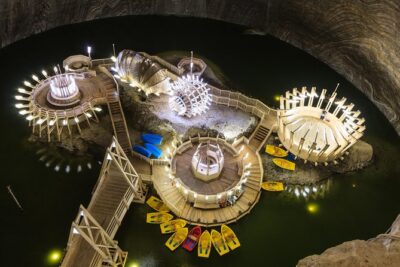
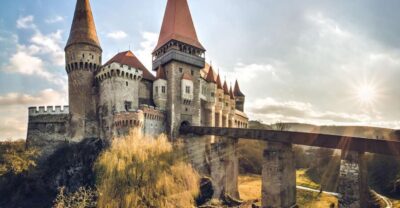
Turda Salt Mine, Corvin Castle, Alba Carolina Tour
Read our review →
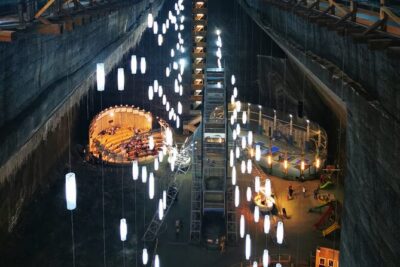
Turda Salt Mine, Corvin Castle and Alba Fortress from Cluj
Read our review →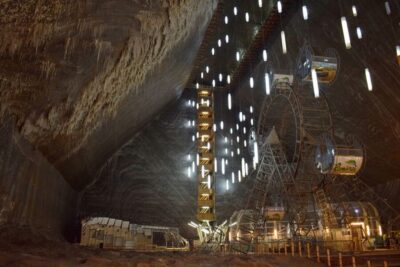

Browse the lists this tour appears in