
Reviewed · CLUJ-NAPOCA TOURS
Two days tour to Bucovina & UNESCO Painted Monasteries
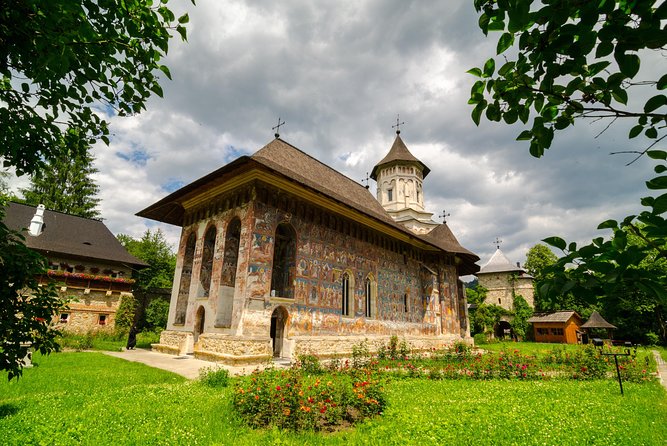
Bucovina’s painted monasteries are the reason to take this trip. Their walls carry broad scenes in blue, red, gold, and green, placed on churches that still feel tied to village life rather than sealed away in a museum. I like that Voronet Monastery is paired with Ciocanesti, where the journey includes traditional countryside instead of one church after another. I also like the private format: your guide can adjust the pace and answer questions without a large group slowing things down.
The catch is the distance. This is a packed two-day road trip from Cluj-Napoca, and long drives are part of the bargain. At $696.97 per person, it is not a cheap excursion, but transport, a professional English-speaking guide, entrance fees, lunch, dinner, and a centrally located hotel are included.
Key points to know before booking
- Voronet Monastery is the main visual prize: Expect one of Bucovina’s best-known painted churches and a major UNESCO stop.
- Ciocanesti adds village character: The route is not limited to formal sights, giving you a look at local tradition and rural life.
- The private vehicle matters: You travel only with your own party, with hotel or airport pickup in Cluj-Napoca.
- Guides Florian and Florin receive special praise: Both are associated with flexible touring and clear historical explanations.
- An egg museum may be added: The collection includes more than 10,000 painted and engraved eggs, though an extra stop is not guaranteed in the stated program.
- The price covers key trip costs: Two meals, one overnight stay, transport, admissions, and guiding are included, but personal expenses and photography fees are extra.
Why Bucovina deserves two days from Cluj-Napoca
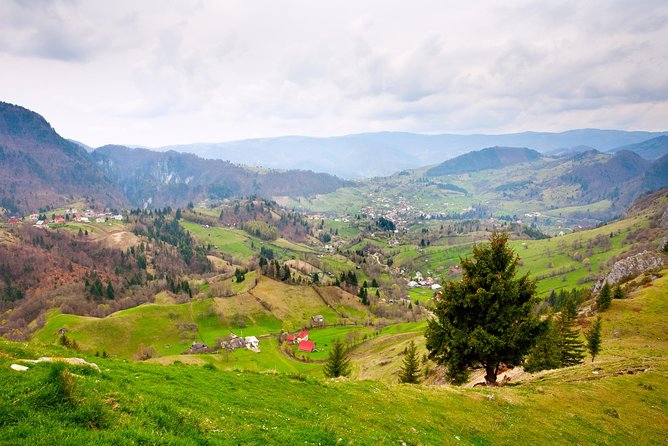
Bucovina lies in northern Romania, well beyond the easy day-trip circuit from Cluj-Napoca. You are not simply checking off a church. You are crossing from Transylvania toward a region known for painted monasteries, traditional villages, and food shaped by local custom.
That distance explains the two-day format. A shorter outing would leave too much time on the road and too little time for the places that make Bucovina special. With an overnight stay in Gura Humorului, you can break the journey and see the main sights without trying to force everything into one exhausting day.
The route begins at 9:00 am. Pickup is offered from a Cluj-Napoca hotel or airport, which makes the first morning easier than arranging a separate transfer to a bus station. You receive a private vehicle and an English-speaking guide, so the road itself becomes useful time for questions and conversation.
I would book this for someone who wants context, not just photographs. The painted monasteries are easier to appreciate when you understand why religious scenes cover the outside walls and how they fit into the region’s past. A private guide can also explain details that are easy to miss when you move through on your own.
A few more Cluj Napoca day trips to weigh up
- Two days tour to Maramures: local experiences and culture
★ 5.0 · 9 reviews - From Cluj-Napoca: Two Day Tour to Maramures
★ 5.0 · 5 reviews - Maramures: 2 Days in Rural Romania
★ 5.0 · 5 reviews
The road from Cluj-Napoca to Bistrita
Bistrita is one of the first named stops on the route. The town helps mark the change from Cluj’s urban setting toward the quieter northern part of the country. It is a useful early stop because the journey is long, and a planned visit gives the day some shape.
Do not expect a leisurely city tour of Bistrita unless your guide confirms one. The published route lists the town as part of the trip, but it does not give a detailed schedule or specific sights there. Think of it as an important point along the road rather than a fully described destination.
The long drive has a practical upside. This is when a good guide earns the cost of a private tour. Florian is praised for giving historical background and making room for individual interests. Florin is also associated with a flexible approach and patience when answering questions. Since the exact guide is not guaranteed, you should request your preferred focus when booking rather than assume a particular person will lead the trip.
The vehicle is described as modern, which matters on a route with substantial road time. You will still want comfortable shoes, water, and a light layer for stops, but you are not managing the driving, directions, or parking yourself.
Ciocanesti and the value of a real village stop
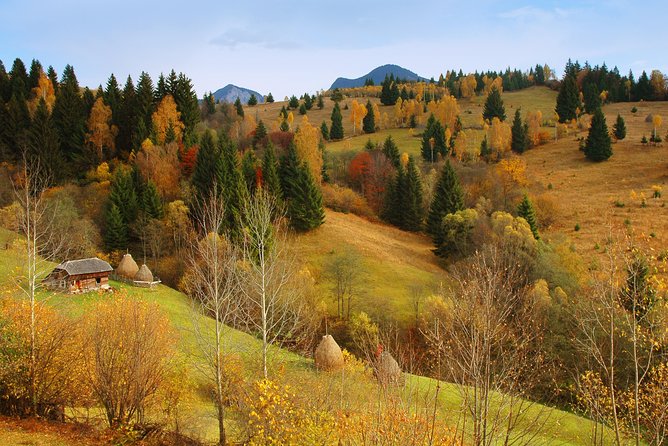
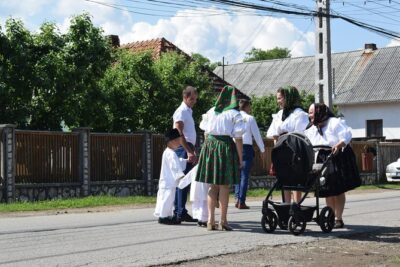
Ciocanesti brings a different kind of interest from the monasteries. The village is known for traditional character, and including it keeps the tour from becoming a simple religious-art circuit. Here, you get a sense of the built and social setting that gives Bucovina its appeal.
The information provided does not promise a particular workshop, house visit, or demonstration in Ciocanesti. That is worth noting. You should expect a village stop, not assume that a craftsman, museum, or scheduled cultural performance is part of the day.
Still, this is one of the strongest choices in the route. A painted church can be magnificent, but the surrounding villages help you understand that Bucovina is a living region. I like the contrast: formal religious art at the monastery, then ordinary roads and local homes in the countryside.
If you care about photography, this stop may be especially rewarding, but photography fees are not included. Ask your guide where photography is allowed and if a fee applies before taking pictures inside a church or collection. Personal expenses are also separate, so keep some money available for anything you choose to buy.
Voronet Monastery and Bucovina’s painted walls
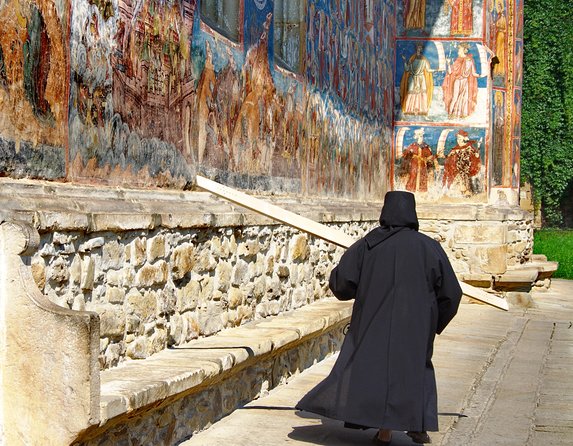
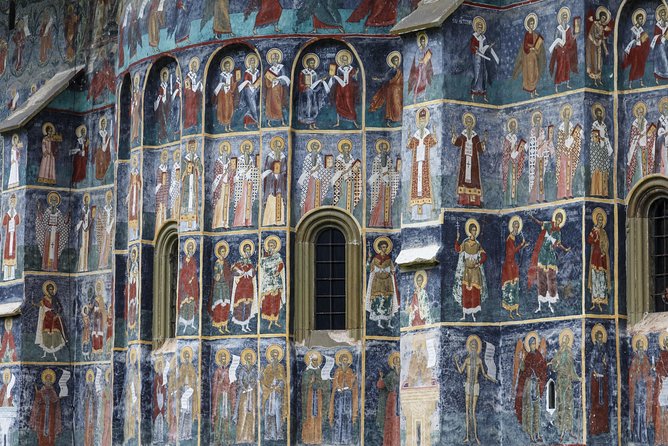
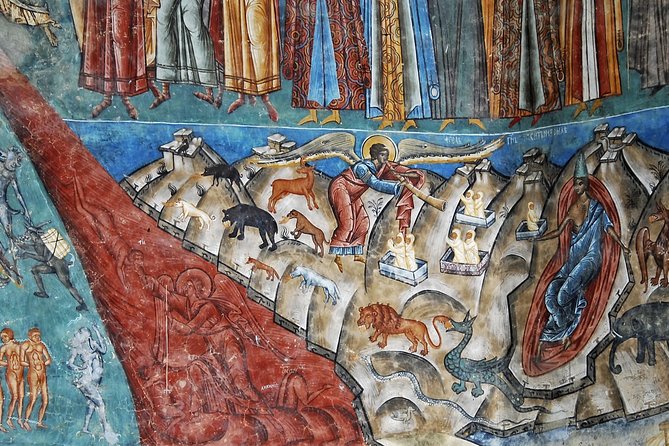
Voronet Monastery is the centerpiece of the trip. It is one of the painted monasteries connected with Bucovina’s UNESCO World Heritage Site, and its exterior decoration is the detail most likely to stay with you.
The churches are much more impressive in person than a quick photograph suggests. Images flatten the walls and miss the sense of scale, texture, and color. At Voronet, take time to look closely rather than rushing around the building for a single wide shot.
Your guide can help explain the scenes and historical setting. The value of the visit is not only visual. Without background, the paintings can seem like a dense collection of figures and symbols. With explanation, you have a better chance of understanding what you are seeing and why the church matters.
The visit also rewards patience. Weather, light, restoration, and the condition of the paintings can affect how clearly details appear. The tour includes entrance fees, so you do not need to handle that part of the visit yourself. Photography fees, however, are not covered.
Voronet is likely to be the emotional high point of the tour, but it should not be treated as the whole reason to go. The appeal of Bucovina comes from the combination of painted monasteries and the countryside around them. That is why the route through Ciocanesti and the overnight in Gura Humorului are important.
Same corner of the country, a completely different day out:
- Curly Tour – Day trip from Cluj 🙂
★ 5.0 · 330 reviews - Cluj: Turda Salt Mine, Corvin Castle, Alba Carolina Tour
★ 4.8 · 184 reviews - Cluj-Napoca: 2.5-Hour Guided Walking Tour
★ 4.8 · 104 reviews - Turda salt mine 4h tour from Cluj
★ 5.0 · 73 reviews
Gura Humorului and the overnight break
Gura Humorului is the base named for the end of the first day and the overnight portion of the trip. Its central hotel location is practical, giving you a place to sleep without adding another transfer across the region.
The accommodation is included, but the listing does not specify the hotel name, room category, or breakfast arrangements. If those details matter to you, ask before paying. Do not assume that every meal is covered simply because lunch and dinner are included.
Dinner is part of the package and gives you a chance to try local food without searching for a restaurant after a full day on the road. The tour description calls it authentic local cuisine, but it does not identify a specific menu or restaurant. Expect regional cooking rather than a fixed dish list.
The overnight stay also improves the rhythm of the trip. You can finish the first day near the monasteries instead of returning all the way to Cluj-Napoca. The second morning then feels like the continuation of a regional visit, not just a long return journey.
The egg museum bonus
One of the more unusual possible additions is an egg museum with more than 10,000 painted and engraved eggs. That is a striking collection, and it gives you another way to see Bucovina’s decorative traditions beyond church murals.
This stop is not clearly part of the fixed itinerary. It was added as a bonus on at least one flexible private tour, so you should treat it as a possible extra rather than a guaranteed inclusion. Ask your guide on the first day if time and routing allow it.
I like this kind of optional stop because it broadens the experience. The monasteries show large-scale religious art. The eggs show patience, folk design, and small-scale craft. You also get a reminder that local culture is not limited to the headline UNESCO sights.
The same practical rule applies here as at the monasteries: confirm photography rules and any fee before taking pictures. Photography fees are specifically excluded from the tour price.
Meals, admissions, and the $696.97 price
At $696.97 per person, this tour asks for a serious budget. The value depends on how much you value private transport and a guide who can shape the trip around your interests.
The price includes:
- Lunch
- Dinner
- One overnight stay in a centrally located hotel
- Entrance fees
- Modern vehicle transportation
- Professional English-speaking guide
- Hotel or airport pickup in Cluj-Napoca
That list covers the major structural costs of a two-day road trip. You are not paying separately for fuel, driving, admissions, or the main included meals. You also avoid the time and stress of planning a complicated route through northern Romania.
Still, lunch and dinner are the only meals explicitly included. Other food, drinks, snacks, personal purchases, and photography fees are extra. The exact accommodation and meal arrangements are not detailed, so ask for those specifics if you want to compare this with a self-planned trip.
Group discounts are offered, but the stated price is per person. Since the tour is private, the cost may make more sense for a small group sharing the experience than for one person booking alone. The larger your party, the more useful the private vehicle and flexible schedule can become.
What the private format changes
A private tour is not automatically better than a group tour, but it is useful on this route. You can ask to spend longer at a monastery, move through a village more quickly, or request an additional stop if the timing works.
The strongest evidence of that flexibility comes from the guide experience associated with the tour. Florian is described as willing to accommodate special interests and ready with historical background during the long drives. Florin is noted for patience, including a visit to an additional monastery outside the stated program.
That does not mean every booking includes every extra stop. It means you should speak up. Tell the guide if you care most about religious art, village customs, photography, food, or history. A private tour gives your request a chance of shaping the day, while a fixed group schedule usually cannot.
There is also a tradeoff. You are responsible for communicating what you want, and the tour may feel less structured if you expect a minute-by-minute plan. Ask at the start how much time is planned for each stop and which additions are realistic.
Who should book this two-day trip
I would choose this tour if you are staying in Cluj-Napoca and want to see Bucovina without renting a car or building a route from scratch. It suits couples, families, and small groups who prefer a vehicle and guide to public transport.
It is also a good match if the painted monasteries are a long-held priority. One person who had waited decades to see them found the churches especially meaningful, and the guide’s flexibility helped shape the experience around personal interests. You do not need that same level of anticipation, but you should care about art, religion, architecture, or Romanian culture to get the most from the journey.
I would hesitate if you dislike long drives or want a slow, hotel-based holiday. Two days is efficient, but it is not leisurely. The schedule includes several named places and a return to Cluj-Napoca, so road time will take up a meaningful part of the experience.
This may also be less suitable if you need a fully specified hotel, menu, and detailed timetable before booking. The main inclusions are clear, but the accommodation name, exact meals, and optional stops are not.
Practical details before you go
The tour starts at 9:00 am, with pickup offered from a Cluj-Napoca hotel or airport. Confirmation is provided at booking, and most people can participate.
Only your own group takes part. That makes the experience more personal and gives you a better chance to ask questions during the drive. Group discounts are available, and the ticket is mobile, so you do not need to depend on a printed voucher.
Free cancellation is available if you cancel at least 24 hours before the local start time. Cancellations or changes made inside that window are not accepted for a refund.
Keep your expectations precise. The tour includes the major practical pieces, but not every expense. Budget for meals beyond lunch and dinner, personal purchases, and photography fees. Also confirm whether a hoped-for extra, such as the egg museum or another monastery, fits the schedule.
Should you book it?
Book this tour if you want Bucovina’s painted monasteries but do not want to handle the long drive, route planning, admissions, and overnight arrangements yourself. The combination of Voronet, Ciocanesti, Gura Humorului, local meals, and a private English-speaking guide gives you more than a single church visit.
The best reason to choose it is flexibility. Guides Florian and Florin are associated with thoughtful explanations and willingness to adjust the day, though you should confirm who is assigned and state your interests early.
Skip it if $696.97 feels high for a two-day trip or if long road journeys wear you down. For the right person, though, this is a practical way to reach one of Romania’s most distinctive cultural regions, with the key logistics already handled.
FAQ
Where does the tour begin?
The tour begins in Cluj-Napoca at 9:00 am. Hotel and airport pickup are offered.
How long does the tour last?
The experience lasts approximately two days and includes one overnight stay.
Is the tour private?
Yes. Only your group participates in the tour.
Which places are included in the route?
The stated route includes Cluj-Napoca, Bistrita, Ciocanesti village, Voronet Monastery, and Gura Humorului.
Is accommodation included?
Yes. One night in a centrally located hotel is included.
Which meals are included?
Lunch and dinner are included. Other meals are not included.
Are entrance fees covered?
Yes. Entrance fees are included, but photography fees are not.
Can I cancel for a full refund?
Yes, if you cancel at least 24 hours before the experience start time. Cancellations or changes made less than 24 hours in advance are not accepted for a refund.
Just added around Cluj Napoca
- CJ05 – Mysteries of Transylvania: Bran Castle & Sighisoara★ 4.8 · 3 reviews
- Transylvania’s Trail: Sibiu, Bran Castle, Brasov, Sighisoara★ 4.6 · 3 reviews
- Cluj – walking city tour★ 5.0 · 3 reviews
- Cluj: Private City Walking Tour★ 4.4 · 4 reviews
- Sighisoara & wine tasting (from Cluj)★ 5.0 · 4 reviews
- CJ01 – Explore Cluj-Napoca: A Vibrant City Tour in English★ 5.0 · 4 reviews
- Sighisoara, UNESCO & wine tasting (1 day, from Cluj)★ 5.0 · 4 reviews
- 3 Day Tour of Maramures★ 5.0 · 4 reviews
Cluj-Napoca Tours, compared.
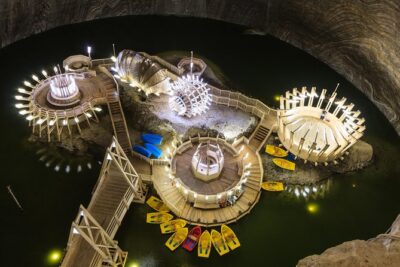
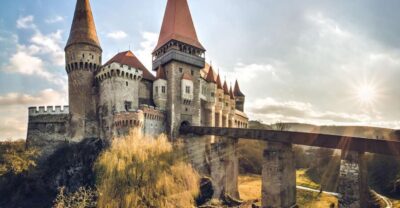
Turda Salt Mine, Corvin Castle, Alba Carolina Tour
Read our review →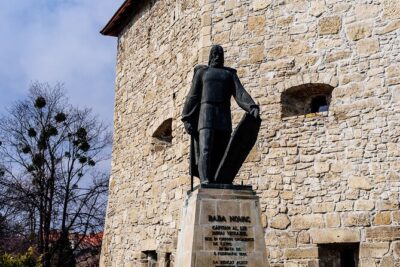
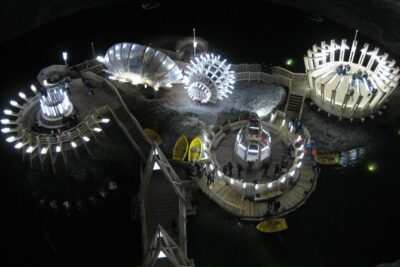
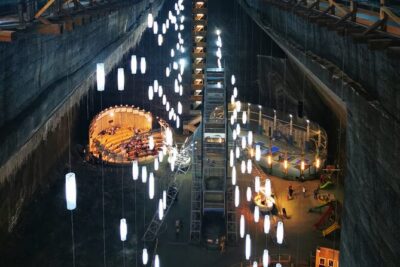
Turda Salt Mine, Corvin Castle and Alba Fortress from Cluj
Read our review →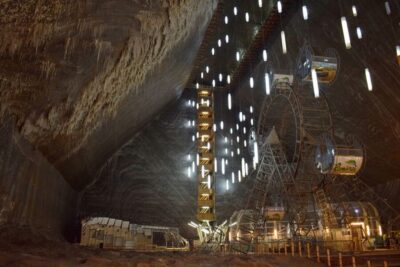
Browse the lists this tour appears in