
Reviewed · COMMUNIST BUCHAREST TOURS
Snagov Monastery, Ceaușescu Mansion, & Village Museum – 6h
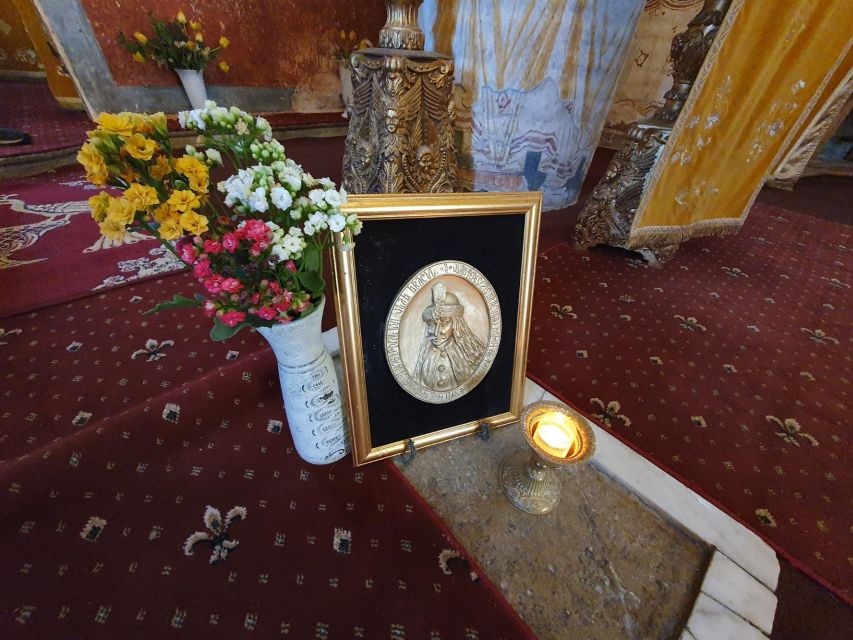
The most surprising stop is Snagov Monastery, reached by a short trip beyond Bucharest and set on an island. It adds a quiet, almost theatrical change of scene to a city tour, with the reputed tomb of Vlad the Impaler, the ruler linked to the Dracula legend.
I like the way this tour joins two very different sides of Romania: the modest wooden houses and churches at the Village Museum, then the private luxury of the Ceaușescu family home. I also like having a private car and guide, since the route reaches places outside central Bucharest and can be adjusted to suit your group.
The main consideration is timing. The advertised duration is six hours, but the listed stops add up to about seven hours before allowing for driving. Ask for a confirmed schedule before booking, especially if you have an evening train, flight, or dinner reservation.
Key points to know before you book
- Snagov Monastery sits on an island and is linked with the tomb of Vlad the Impaler, the historical figure behind the Dracula story.
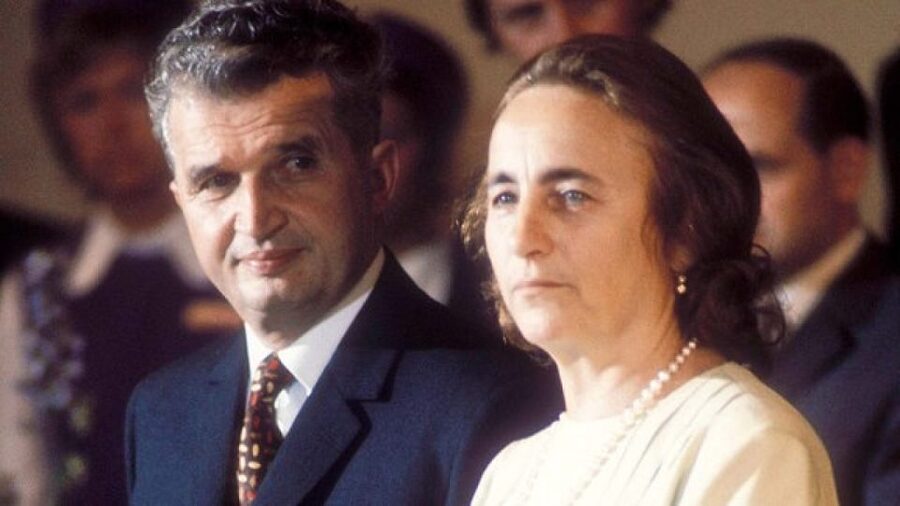
- The Ceaușescu Mansion reveals private life behind dictatorship, including the home shared by Nicolae, Elena, and their children.
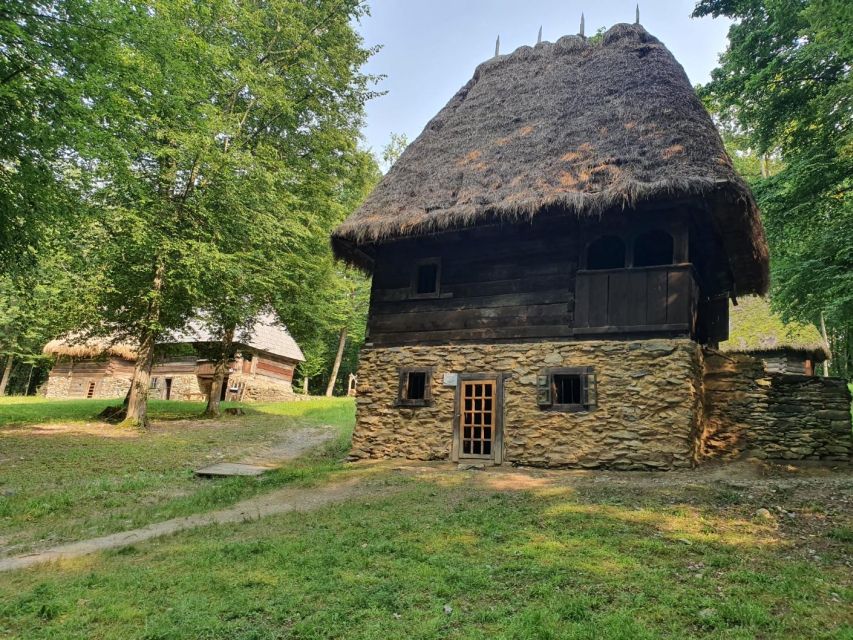
- The Village Museum gathers traditional houses from across Romania, with wooden, adobe, and stone buildings, mills, and a wooden church.
- The private format gives you useful flexibility, with transport, fuel, parking, and road tolls included.
- The central Bucharest portion packs in major sights, including Calea Victoriei, Revolution Square, the Romanian Athenaeum, CEC Palace, and the Palace of the Parliament.
- Entrance fees cost about 17 euros per person extra, and food and drinks are not included.
Why this route gives you more than a standard Bucharest tour
Bucharest can be hard to read at first. Grand nineteenth-century buildings sit near Communist-era blocks, quiet Orthodox churches appear beside busy streets, and the city’s royal, theatrical, and political pasts overlap in a small area.
This outing helps you sort out those layers. You see village traditions, a dictator’s private residence, the place where the 1989 revolution began, and the city’s most recognizable buildings. Then you leave the capital for Snagov, where the mood changes from urban history to religious legend.
That range is the real appeal. You are not spending six hours looking at one type of monument. Instead, you move between rural life, political power, folklore, and architecture.
The tour is private, so you travel only with your own family or friends. A guide and driver are available in English, French, Italian, Romanian, Spanish, or German. Pickup is included in Bucharest, with the driver holding a sign with your last name.
No guide name is provided in the tour details, so you cannot request a particular guide from the information available. The experience has received five-star ratings from Silvia of Austria, Lorenzo of Italy, and Nadine of Switzerland. The short comments praise the smooth organization, the amount learned, and a particularly well-informed guide who explained the sharp contrasts between Communist buildings, Art Deco and Baroque architecture, the lake, and Dracula’s tomb.
More communist-era Bucharest walks:
- The Real tour of Communism
★ 5.0 · 666 reviews - Life under Communism
★ 5.0 · 358 reviews - 3-Hour Guided Tour of Communist Bucharest
★ 4.9 · 303 reviews
Snagov Monastery and the Dracula connection
Snagov Monastery is the outing’s most unusual stop. It is about 40 minutes outside Bucharest and sits on an island, giving the visit a distinct sense of separation from the capital.
The monastery is associated with Vlad the Impaler, the fifteenth-century ruler whose name helped inspire the Dracula legend. The tour description presents the site as the location of his tomb. That connection gives the visit an extra hook, but you should treat it as a historical tradition tied to the Dracula story, not as a stage set from a horror film.
The planned visit lasts about an hour, including sightseeing, photography, and a guided visit. The island setting is the main visual reward. After the city’s traffic and heavy buildings, water and open views make this feel like a genuine change of pace.
I would put this stop near the top of the list for anyone interested in Romanian folklore, medieval rulers, or unusual religious sites. It is less important if your main goal is a long, detailed monastery tour, since the stop is only one part of a much larger day.
The route also means time in the car. That is not a flaw, but you should know what you are buying. Snagov adds a memorable story and a different setting, yet it takes the tour beyond Bucharest and contributes to the schedule problem.
The Village Museum: Romania in one open-air collection
The Dimitrie Gusti National Village Museum gives you a quick way to understand traditional Romanian life without traveling across the whole country. Its buildings come from different regions and include houses made from wood, adobe, stone, and other local materials.
You can expect to see homes, a mill, and a wooden church among the national and spiritual symbols of village life. The point is not simply to admire old buildings. The collection shows how families shaped homes, workspaces, and religious places around local materials and practical needs.
The tour presents village life as modest and closely connected to its surroundings. That makes this stop a useful counterpoint to the Ceaușescu Mansion. At the museum, you see how ordinary people built sustainable homes with what was available. At the mansion, you see how a ruling family lived behind guarded walls and political privilege.
You have about an hour here with a guide. That is enough for an introduction, but not enough for a slow inspection of every building. If you love folk architecture, you may wish for more time. The private format helps because you can ask questions and focus on the parts that interest you most.
For a first visit to Bucharest, I find this stop more useful than a generic park visit. It gives you a sense of regional variety and explains why Romanian village buildings remain such an important part of the country’s identity.
Inside the Ceaușescu family’s Spring Palace
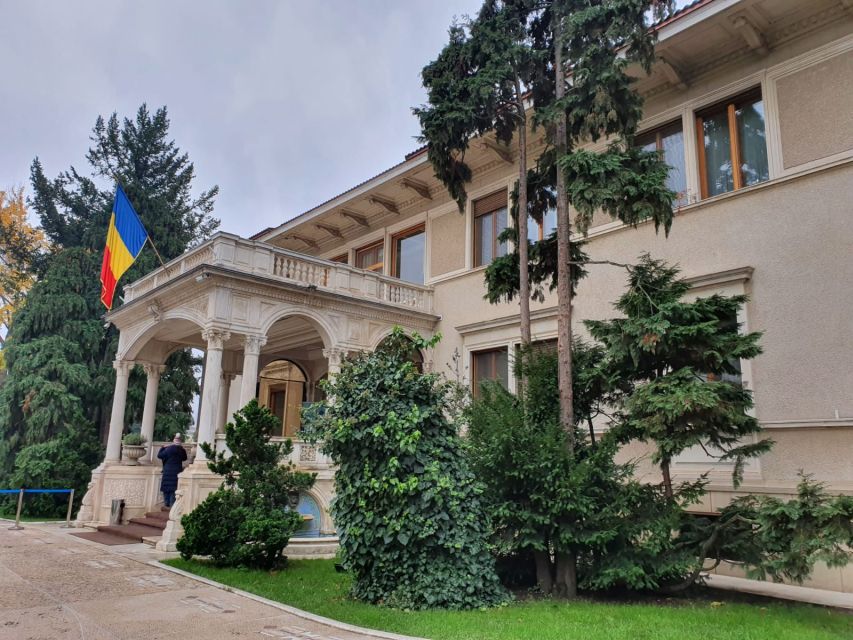
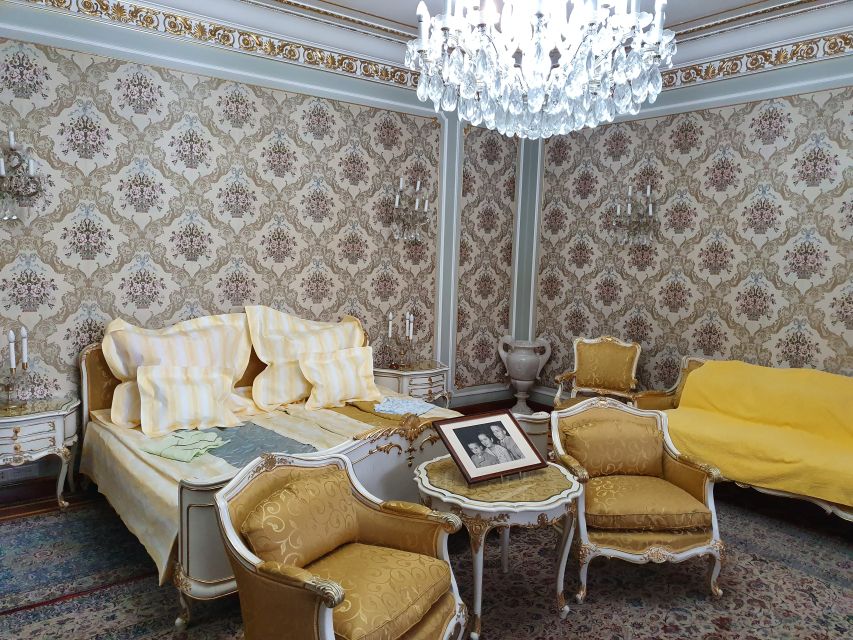
The Ceaușescu Mansion was the private home of Nicolae and Elena Ceaușescu and their children, Nicu, Zoia, and Valentin, from 1965 until 1989. It was known at the time as the Spring Palace.
The house was built in the mid-1960s and enlarged between 1970 and 1972. Its design was led by Aron Grimberg-Solari, while Robert Woll worked on the gardens and furniture. Those details matter because the building is not just a political memorial. It was also a carefully designed family residence shaped by the tastes and status of Romania’s ruling household.
You are given about an hour for a guided visit and walk. The value here is the contrast between public ideology and private comfort. Communist Romania promoted an image of austerity and equality, yet this residence belonged to the country’s top political family.
I would not approach the mansion expecting a full account of Communist Romania on its own. Instead, use it as a physical setting that helps explain power, privilege, and the distance between official slogans and private life.
The stop works especially well after the Village Museum. First you see simple homes made from local materials. Then you enter a residence enlarged and decorated for the Ceaușescu family. That pairing gives the day a clear human scale: how most people lived, and how the ruling family lived.
More museums in Bucharest:
- Bucharest: Museum of Senses Entry Ticket
★ 4.2 · 364 reviews - Communism in Bucharest – Landmarks, Museum & Communist Appetizers
★ 5.0 · 111 reviews - Bucharest: Entry ticket at the Museum of Communism
★ 4.6 · 57 reviews - Bucharest: Museum of Communism Ticket with Communist Coffee
★ 4.6 · 52 reviews
Calea Victoriei and Bucharest’s sharp contrasts
Calea Victoriei is one of the best places on the route to see Bucharest’s mixed architectural and social character. With a private guide, you pass royal buildings, Communist landmarks, old Orthodox churches, museums, theatres, restaurants, tea shops, music stores, casinos, retail shops, and places to buy souvenirs.
The avenue is useful because it does not present Bucharest as one tidy historical period. You can see the Royal Palace on one side of the city’s story and the former Central Committee of the Romanian Communist Party on the other. Old churches and grand civic buildings add still more layers.
The planned visit lasts about an hour and a half, including free time and possible shopping. That is a generous portion of the tour, although it also adds to the longer total schedule. If you want a chance to browse or pause for a drink, this is where that breathing room is most likely to fit.
I like having a guide here because the buildings can blur together when you walk without context. The value comes from understanding the contradictions, not just collecting facade photographs.
Revolution Square and the end of Ceaușescu’s rule

Revolution Square is the key political stop in central Bucharest. The former Central Committee building is tied to the December 1989 uprising that removed Nicolae Ceaușescu from power.
The tour explains the moment when Ceaușescu fled by helicopter, leaving behind questions about his fortune, the role of the state security service, and offshore accounts. These subjects remain part of the wider controversy surrounding his rule.
You have about 30 minutes here. That is enough for a guided explanation and a look at the setting, but not a full study of the revolution. The square is most valuable when your guide connects the buildings to the events that took place there.
This stop also gives the Ceaușescu Mansion a sharper meaning. At the mansion, you see the family’s protected private world. At Revolution Square, you see the public anger and political collapse that ended it.
The Athenaeum, CEC Palace, and Parliament
The Romanian Athenaeum is one of Bucharest’s notable architectural landmarks and is included as a short guided stop. You have about 30 minutes for sightseeing, a walk, and views along the way.
The CEC Palace receives about 15 minutes for a break, photographs, a visit, and some free time. That is brief, so think of it as a focused architecture stop rather than a full museum visit. The building is one of the central city’s memorable landmarks and fits naturally into a walking section along Calea Victoriei.
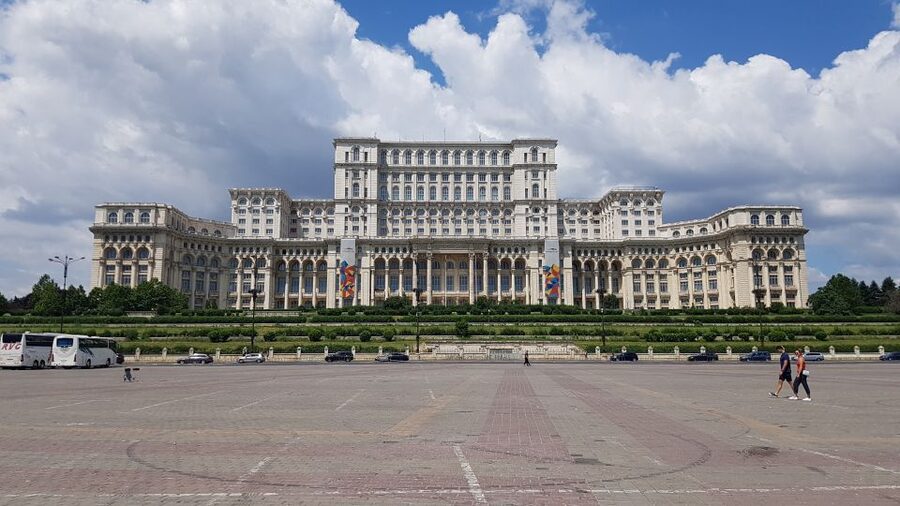
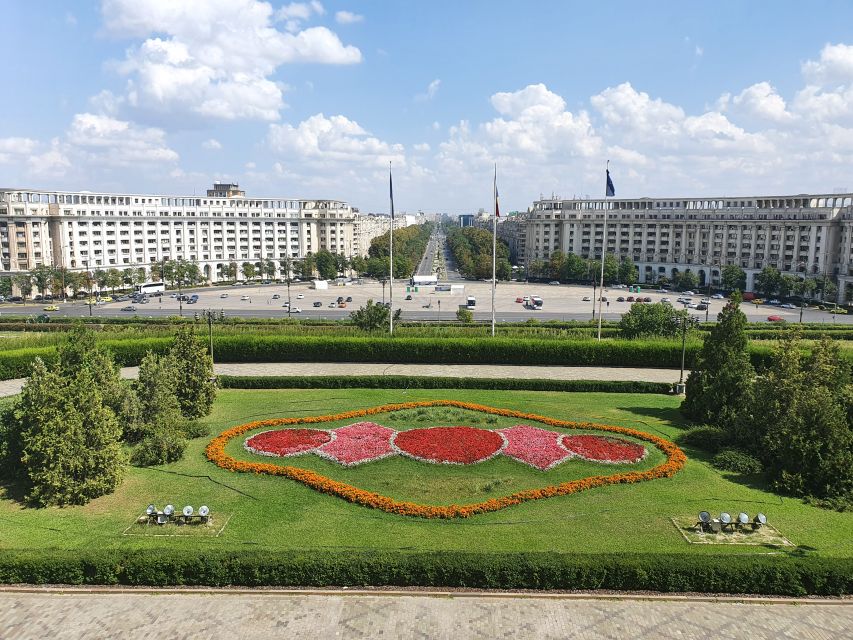
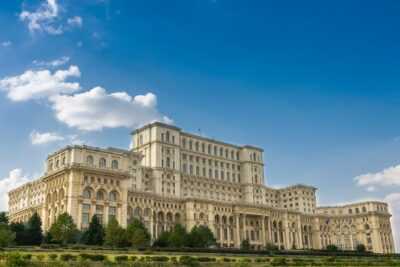
The Palace of the Parliament receives about 30 minutes for photographs, a visit, a walk, and guided sightseeing. The route does not promise a full interior tour, so clarify exactly what access is available on your date. You should expect the building to be treated as a major sight and political symbol, with the amount of interior time dependent on the entrance arrangements.
These stops work best as a group. The Athenaeum represents Bucharest’s cultural and architectural side. CEC Palace adds a historic civic landmark. The Palace of the Parliament brings you back to the enormous scale of the Communist era.
What the $254 price includes
At $254 per person, this is not a budget walking tour. Its value depends heavily on how many people share the private vehicle and how much you would otherwise spend arranging separate transport.
The price includes a private car or minibus for your party, a licensed multilingual guide and driver, fuel, parking, and road tolls. It also includes pickup in Bucharest and flexibility to change the daily route after the tour begins.
That flexibility is a real benefit. You can ask for more time at a favorite central sight or adjust the order if traffic and opening arrangements require it. A private vehicle is also important because Snagov is outside the capital and awkward to combine with the central sights using only short walks.
Entrance fees are extra, at about 17 euros per person. Food and drinks are also excluded. Add those costs when comparing the total with a smaller group tour or with booking transport and museum visits on your own.
For a couple, the per-person price may feel high. For a family or group of friends, the private setup can make better financial sense, particularly if you value hotel pickup, language choice, and a route built around your interests.
Timing, comfort, and practical points
The experience is advertised as six hours, with starting times depending on availability. Yet the listed stop allocations total roughly seven hours before drive time is added. Because the route includes both Snagov and several Bucharest stops, I would confirm the actual duration with Nicolas Experience Tours SRL before paying.
The tour includes free cancellation up to 24 hours in advance for a full refund, and you can reserve now and pay later. Those terms help if your Bucharest plans may shift.
Pickup is included in Bucharest. The driver holds a sign with your last name, which makes meeting easier, especially if you are staying at a large hotel or arriving in a busy area.
Food and drinks are not included, and no meal stop is specifically promised. Plan around that rather than assuming lunch will be built into the route. The Calea Victoriei portion includes restaurants and shops, but free time there is not the same as an included meal.
The guide languages are Romanian, English, Italian, French, Spanish, and German. Since the tour is private, you can ask for explanations at your own pace and focus on subjects such as village architecture, the Dracula connection, Communist Romania, or Bucharest’s royal buildings.
Who should book this private Bucharest day
I would recommend this tour to you if you want a broad first look at Bucharest and do not want to arrange separate transport to Snagov. It suits families, couples, and small groups who value privacy and want to combine major sights with unusual stops.
It is especially good for people interested in political history. The Village Museum, Ceaușescu Mansion, Revolution Square, and the Palace of the Parliament create a clear route through everyday life, elite life, dictatorship, and revolution.
It also suits anyone drawn to Dracula lore but looking for a real historical and religious site rather than a themed attraction. Snagov’s island setting gives that story a memorable physical place.
I would hesitate if you want a slow, specialist visit to every museum or a full interior tour at every building. The route covers a lot in one day, so several stops are introductions rather than long visits.
Should you book it?
Book this tour if you want maximum variety with private transport. Snagov Monastery, the Village Museum, the Ceaușescu Mansion, and Revolution Square give you four very different ways to understand Romania.
The strongest reason to book is the combination of an out-of-town monastery and a central Bucharest history route. The main reason to pause is the price and the uncertain timing created by a six-hour description alongside stop times that total about seven hours before driving.
Confirm the final schedule, entrance arrangements, and group size. If those details work for you, the tour offers a practical and thoughtful introduction to Bucharest, with more substance than a simple city highlights drive.
FAQ
Where does the tour begin and end?
Pickup and drop-off are in Bucharest. The driver holds a sign with your last name at pickup.
How long does the tour last?
The advertised duration is six hours. The listed stop times add up to about seven hours before driving, so confirm the exact schedule with the provider.
Is this a private tour?
Yes. The car or minibus is reserved for you and your friends or family.
What languages can the guide speak?
Guides are available in Romanian, English, Italian, French, Spanish, and German.
Is transportation included?
Yes. A private car or minibus, fuel, parking, and road tolls are included.
Are entrance fees included?
No. Entrance fees are extra and are estimated at about 17 euros per person.
Is food included?
No. Food and drinks are not included.
What is special about Snagov Monastery?
It is about 40 minutes outside Bucharest, located on an island, and associated with the tomb of Vlad the Impaler, the historical figure linked with Dracula.
What will I see at the Village Museum?
You will see traditional Romanian houses made from wood, adobe, stone, and other materials, along with features such as a mill and wooden church.
Can I cancel the booking?
You can cancel up to 24 hours in advance for a full refund. You can also reserve now and pay later.
Just added around Bucharest
- The essence of Saxon Transylvania – 3-day tour of its citadels★ 5.0 · 3 reviews
- Discover Europe’s Deepest Mines & Peles Castle’s Royal Charm★ 5.0 · 3 reviews
- Full-Day Tour to the Black Sea, Constanta and Balchik from Bucharest★ 4.0 · 3 reviews
- Winery touring & private wine tasting – one day private tour★ 5.0 · 3 reviews
- Full day Bucharest Sightseeing Tour★ 5.0 · 3 reviews
- 2 Days Private Tour – The Romanian Caves from Bucharest★ 5.0 · 3 reviews
- 4 Days – Transylvania Private Tour★ 5.0 · 3 reviews
- Private Tour to Peles and Dracula’s Castle – Day trip from Bucharest★ 4.0 · 3 reviews
Communist Bucharest Tours, compared.
Bucharest Essential Tour: Old Town, Calea Victoriei & Communism
Read our review →
Communism in Bucharest – Landmarks, Museum & Communist Appetizers
Read our review →
Browse the lists this tour appears in