
Reviewed · CLUJ-NAPOCA TOURS
Cluj: Private City Walking Tour
Cluj’s story comes together on foot, from the old center around Museum Square to the broad sweep of Union Square and the surviving scraps of its medieval wall. The route also shows how several Christian traditions shaped the city, ending at the Orthodox Cathedral. The mix of major sights and lesser-known corners gives you a useful first look without turning the walk into a history lecture.
I like the private format, since your guide can adjust the pace and add context where you show interest. I also like the practical local angle: guide Joseph was praised for tailoring the walk and suggesting a lunch spot, while another guide helped connect the sights to daily life in Cluj. The main consideration is the two-hour limit, which gives you a clear introduction but not enough time for long interior visits or a slow look at every stop.
Key points to know before you book
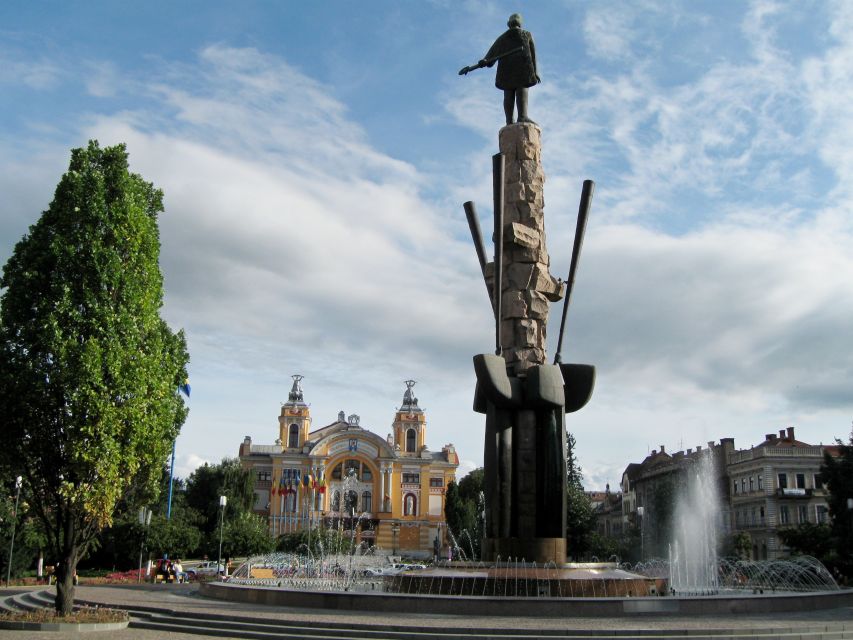
- Start at Carolina Obelisk: Meet in front of the obelisk in Museum Square, at Piața Muzeului 4.
- Follow Cluj’s medieval core: The walk links Museum Square, Union Square, the old civilian house, Matthias Corvinus, and fragments of the 15th-century wall.
- See the city’s religious mix: Roman Catholic, Greek Catholic, Unitarian, Lutheran, Calvinist, and Orthodox traditions all enter the story.
- Private English-language guiding: You get a private group rather than a large shared walk, with a chance to shape the conversation.
- Plan for two hours outdoors: Wear comfortable shoes, and expect the tour to run in rain or shine.
- Price and flexibility: At $68 per person, the value depends on your group size and how much you want personal attention.
Why this walk works as a first look at Cluj
Cluj-Napoca can seem easy to grasp at first. Its center has handsome squares, cafés, churches, and student energy packed into a walkable area. But the city makes more sense when you see how the modern center grew around a medieval settlement, how its walls once defined the town, and how several faiths shared the same streets.
This private walking tour gives you that framework in two hours. You are not simply ticking off a statue and a church. You are moving from the oldest part of the city toward the central square, then out toward the former edge of the medieval town before finishing at the Orthodox Cathedral.
I see this as a good orientation walk for your first day in Cluj. It helps you identify the places you may want to revisit, while the guide can answer questions about local life, city customs, and the stories behind the buildings. The tour is conducted in English and uses a private group format, which should make it easier to ask questions than on a large group outing.
The pace is likely to be steady rather than rushed. Still, two hours passes quickly when the route includes several neighborhoods, monuments, religious traditions, and historic sites. If you want detailed interior tours or long photo stops, you may need to return on your own afterward.
More Walking Tours in Cluj Napoca
- Cluj-Napoca: 2.5-Hour Guided Walking Tour
★ 4.8 · 104 reviews - Cluj-Napoca: 2.5-Hour Guided Walking Tour
★ 4.5 · 29 reviews - Cluj-Napoca Walking City Tour
★ 4.5 · 16 reviews
Starting at Carolina Obelisk in Museum Square
The meeting point is in front of the Carolina Obelisk in Museum Square, at Piața Muzeului 4. This is a useful starting point because the square sits in the oldest part of Cluj, giving the tour an immediate sense of place rather than beginning in a modern commercial district.
In summer, Museum Square takes on a relaxed café feel, with colorful terraces and a more bohemian mood. That contrast is part of the appeal. You begin among old buildings and medieval traces, yet you are also in a living city where people meet for coffee and meals.
The Carolina Obelisk helps make the meeting point easy to identify. Arrive ready to walk, since the tour is outdoors and continues through several central areas. Comfortable shoes are specifically recommended, and that is sound advice for any city route that includes old streets and extended standing.
Your guide will set the tone here. The experience is meant to cover both the city’s past and its modern life, so you can expect more than dates and names. The strongest version of this tour will help you see why Museum Square remains a social space as well as a historic one.
Museum Square and Cluj’s oldest city center
Museum Square is important because it sits in the oldest section of the city. From here, the guide begins to place Cluj’s medieval center in relation to the city you see today.
The tour description calls attention to hidden medieval streets, but the value is not only in finding an old lane. It is in understanding the shape of the former town and how daily life once worked within it. As you walk, look for the way old façades, narrow passages, and open public spaces fit together.
This part of the walk should appeal to you if you prefer street-level history. You are not viewing Cluj from behind a bus window or moving between isolated monuments. You are crossing the same central spaces that connect the city’s past with its present cafés, university life, and local routines.
The summer terraces may add a pleasant pause in the atmosphere, but they can also make the square feel less like a quiet historic site. That is not a flaw so much as a reminder that Cluj is not a preserved museum town. It is a working city with a young, social character.
The oldest civilian house and the route to Union Square
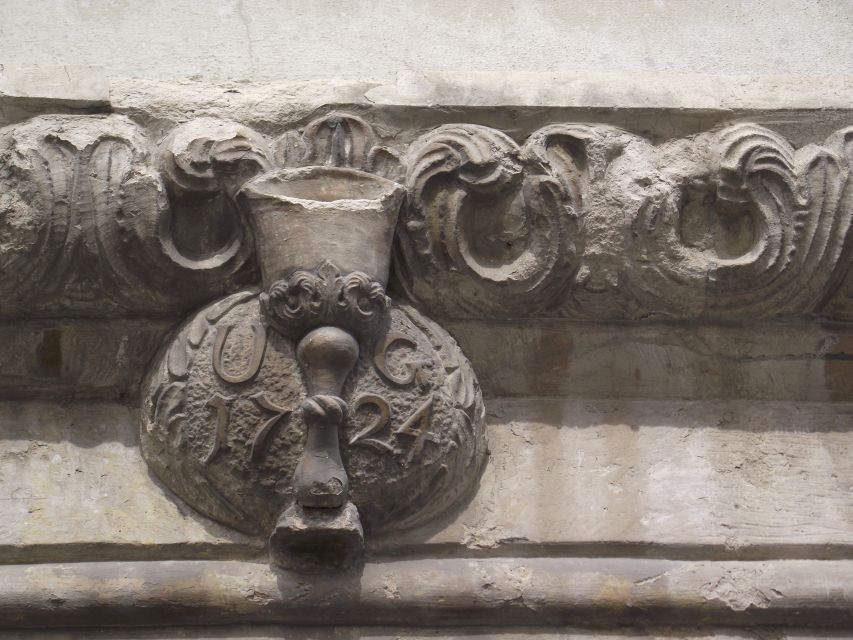
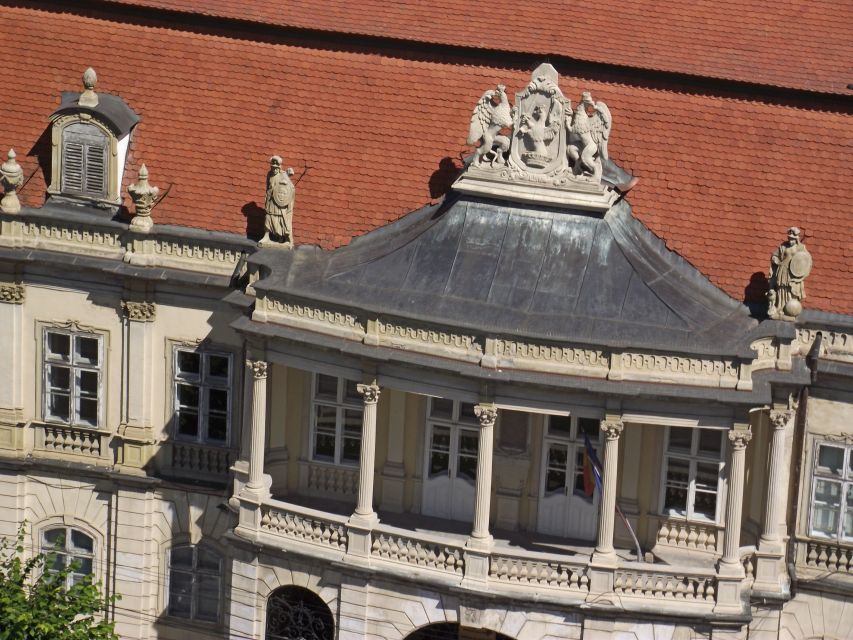
From Museum Square, the walk continues toward Union Square, with a stop at the oldest and best-preserved civilian house in the city. This is one of the most useful stops for understanding ordinary urban life.
Large churches, monuments, and public buildings often dominate city tours. A civilian house gives you a different view. It points toward the homes, businesses, and families that occupied the medieval center beyond its grand religious and political landmarks.
The supplied details do not specify an interior visit, so you should expect to see the house from the outside unless the guide explains otherwise. That matters when you set expectations. The stop is valuable for its age and condition, but it may be brief rather than a full museum visit.
The walk toward Union Square also helps you watch the city change in scale. Museum Square feels more enclosed and old-world. Union Square opens up into Cluj’s best-known public space, where the city’s major monument and surrounding architecture create a much broader view.
Same corner of the country, a completely different day out:
- Curly Tour – Day trip from Cluj 🙂
★ 5.0 · 330 reviews - Cluj: Turda Salt Mine, Corvin Castle, Alba Carolina Tour
★ 4.8 · 184 reviews - Turda salt mine 4h tour from Cluj
★ 5.0 · 73 reviews - Turda Salt Mine, Corvin Castle and Alba Fortress from Cluj
★ 5.0 · 65 reviews
Matthias Corvinus and the medieval story of Cluj
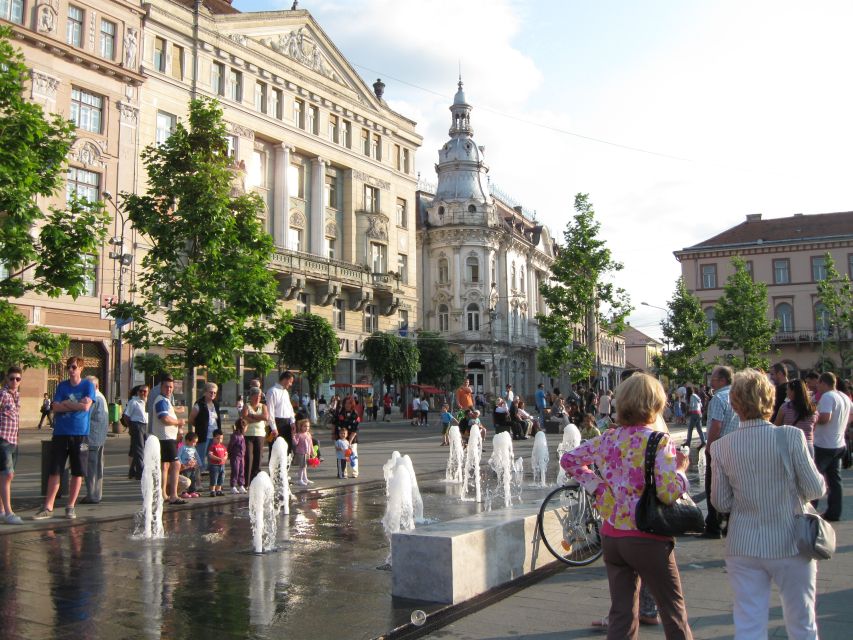
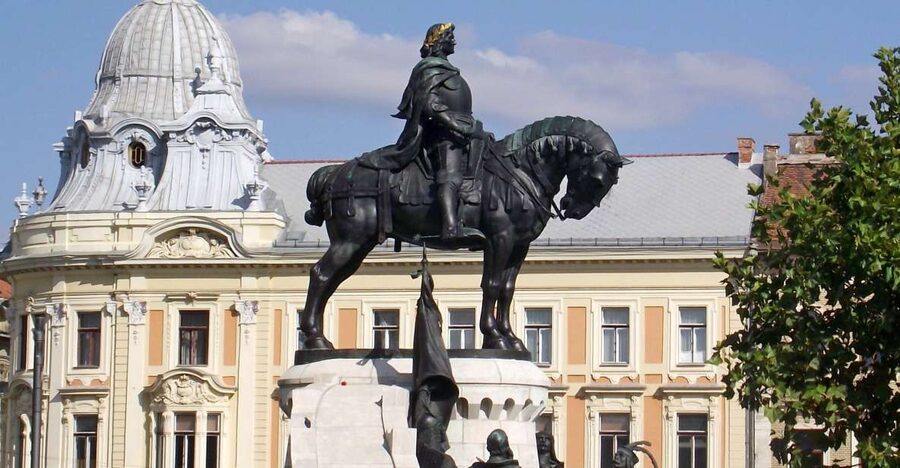
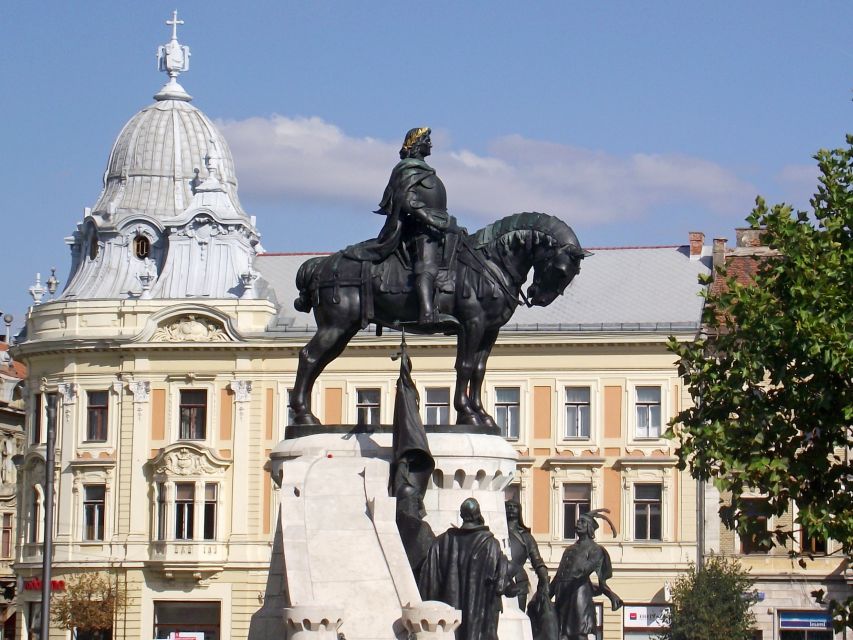
Union Square is home to Cluj’s most famous landmark, the Matthias Corvinus Statue. This is the central historical stop on the route, and the guide uses the stories connected to Matthias Corvinus to explain the medieval history of the area.
The statue is not just a photo stop. It gives your guide a clear way into questions of power, place, and memory. The tour connects the life stories associated with Matthias Corvinus to the wider medieval development of Cluj and the surrounding region.
I like this approach because a monument becomes easier to remember when it has a human story attached to it. You may not retain every date, but you are more likely to remember why the statue matters and how it fits into the city’s past.
Union Square is also where the tour’s modern side becomes clear. The square is a major gathering point, and the surrounding center shows Cluj as a lively university city rather than only a medieval settlement. The guide’s task is to connect those two identities without letting either one take over.
This is likely to be one of the busiest parts of the walk, so listen closely when the guide begins explaining the statue. If you want photographs, take them before or after the main explanation rather than trying to do both at once.
Following the old wall toward the medieval edge
After Union Square, the route heads toward the outskirts of the medieval city. Here you will see several fragments of the 15th-century defense wall.
These fragments may not have the drama of a complete fortress, but they can be more revealing in a way. A surviving section of wall shows where the old town ended and helps you imagine the scale of medieval Cluj. The guide can also explain how the defensive line relates to the streets and buildings around it.
I find remnants like this most useful when they are placed on a map of the city, even if only through spoken explanation. Without that context, a short wall can look like an isolated old structure. With context, it becomes a marker of the former boundary between the settled town and the area beyond it.
The route is a good reminder that historic cities are often read through fragments. Cluj does not need a fully intact medieval enclosure to tell that story. A few preserved pieces, placed in relation to the old center, can show how the city once worked.
This section may be less immediately impressive than Union Square, but it is one of the stops that separates a basic sightseeing circuit from a walk with more local context. You are seeing part of Cluj that many visitors could pass without noticing.
The university and Cluj’s modern identity
The walk also takes in the headquarters of the second-biggest university in Romania. The university stop brings the route into the present and explains why Cluj has such a lively city center.
The information provided does not name the university, and it does not include an interior visit. You should think of this as an exterior landmark and a point for discussing the role of education in modern Cluj.
This stop matters because the city’s student character is not separate from its historic center. The cafés, public squares, and busy central streets are part of a city shaped by its universities. The guide can help you connect the old walls and historic houses with the younger population that gives the center its current energy.
I especially like this balance in a city tour. A walk that focuses only on medieval buildings can leave you with a frozen picture of Cluj. This route shows that the city’s identity keeps changing, with historic places still serving as part of everyday urban life.
If you are visiting Cluj for several days, this context can help you choose where to spend your free time. You will have a better sense of which areas feel historic, which are linked to university life, and where the central city comes together.
Learning how several religions shaped the city
One of the tour’s most thoughtful elements is its look at Cluj’s religious traditions. The route discusses Roman Catholic, Greek Catholic, Unitarian, Lutheran, and Calvinist communities before ending at the Orthodox Cathedral.
That list alone shows why a simple church tour would not be enough. Cluj’s religious story includes several traditions, each with a place in the city’s cultural and architectural life. The guide can give you a basic map of those communities and explain how they fit into the city’s development.
The wording of the experience suggests that the focus is on learning about the different religions present in town, not entering every church. Entry tickets are not included, and the tour details do not promise interior access. You should therefore expect an outdoor route with explanations rather than a series of formal church visits.
This is still valuable. Religious buildings often shape a city’s skyline and public spaces, but their meaning can be hard to read without context. A guide helps you understand why different churches appear in the same urban story and prevents you from treating each one as an isolated monument.
The subject also gives you a more honest picture of Cluj. The city is not defined by one tradition alone. Its center reflects several communities and layers of local history, and the walking route lets you see that pattern without requiring a full day of sightseeing.
Finishing at the Assumption Cathedral
The tour ends at the Orthodox Cathedral, also known as the Assumption Cathedral. This gives the route a clear final stop and a chance to consider the Orthodox side of Cluj’s religious life after learning about the other traditions in the city.
Ending here works well because the cathedral is not just another building added to a long list. It completes the route’s religious theme and gives you a final landmark at which to pause and orient yourself.
As with the other religious sites, no entry ticket is included, and the information does not state that the guide takes you inside. Plan on a guided exterior visit unless your guide tells you otherwise. If you want to see interiors, ask during the tour about what is possible and what requires a separate visit.
The finish is also practical. You are left in a central part of Cluj, with the rest of the city available for your own plans. One guide specifically suggested places to grab lunch, so it is worth asking your guide for a recommendation at the end, especially since meals and drinks are not included.
How much value do you get for $68?
The listed price is $68 per person for two hours. That is not the cheapest way to walk around Cluj, especially if you are traveling alone or as a couple and are comfortable using a guidebook or free map.
The value improves if you are traveling with a small private group and want direct attention. You are paying for an English-speaking guide, a planned route, historical explanation, and the ability to ask questions as you go. The private format also gives you a better chance of adjusting the focus toward medieval history, religion, modern city life, or practical advice.
I would not book this expecting included food, drinks, museum admission, or a long interior tour. Those costs are separate, and the tour is built around walking and guiding rather than paid attractions.
The strongest value comes from the way the stops connect. Museum Square, the oldest civilian house, Union Square, Matthias Corvinus, the old wall, the university, and the cathedral make a sensible story. You get more than a list of sights, provided you take advantage of the guide and ask questions.
For a solo visitor, $68 may feel high for two hours. For a private group that wants a tailored introduction, it can be reasonable. The reported rating is 4.4 from four reviews, including praise for Joseph’s historical context, friendly manner, and willingness to customize the route. Another high rating called the experience a good way to see both main sights and lesser-known spots.
Who should book this Cluj walking tour?
I would choose this tour if you are visiting Cluj for the first time and want the city explained in a compact format. It suits people who like history but also want to understand how a university city functions today.
It is a good fit for:
- Couples or small groups who value a private guide
- First-time visitors who want a clear central-city orientation
- People interested in medieval streets, fortifications, monuments, and churches
- Visitors who want historical detail without spending a full day in museums
- Anyone who appreciates local food suggestions at the end of a tour
You may want something else if you prefer to explore alone, spend a long time inside churches, or move at a very slow photography pace. The tour is two hours, and the route covers a lot of ground. It gives you a framework, not an exhaustive study of every building.
The experience is wheelchair accessible, though the route remains a walking tour and conditions can vary with weather and street surfaces. It operates rain or shine, so bring suitable clothing as well as comfortable shoes.
Should you book the private Cluj city walk?
Book it if you want a guided introduction that links Cluj’s medieval center with its modern university life and varied religious traditions. The private format is the main reason to choose it, especially if you want to shape the conversation or ask for practical advice about lunch and nearby sights.
Skip it if you mainly want a free wander through the squares or if $68 per person feels too steep for a two-hour outdoor tour. For everyone else, this is a useful first-day activity, with a well-planned route and enough historical context to make later independent walks more rewarding.
FAQ
Where does the Cluj private walking tour begin?
The tour begins in front of the Carolina Obelisk in Museum Square, at Piața Muzeului 4.
Where does the tour finish?
The tour finishes at the Assumption Cathedral, also called the Orthodox Cathedral.
How long does the walking tour last?
The guided walk lasts two hours.
What language is the tour offered in?
The tour is offered in English with a live English-speaking guide.
Is this a private group tour?
Yes. The experience is arranged for a private group.
What sights are included on the route?
The route includes Museum Square, the oldest civilian house in Cluj, Union Square, the Matthias Corvinus Statue, fragments of the 15th-century defense wall, the headquarters of the second-biggest university in Romania, and the Orthodox Cathedral.
Does the tour include meals or drinks?
No. Meals and drinks are not included, and lunch is specifically excluded.
Are entry tickets included?
No. Entry tickets are not included in the tour price.
Is the tour wheelchair accessible?
Yes. The activity is listed as wheelchair accessible.
What should I bring?
Bring comfortable shoes. The tour takes place outdoors and runs rain or shine.
Just added around Cluj Napoca
- Cluj – walking city tour★ 5.0 · 3 reviews
- Sighisoara & wine tasting (from Cluj)★ 5.0 · 4 reviews
- CJ01 – Explore Cluj-Napoca: A Vibrant City Tour in English★ 5.0 · 4 reviews
- Sighisoara, UNESCO & wine tasting (1 day, from Cluj)★ 5.0 · 4 reviews
- 3 Day Tour of Maramures★ 5.0 · 4 reviews
- From Cluj-Napoca: Two Day Tour to Maramures★ 5.0 · 5 reviews
- 650cc Motorbike Rental from Turda★ 5.0 · 5 reviews
- CJ04 -Maramureș Adventure:Tradition, Folk Art &Scenic Beauty★ 5.0 · 5 reviews
Cluj-Napoca Tours, compared.
Turda Salt Mine, Corvin Castle, Alba Carolina Tour
Read our review →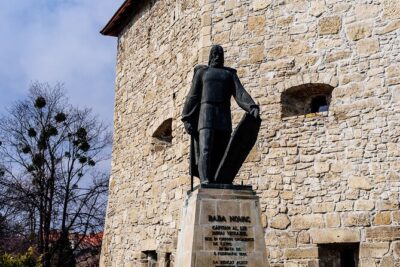
Turda Salt Mine, Corvin Castle and Alba Fortress from Cluj
Read our review →
Browse the lists this tour appears in