
Reviewed · COMMUNIST BUCHAREST TOURS
Timisoara: Grand Communism Tour
Timisoara’s communist story feels most real when you leave the postcard center and visit the places where ordinary people resisted Nicolae Ceausescu’s regime. This 3.5-hour tour links a basement museum, a church tied to the 1989 uprising, a former Communist Party headquarters, and the Cemetery of Revolution Heroes.
I like the small group limit of 10, which gives the guide room for questions, and I like the use of personal family stories alongside the political timeline. Guides including Andrei, Sergio, Sergiu, and Roberta are praised for clear English, strong storytelling, and, in some cases, firsthand family connections to the communist period.
The main consideration is the serious subject matter. You will hear about repression, resistance, death, and the final days of Ceausescu’s rule, so this is not a light sightseeing outing. The 20 RON entrance fee to the Revolution Memorial is also extra.
Key points to know before you book
- SCARTZ club begins the story in an unusual setting: The tour starts at the location of the misfit SCARTZ club and continues to its basement Communist Customer Museum.
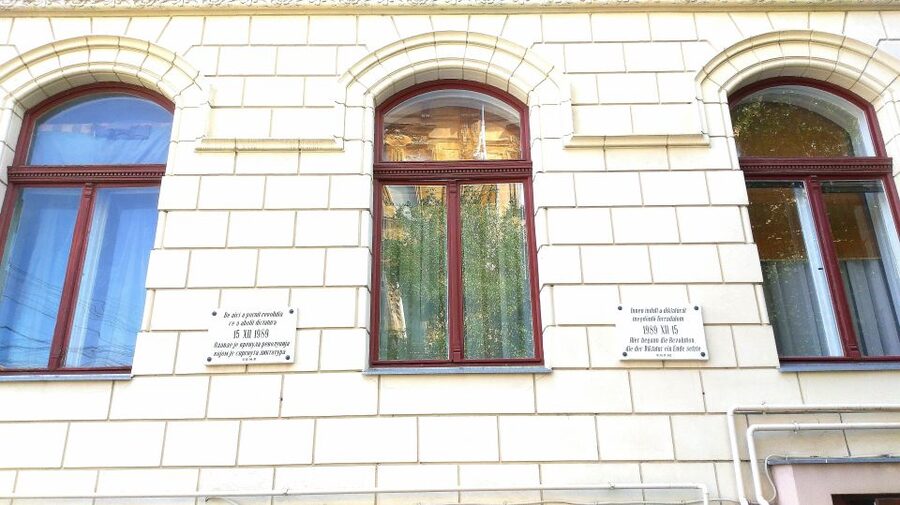
- The 1989 Revolution is tied to real places: You visit the Reformed Hungarian Church, where the uprising began in December 1989.
- Personal stories add human scale: Guides such as Andrei and Roberta bring family experiences into the wider political story.
- You see areas beyond the usual tourist route: The tour includes neighborhoods and buildings linked to daily life during the communist period.
- Transportation is included between stops: This matters because the itinerary covers several parts of Timisoara in a limited time.
- The price includes a live guide but not the final museum fee: At $70 per person, the value depends mainly on how much historical explanation you want from a small-group specialist.
Why Timisoara is the right place for this story
Timisoara is closely linked to the end of Romania’s communist regime. The events of December 1989 began here before spreading across the country, eventually bringing down Ceausescu’s government.
That connection gives the tour a clear purpose. You are not simply looking at old apartment blocks or hearing a general lecture about Eastern Europe. You are moving through places tied to resistance, religious tension, public protest, and the final collapse of a dictatorship.
The tour also reaches beyond the last weeks of 1989. Your guide explains roughly 50 years of political and geopolitical change, helping you understand how Romania arrived at that breaking point. That longer view matters, since the Revolution did not appear out of nowhere.
You will hear about Nicolae Ceausescu, the most notorious figure in Romania’s communist period, but the focus is not only on one leader. The story includes the systems around him, the pressure placed on ordinary people, and the ways Romanians opposed communist rule long before the 1989 uprising.
More communist-era Bucharest walks:
- The Grand Tour of Communist Ages at Timisoara
★ 5.0 · 17 reviews - The Real tour of Communism
★ 5.0 · 666 reviews - Life under Communism
★ 5.0 · 358 reviews
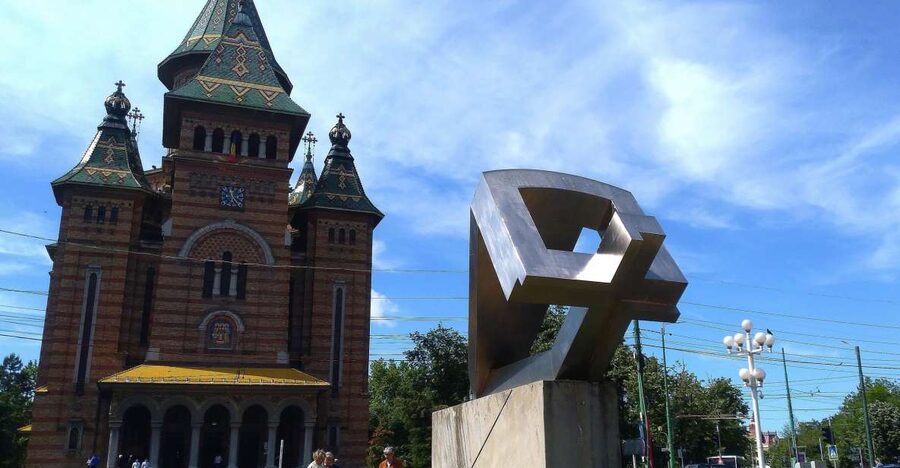
Starting at the Orthodox Cathedral and SCARTZ club
The meeting point is in front of the Orthodox Cathedral. From there, the tour begins at the location of SCARTZ, described as a misfit club rather than a polished historic attraction.
That is a fitting start for a tour about a society that changed dramatically. Instead of opening in a formal museum, you begin in a modern, unconventional space that carries an older story below ground.
The Communist Customer Museum is in the basement of SCARTZ club. Its setting gives the opening stop a more direct feel than a standard display in a large public institution. You can expect the guide to use objects and surroundings to explain how people lived and consumed goods during communism.
The museum is especially useful if you know little about everyday life under the regime. Political history can become abstract very quickly. A basement collection devoted to the customer side of communism points you toward practical questions: What could people buy? What did shortages mean? How did daily routines change?
The supplied information does not provide a full list of objects or the museum’s exact size, so you should not expect a large national museum. Think of it as a compact stop that supports the guide’s explanation.
Understanding Ceausescu without reducing everything to one man
Nicolae Ceausescu receives major attention during the opening part of the tour. You learn about his role in Romania’s communist period and the policies that helped create the anger that later erupted in Timisoara.
A good guide can make this section useful by connecting national politics with ordinary life. Andrei, for example, has been praised for an easygoing style, strong English, and engaging stories. He has also used personal family accounts to make the period easier for people from outside Romania to understand.
That personal element is one of the tour’s strongest features. A textbook can explain dates and institutions, but a family story can show how those policies affected real households. It gives you a clearer sense of what was remembered, feared, or simply endured.
The guides do not all offer the same language combination. Tours are available in English and Romanian, and individual guides have also led tours in Italian. Sergio or Sergiu, depending on the guide assignment, has been noted for professional presentation and fluent Italian. Roberta has also been praised for her command of the subject and her personal link to the period.
Since the exact guide is not guaranteed in the information provided, book this tour for the structure and subject matter first. The guide quality appears to be a major part of the experience, but your assigned guide may differ.
The Anti-Communist Resistance Movement Monument
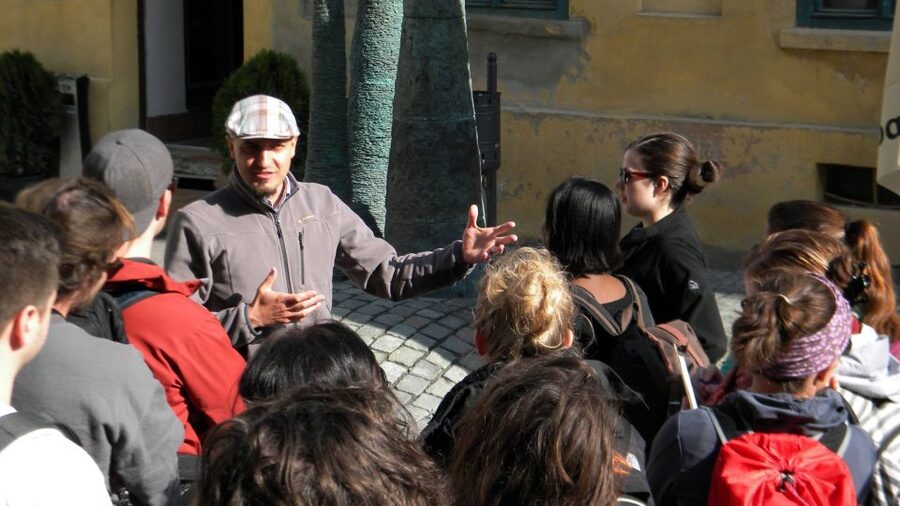
The next stop focuses on the Anti-Communist Resistance Movement Monument. Here, the story reaches back to the 1950s and 1960s, when Romanians opposed the communist system in difficult and dangerous ways.
This section is important because many visitors know the 1989 Revolution but have less sense of the resistance that came before it. Your guide explains how opposition existed decades earlier, even when open protest carried severe consequences.
The monument gives that resistance a physical location. You are not only hearing about a sequence of political events. You are standing at a place designed to remember people who opposed the regime during its earlier decades.
Expect the tone to become more solemn here. The tour deals with harsh treatment and the risks taken by those who resisted. It is worth allowing yourself time to listen rather than treating this as a quick photo stop.
The stop also broadens the meaning of anti-communist history. Opposition was not limited to one group or one dramatic day. It developed over time, and the guide’s job is to connect those separate acts of resistance to the public uprising that came later.
A few more Timisoara day trips to weigh up
- The Classic Tour of Timisoara
★ 5.0 · 154 reviews - Weekly Guided Tour in English – Tuesday, Thursday, Saturday
★ 5.0 · 84 reviews - Timisoara All in One – Walking and Tram Tour
★ 5.0 · 72 reviews - Timisoara: Guided Walking Tour
★ 4.9 · 38 reviews
The Reformed Hungarian Church and the first days of protest
The Reformed Hungarian Church is one of the most meaningful stops on the route. It is identified as the place where the uprising began in December 1989.
This makes the church more than a religious building. It became a focal point for protest, and its connection to the first days of the uprising helps you understand why Timisoara holds such a central place in Romania’s modern political story.
The church also adds an important local and community dimension. The tour is not only about government offices and national leaders. It shows how a local place of worship became connected to a movement that challenged the entire regime.
Your guide explains the events around the uprising and the anti-communist, anti-Ceausescu Revolution of Timisoara. The value here comes from hearing the sequence in the same city where it unfolded. Dates and names become easier to follow when you can link them to streets, buildings, and public spaces.
This is one of the stops where the quality of the storytelling matters most. You should expect a serious account rather than a quick claim that the Revolution began here. Guides such as Andrei have been praised for adding anecdotes and family stories, which can make this part more understandable and emotionally direct.
The former Communist Party headquarters
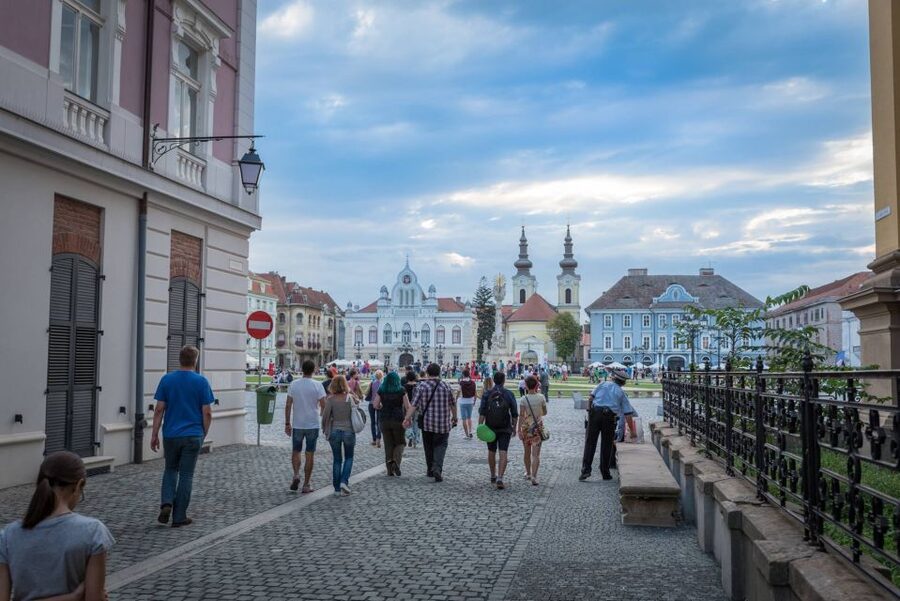
The route also includes the local headquarters of the former Communist Party. This stop helps show how power was organized at city level.
The building is useful as a counterpoint to the church. At the church, you hear about public resistance and the start of the uprising. At the party headquarters, you consider the institutions and officials that represented the system people were challenging.
I like this pairing because it keeps the tour from becoming a one-sided procession of memorials. You see both the place associated with protest and the place associated with authority. That contrast gives the political story a clearer shape.
The supplied details do not say how long the group spends inside or outside the former headquarters, so do not assume a full interior visit. Treat it as a historic location included in the route, with the guide providing the explanation.
The Cemetery of Revolution Heroes
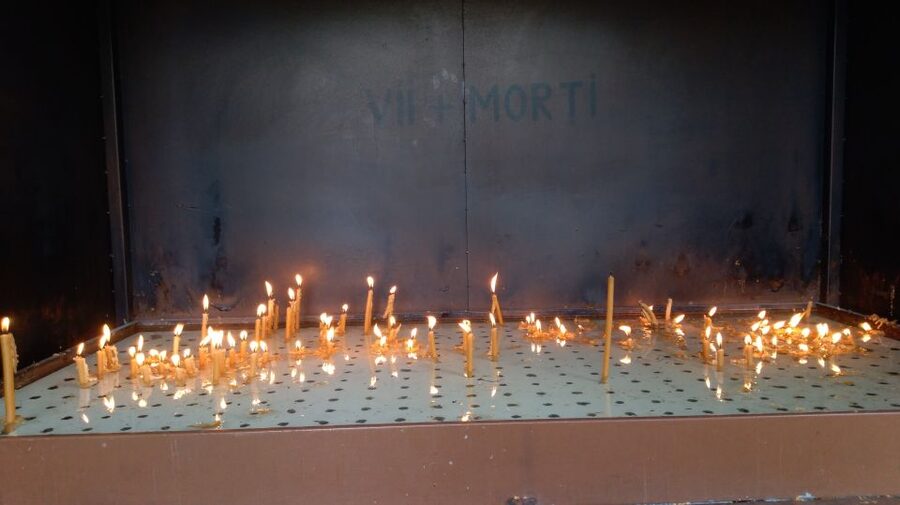
The Cemetery of Revolution Heroes brings the final events into sharp focus. This is where you learn about people who died during the fighting and unrest connected to the end of Ceausescu’s rule.
A cemetery demands a slower pace. Names and dates can feel remote elsewhere, but graves make the cost of the Revolution plain. Your guide explains the events that led to the end of the regime and places the victims within that larger story.
This may be the most emotionally difficult part of the tour. If you prefer history presented without personal tragedy, you should know that the itinerary does not avoid the human cost. For anyone trying to understand what the Revolution meant to Timisoara, however, this stop is essential.
The cemetery also prevents the tour from treating 1989 as a neat political success story. Regime change came with loss, uncertainty, and fear. That balance is one reason the route offers more than a standard city tour.
The Revolution Memorial closes the route
The final stop is the Revolution Memorial of Timisoara, which honors the people of the anti-Ceausescu Revolution. This is where the tour’s main threads come together: earlier resistance, the December uprising, the role of local institutions, and the deaths that marked the final days of the old regime.
The memorial requires an additional entrance fee of 20 RON. That is not a large extra cost, but you should include it when comparing the total price with other Timisoara activities.
I would not skip the memorial automatically just because it costs extra. The tour is built around the Revolution, and the memorial gives you a dedicated place to think through what you have seen. The guide’s explanation before or during the stop can also help you understand why the memorial matters.
The exact museum displays are not described in the available details, so I would avoid expecting a particular exhibit or layout. The reliable point is that it honors the people involved in the Timisoara Revolution and serves as the closing stop.
What the $70 price gives you
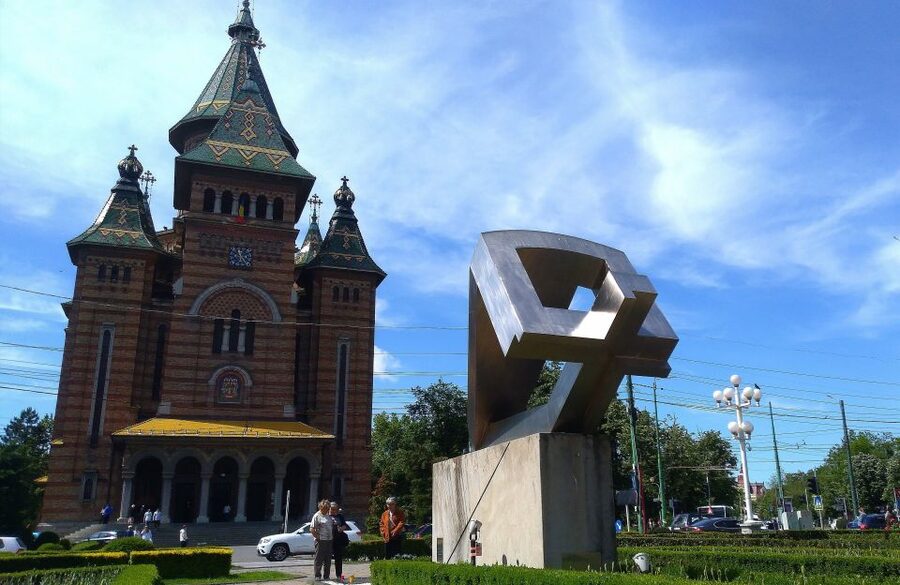
At $70 per person, this is not the cheapest way to spend half a day in Timisoara. The price makes more sense if you want a focused history experience with transportation between stops, rather than a general orientation walk.
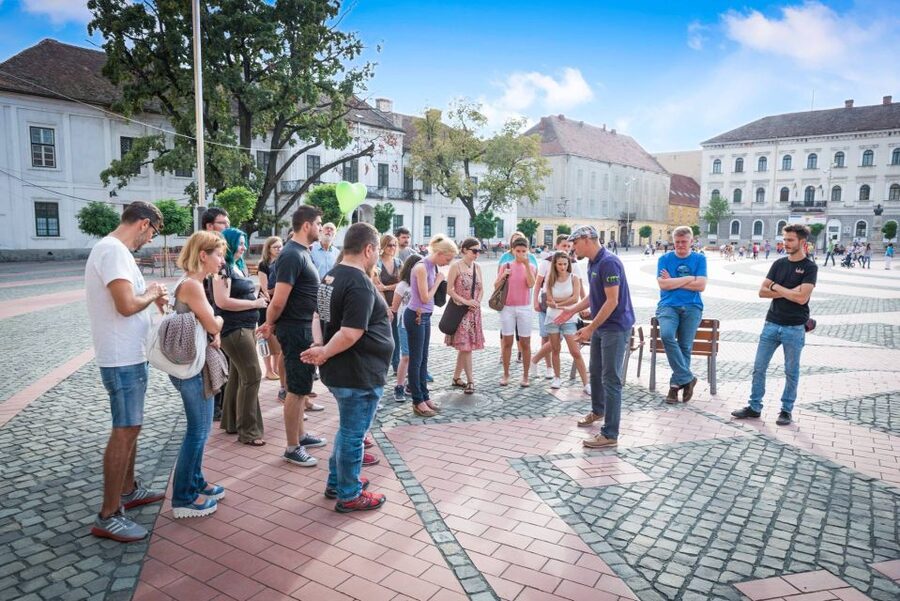
You receive a live guide, transportation between the locations, and a small group capped at 10 participants. That group size is a real benefit for a subject that depends on questions and explanation. You are less likely to be lost in a crowd, and a guide can give more attention to personal questions.
The value also depends on your interest. If you already know Romanian communist history well and only want to photograph the sites, $70 may feel high. If you want the political background, local setting, and personal stories explained in clear English, the cost is easier to justify.
Remember to add the 20 RON Revolution Memorial entrance fee. The tour lasts 3.5 hours, so you are paying for a concentrated half-day, not an all-day program.
Who will get the most from this tour
I would choose this tour if you enjoy modern European history, political change, memorial sites, or local stories that sit outside the usual sightseeing route. It also suits anyone who wants to understand why Timisoara played such an important role in Romania’s 1989 Revolution.
The tour works well for visitors who are new to the subject. Guides explain the wider political timeline rather than assuming you already know the details, and the route gives you concrete places to attach to that information.
It may be less suitable for young children or anyone looking for a relaxed, entertainment-first outing. The subject includes authoritarian rule, resistance, deaths, and national trauma. Even when the guide is warm and easygoing, the material remains heavy.
Language should be straightforward for English speakers. English and Romanian are listed as the main languages, and Andrei has been specifically praised for flawless English. Italian-language guiding has also been available with Sergio or Sergiu.
Practical details for a smoother visit
Meet in front of the Orthodox Cathedral. Because transportation between stops is included, you do not need to plan your own route through the different sites.
The tour is limited to 10 people, but check the available start times when booking. The duration is 3.5 hours, making it easy to fit into a morning or afternoon plan, depending on the departure time.
You can cancel up to 24 hours ahead for a full refund, and the reserve-now, pay-later option lets you keep your schedule flexible. These policies are useful if you are still arranging a Timisoara visit, though they should not be the main reason to choose the tour.
Bring a willingness to listen. The experience depends less on scenic views and more on the guide’s ability to explain difficult events clearly. I would also keep the rest of the day fairly open after the tour, since the cemetery and Revolution Memorial can leave you with plenty to think about.
Should you book the Grand Communism Tour?
Book it if you want Timisoara’s communist past explained through real locations, not just dates in a guidebook. The strongest reasons are the small group, transportation between stops, the church where the uprising began, and the guides’ use of personal stories.
I would especially recommend it to history-focused visitors who want to see neighborhoods beyond the main tourist areas and understand how the communist period shaped daily life. The main drawbacks are the serious subject matter, the extra memorial fee, and the relatively high $70 price.
If those points work for you, this is a focused and worthwhile way to understand why Timisoara became the starting point of Romania’s 1989 Revolution.
FAQ
Where does the tour meet?
The meeting point is in front of the Orthodox Cathedral in Timisoara.
How long does the tour last?
The tour lasts 3.5 hours.
What languages are available?
The live tour guide is available in English and Romanian. Italian-language guiding has also been provided by guides such as Sergio or Sergiu.
How many people are in the group?
The tour is limited to 10 participants.
Is transportation included?
Yes. Transportation between the tour stops is included.
Is the Revolution Memorial entrance included?
No. Entrance to the Revolution Memorial costs an additional 20 RON.
What places are included on the tour?
The route includes SCARTZ club and its Communist Customer Museum, the Anti-Communist Resistance Movement Monument, the Reformed Hungarian Church, the former local Communist Party headquarters, the Cemetery of Revolution Heroes, and the Revolution Memorial of Timisoara.
Can I cancel for a full refund?
Yes. You can cancel up to 24 hours in advance for a full refund. You can also reserve now and pay later.
Just added around Timisoara
- Timisoara Downtown Dream Tour★ 4.9 · 12 reviews
- Bite your way through Timisoara – Timisoara’s Street Food Tour★ 5.0 · 14 reviews
- Ecumenical Tour of Timisoara★ 5.0 · 15 reviews
- One Day in Transylvania – Departure from Timisoara★ 5.0 · 16 reviews
- The Grand Tour of Communist Ages at Timisoara★ 5.0 · 17 reviews
- Danube Gorge & Banat Waterfalls★ 5.0 · 27 reviews
- Timisoara: Classic Walking Tour★ 5.0 · 26 reviews
- Timișoara Highlights – Walking Tour★ 5.0 · 28 reviews
Communist Bucharest Tours, compared.
Bucharest Essential Tour: Old Town, Calea Victoriei & Communism
Read our review →
Communism in Bucharest – Landmarks, Museum & Communist Appetizers
Read our review →

Browse the lists this tour appears in